
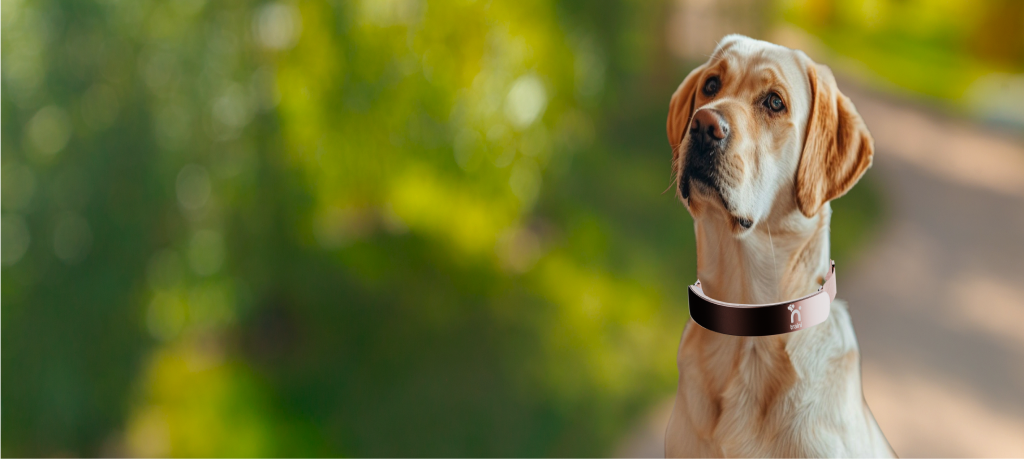


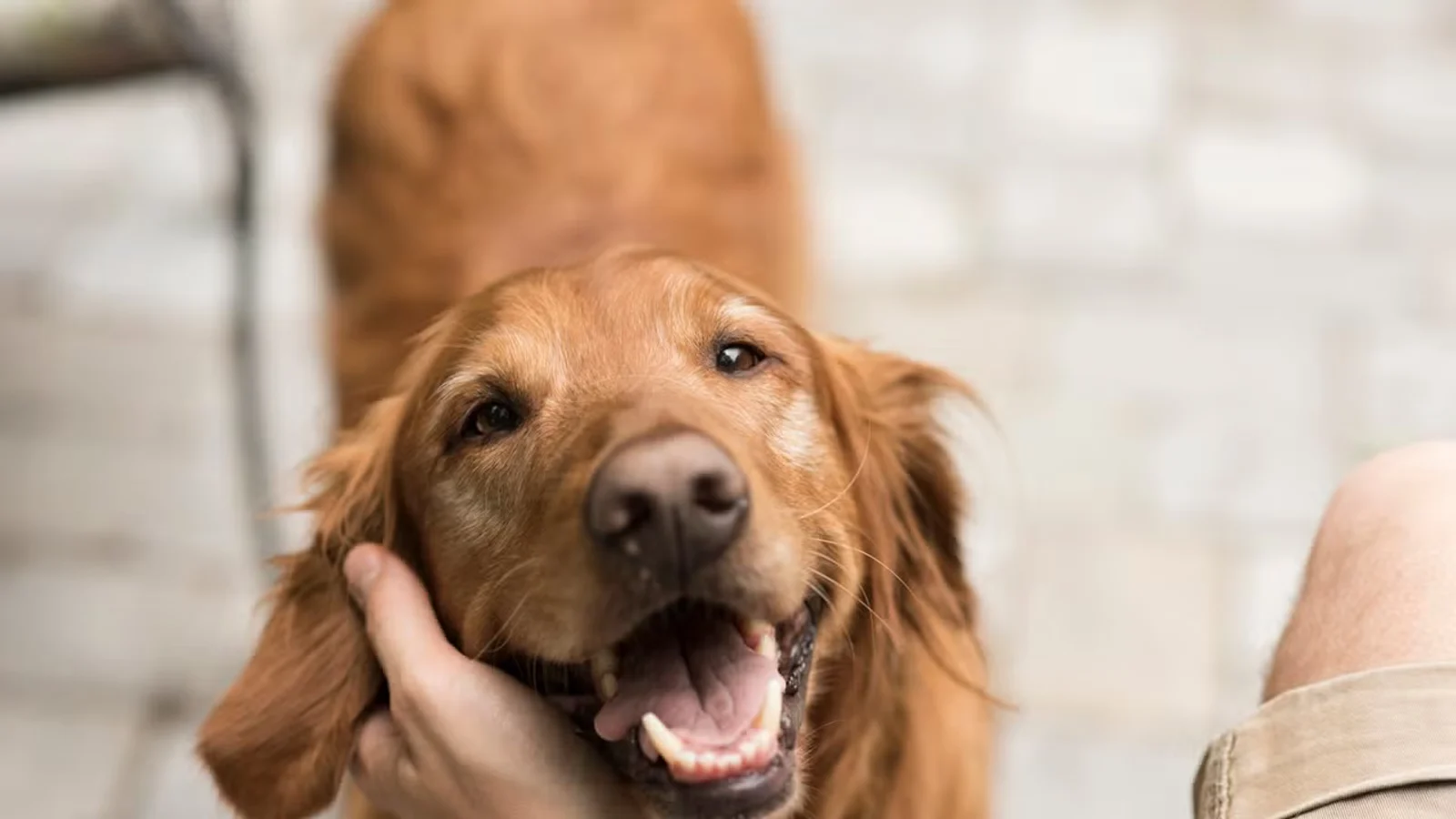
You look up from your phone and there it is again — your dog, fixed on you with an unblinking gaze. Dog staring can feel mysterious, even a little intense, but most of the time it’s your dog doing exactly what they do best: communicating with you. A stare can mean love, a request, or simple anticipation — and just occasionally, it’s a signal worth taking seriously.
Here’s what’s actually going on behind that gaze, the science that explains why eye contact matters so much to dogs, and how to tell an affectionate look from a warning one.
Is it normal for dogs to stare at me?
Yes. For dogs, watching their human closely is completely normal behavior. Dogs are experts at reading people — far better than most animals — and your face, hands, and body language are the richest source of information in their world. A lot of staring is simply your dog paying attention, waiting to see what you’ll do next.
The science: the “love loop” behind your dog’s gaze
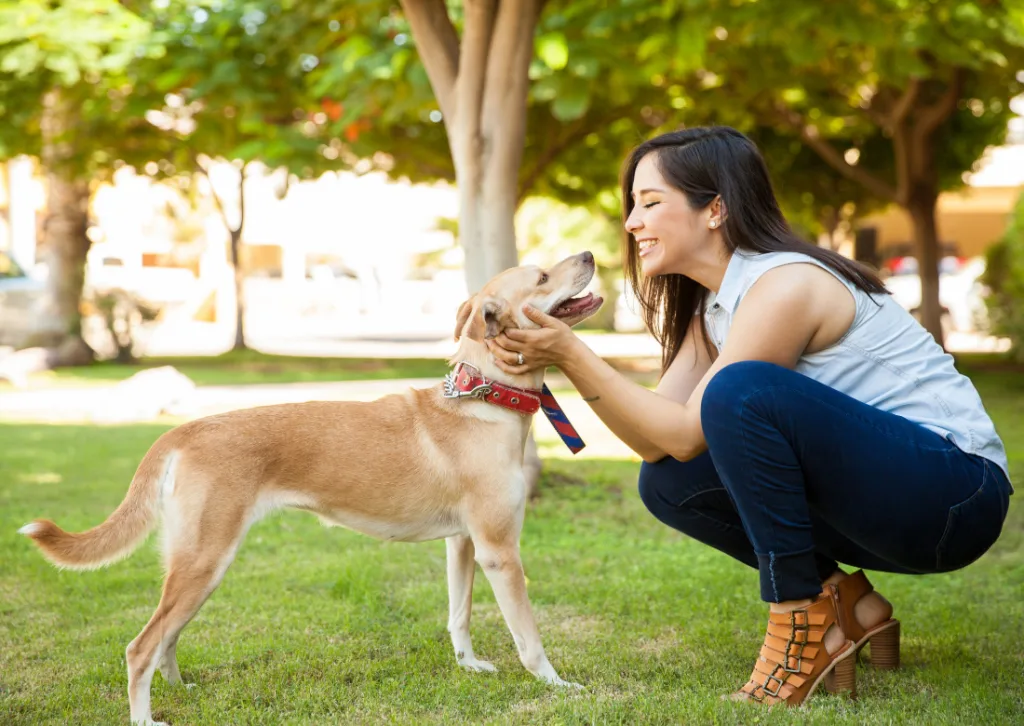
There’s real biology behind a soft, lingering stare. In a well-known study published in Science, researchers found that when dogs and their owners gazed into each other’s eyes, both experienced a rise in oxytocin — the same “bonding hormone” involved in the relationship between parents and infants. The longer the mutual gaze, the bigger the oxytocin boost, for dog and human alike.
In other words, that eye contact isn’t one-sided or accidental: it’s part of a feedback loop that strengthens the bond between you. When your dog holds your gaze with soft, relaxed eyes, there’s a good chance they’re simply feeling connected to you.
Reasons your dog stares at you
Affection and bonding
A relaxed stare with soft eyes, a loose body, and maybe a gently wagging tail is often pure affection — your dog’s version of a contented look across the room.
They want something
Dogs are quick to learn that looking at you gets results. A stare near dinnertime, by the door, or next to the leash usually means your dog is asking for something specific — food, a walk, a game, or a bathroom break — and waiting to see if it works.
They’re reading you for cues
Dogs watch us constantly for signals about what happens next. Your dog may be studying your face and movements to predict whether it’s time for a meal, a trip outside, or the end of the workday — staring is how they catch the earliest clue.
They’re waiting for direction
A dog who’s been trained, or who’s simply unsure, may stare while waiting for guidance — a cue, a command, or permission. This attentive look is common in dogs who are keen to please and checking in with their person.
Staring in specific moments
While you’re eating
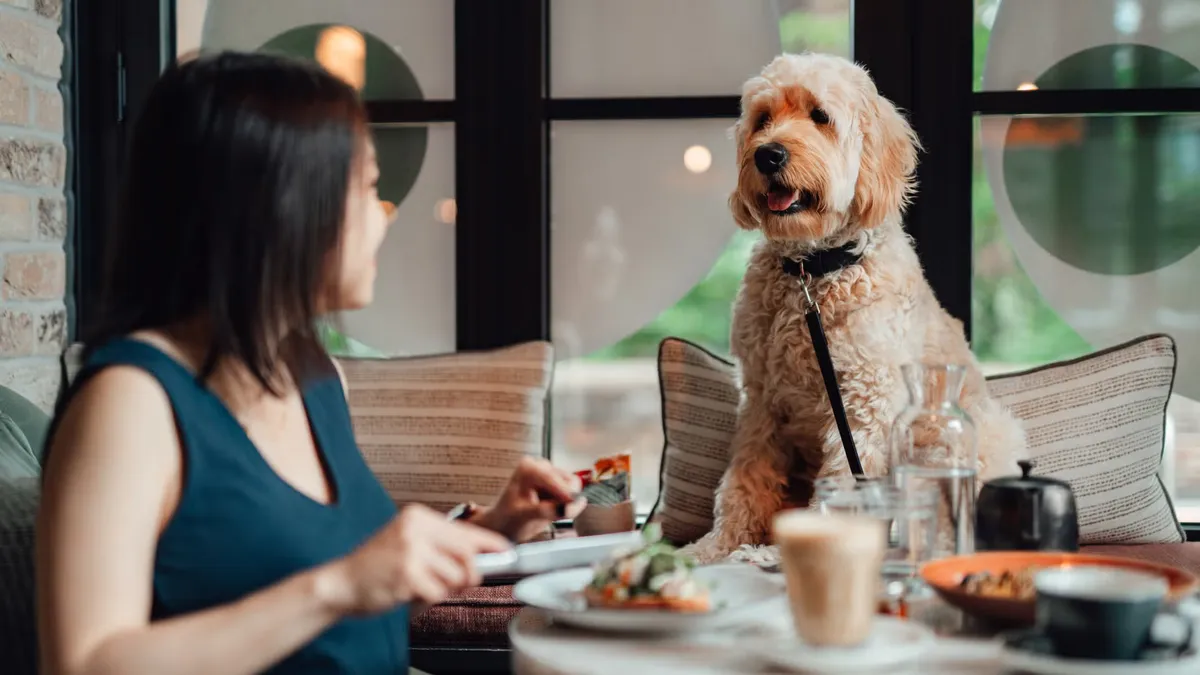
The classic hopeful stare. If staring at your plate has ever earned a scrap, your dog has learned it’s worth a try. Consistency — and not feeding from the table — is the only thing that fades it.
While lying down
A dog who watches you calmly while resting is usually just keeping tabs on their favorite person. With a relaxed body and soft eyes, this low-key staring is a sign of contentment and attachment, not something to worry about.
While they poop
It feels strange, but that eye contact mid-squat is thought to come from a moment of vulnerability — your dog instinctively looks to you, their trusted guardian, to keep watch while they’re exposed.
The hard stare: when a stare is a warning
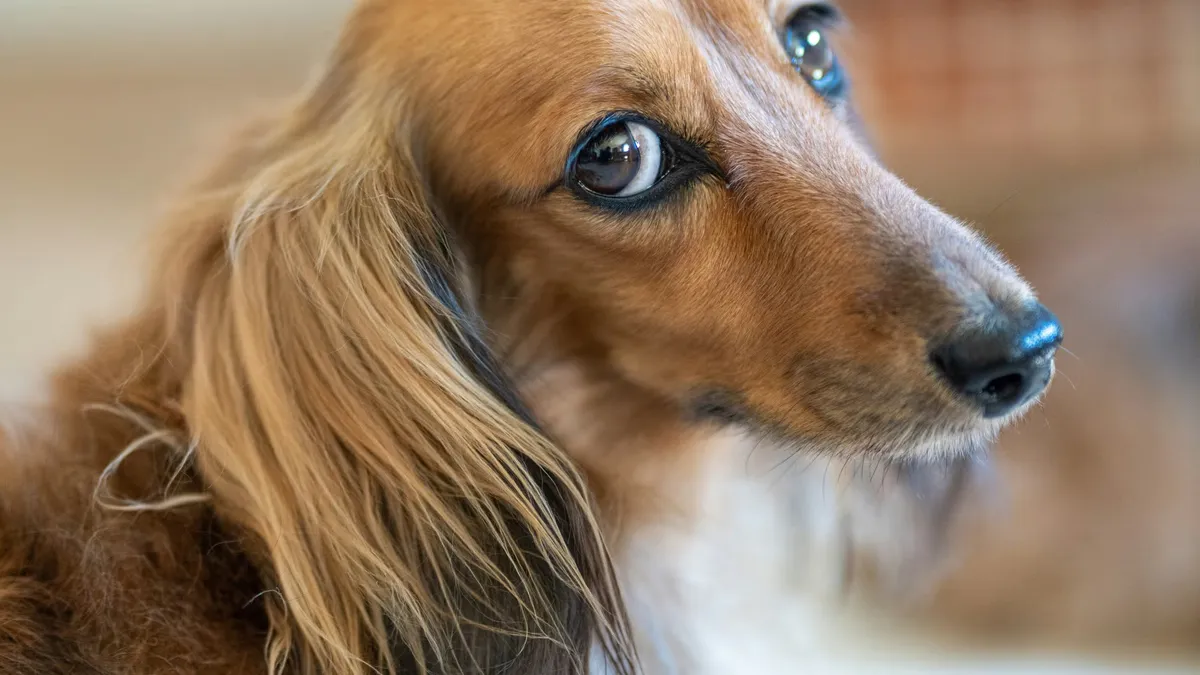
Not every stare is affectionate, and it’s important to tell the difference. A soft stare — relaxed eyes, loose body, easy blinking — is friendly. A hard stare — fixed, unblinking, with a stiff body, tense mouth, or the whites of the eyes showing (“whale eye”) — can be a sign of discomfort, resource guarding, or a warning to back off.
If a dog gives you a hard stare, especially over food, a toy, or a space, don’t lean over them or stare back — that can read as a challenge. Calmly give them room and remove the pressure. With an unfamiliar or anxious dog, direct eye contact is best kept soft and brief.
When staring could signal a health issue
Occasionally, staring isn’t about communication at all. A dog that stares blankly at walls or into space, seems disoriented, or gets “stuck” — particularly a senior dog — may be showing signs of canine cognitive dysfunction, the dog equivalent of age-related confusion. Staring paired with pacing, restlessness, or other changes in behavior is worth a veterinary check to rule out pain or a medical cause.
How to respond to your dog’s stare
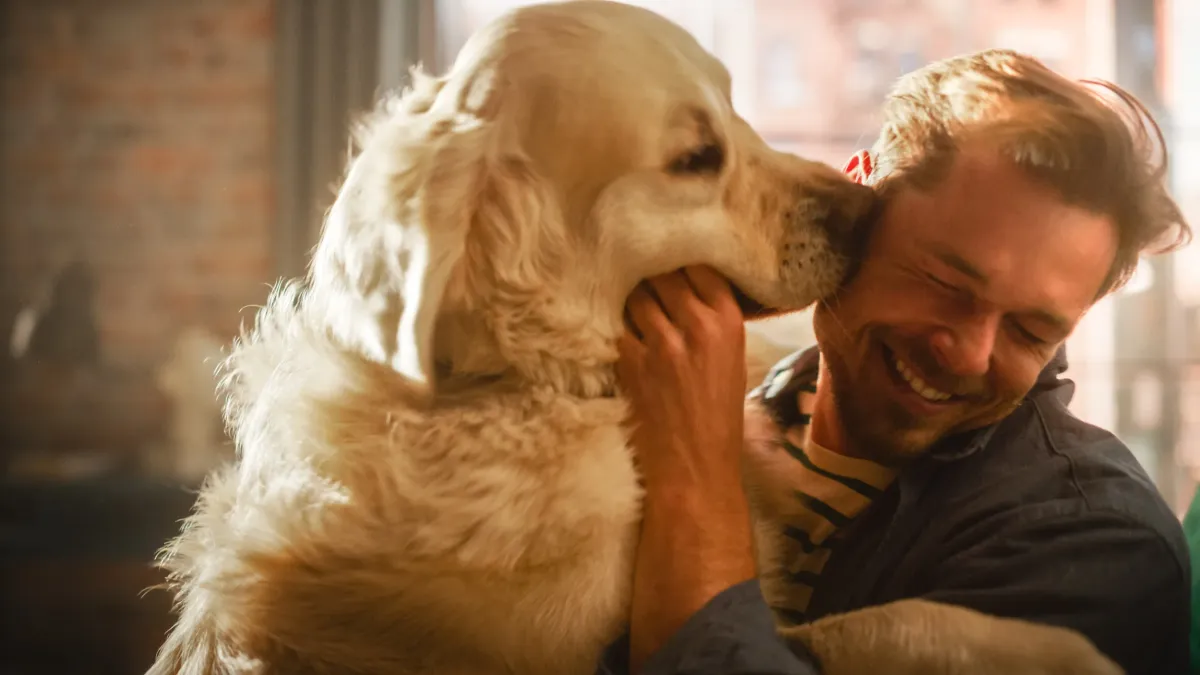
- Return a soft gaze: meeting a relaxed stare with calm, gentle eye contact can deepen your bond — and give you both an oxytocin lift.
- Meet a genuine need: if the stare is a request, check the obvious — hunger, a full bladder, a want for play.
- Don’t reward pushy demands: if staring has become constant attention-seeking, redirect to a settled behavior rather than giving in every time.
- Respect a hard stare: with a tense or guarding dog, give space instead of holding eye contact.
Reading your dog beyond the stare
A stare is just one piece of a much bigger conversation. The real skill is reading it in context — your dog’s eyes, body, and the situation together — to know whether they’re feeling loving, hopeful, or uneasy. That’s what Traini is built for: translating your dog’s emotional signals into plain language so you can understand why a behavior is happening. When you’re not sure what your dog’s gaze is telling you, you can ask PetGPT about your specific situation and get an answer grounded in your dog’s context. For more on canine communication, see our guides on why dogs whine or cry and easing separation anxiety.
Frequently asked questions
What does it mean when my dog just stares at me?
Most often it means your dog is communicating — showing affection, asking for something, or reading you for cues about what happens next. The context (soft vs. hard eyes, what’s nearby, the time of day) usually tells you which.
Is my dog staring a sign of love?
A soft, relaxed stare often is. Mutual gazing has been shown to raise oxytocin — the bonding hormone — in both dogs and their owners, so holding that gentle eye contact really can be your dog saying something close to “I love you.”
How do I know if my dog is bonded to me?
Soft eye contact, seeking you out, relaxed body language around you, following you between rooms, and checking in during walks are all signs of a strong bond. Calm staring is one of them.
What are signs my dog doesn’t like me — or is uncomfortable?
A hard, fixed stare with a stiff body, tense mouth, or whale eye is not affection — it’s a sign of discomfort or a warning. So are avoidance, cowering, lip-licking, and tucking the tail. Give a dog showing these signals space rather than pushing for contact.
This article is for general information and isn’t a substitute for professional veterinary or behavioral advice. If your dog’s staring is sudden, obsessive, directed at walls or empty space, or paired with other changes in behavior, please contact your veterinarian.