



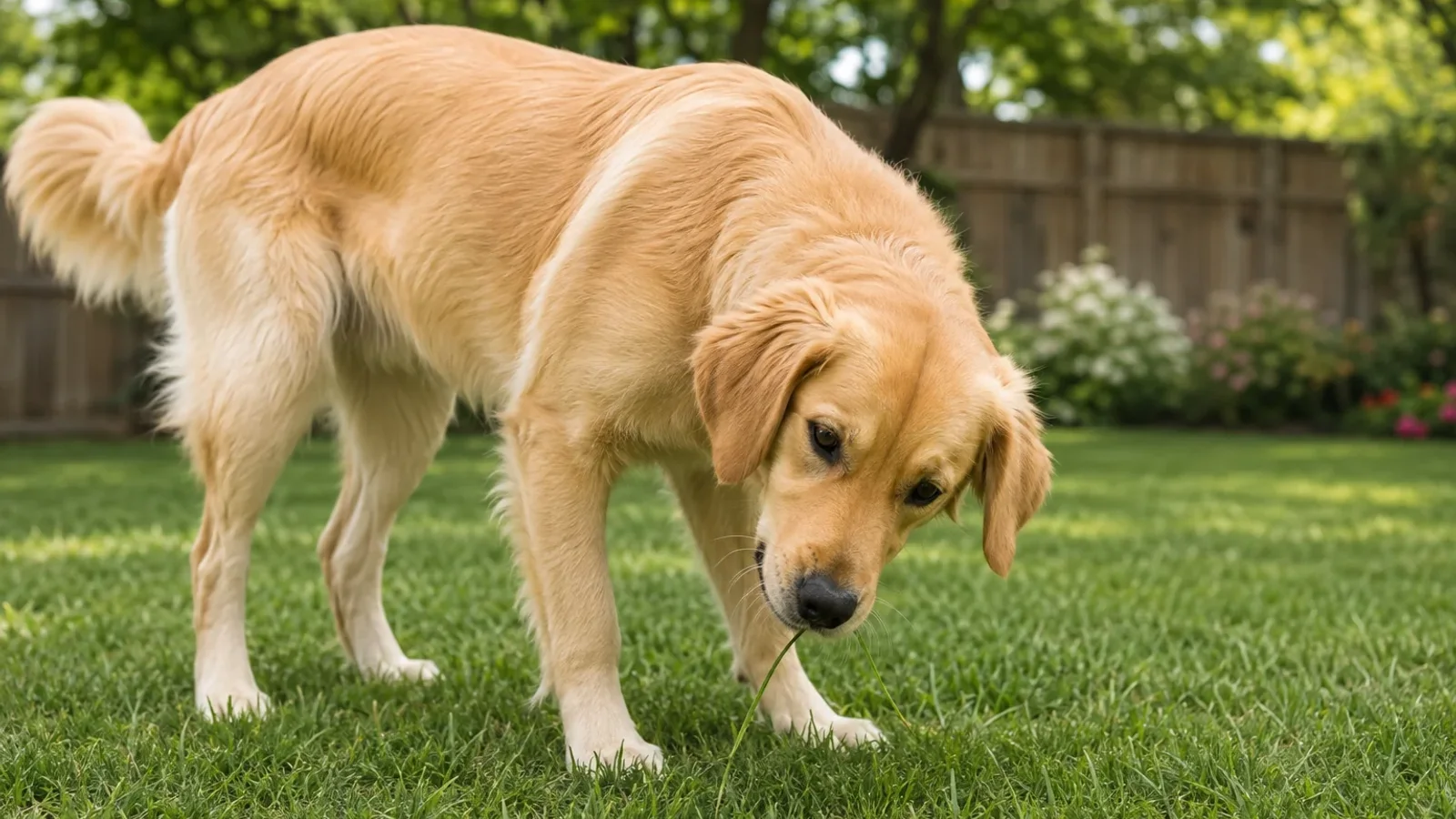
You’re on a walk, everything’s normal, and suddenly your dog drops their head and starts munching grass like it’s the best meal of the day. Is something wrong? Are they sick? Should you stop them? Grass-eating is one of the most common — and most misunderstood — dog behaviors, and the good news is that it’s usually nothing to worry about.
Here’s what the behavior actually means, the myth most articles get wrong, and the specific situations where grass-eating is worth a second look.
Is it normal for dogs to eat grass?

Yes. Grass-eating is extremely common, and most veterinarians consider the occasional graze a perfectly normal part of being a dog. It’s so common that it has a name — “pica” refers to eating non-food items, though routine grass nibbling is usually too mild to count as a problem.
The behavior likely goes back a long way. Plant matter and grass have been found in the stomachs of wild wolves, so researchers believe a taste for greenery is simply part of a dog’s ancestry rather than a sign that something’s broken.
The truth about grass and vomiting
The most repeated explanation is that dogs eat grass to make themselves throw up when their stomach is upset. It’s a tidy story — but the data doesn’t really support it.
In a well-known survey of dog owners, only about 25% of dogs vomited after eating grass, and just 10% showed any sign of illness beforehand. In other words, the large majority of dogs eat grass while feeling perfectly fine and never throw up at all. So while a sick dog might occasionally use grass to trigger vomiting, it’s far from the main reason most dogs graze.
Why dogs eat grass: the leading theories
There’s no single proven answer, but the most credible explanations are:
It’s a natural instinct
As with their wolf ancestors, eating a bit of plant material may simply be hardwired behavior — not a response to any problem.
They like the taste and texture
Fresh grass, especially new spring growth, is something many dogs genuinely seem to enjoy chewing. For some dogs it’s as simple as that.
Boredom or anxiety
A under-stimulated or anxious dog may graze the way a bored person snacks. If the grass-eating spikes when your dog is left alone or has too little to do, the behavior may be emotional rather than physical. Our guides on easing separation anxiety and reading canine distress signals can help you spot whether anxiety is the driver.
They’re after fiber or digestive help
Grass adds roughage, which can help some dogs move things through their digestive system more comfortably. A dog whose diet is low in fiber may instinctively seek it out.
A nutritional gap
Less commonly, persistent plant-eating can hint at a diet missing certain nutrients. If grazing is constant and paired with other changes, it’s worth reviewing your dog’s food with your vet.
Is eating grass bad for dogs?
On its own, grass isn’t harmful, and most dogs can nibble a little with no ill effect. The grass itself isn’t the concern — what’s on or near it can be. That’s where the real risks come in.
The real risks to watch for
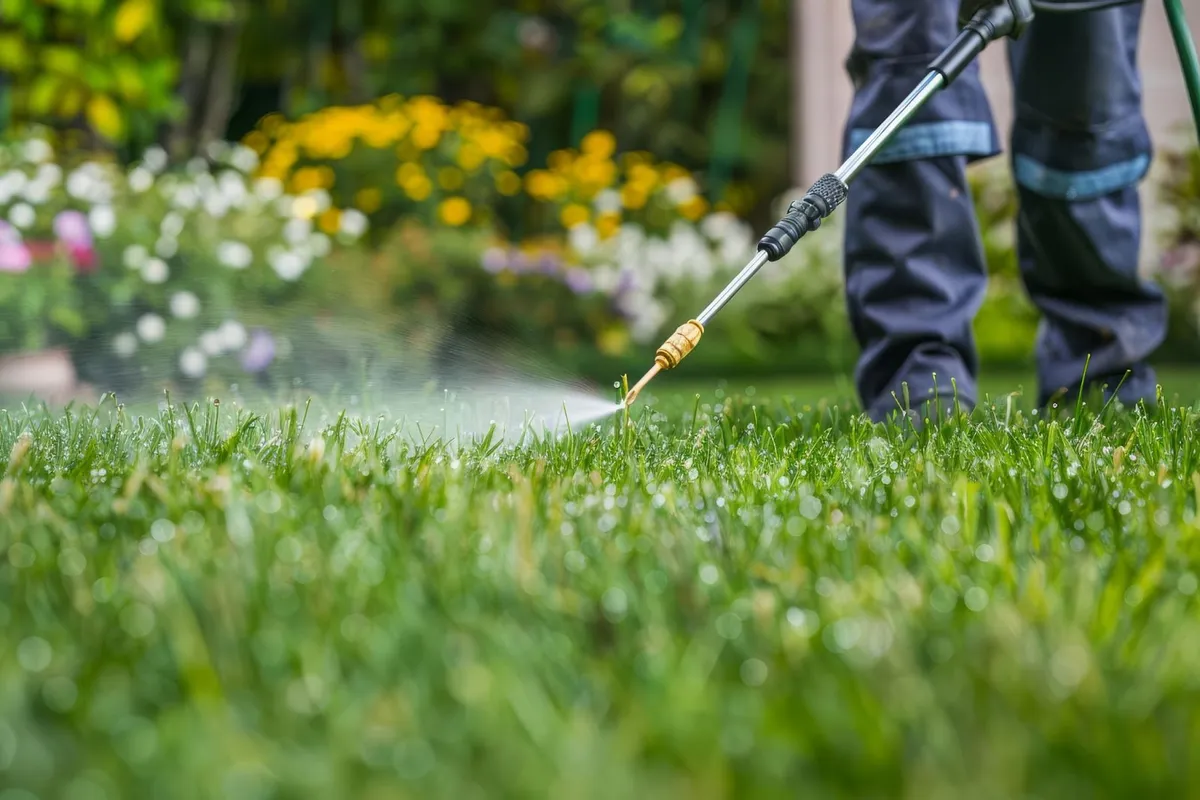
Pesticides, herbicides, and fertilizer
Lawns and parks are often treated with chemicals that are toxic to dogs. This is the single biggest reason to be careful about where your dog grazes — avoid treated lawns, and don’t let your dog eat grass in areas where you can’t be sure what’s been sprayed.
Toxic plants mixed in with grass
Among ordinary grass, dogs can accidentally eat weeds or plants that are genuinely poisonous. Knowing which plants in your yard and on your walking routes are dangerous is worth the effort.
Intestinal parasites
Grass in public areas can be contaminated with the eggs of worms and other parasites from other animals’ waste. Keeping your dog on routine parasite prevention helps reduce this risk.
When grass-eating is a warning sign

Casual, occasional grazing is fine. Talk to your veterinarian if you notice any of these:
- It’s a sudden new habit rather than something your dog has always done
- Your dog eats grass frantically or constantly
- They vomit nearly every time they eat grass
- Grass-eating comes with other symptoms — diarrhea, lethargy, loss of appetite, or weight changes
A sudden, intense urge to eat grass can occasionally signal nausea or digestive discomfort, so a change in pattern is the thing to pay attention to — not the behavior itself.
How to curb excessive grass eating
- Rule out boredom: more walks, play, and enrichment often reduce idle grazing.
- Check the diet: ask your vet whether more fiber or a food change makes sense.
- Manage the environment: steer clear of treated lawns and keep walks engaging so grass isn’t the main entertainment.
- Redirect gently: a well-practiced “leave it” cue lets you move your dog along without a battle.
What your dog might be telling you
Most grass-eating is harmless curiosity. The behavior becomes useful information when it’s new or excessive — because then it may be pointing at something else, whether that’s boredom, anxiety, or a digestive issue. The challenge for owners is telling an emotional need apart from a physical one.
That’s what Traini is built for: reading your dog’s behavior and emotional signals so you can understand why a habit is happening, not just that it is. If you’re unsure whether your dog’s grazing is boredom, stress, or something to raise with your vet, you can ask PetGPT about your specific situation and get guidance grounded in your dog’s context.
Frequently asked questions
Why does my dog eat grass and then throw up?
Some dogs do use grass to trigger vomiting when their stomach is unsettled, but research suggests this is the exception, not the rule — most dogs that eat grass don’t vomit. If your dog throws up nearly every time, or the grass-eating is new and frequent, check with your vet.
Why is my dog suddenly eating a lot of grass?
A sudden increase is the pattern worth watching. It can reflect boredom or anxiety, a change in diet, or digestive discomfort. Because it’s a change from normal, it’s worth mentioning to your veterinarian, especially if other symptoms appear.
Should I stop my dog from eating grass?
You don’t need to stop occasional grazing on grass you know is untreated. Do redirect your dog away from treated lawns, unfamiliar plants, and areas that may be contaminated — and curb the habit if it becomes excessive.
Can eating grass make my dog sick?
The grass itself rarely does. The risks come from pesticides and fertilizers, toxic plants hidden in the grass, and parasites in public areas. Grazing on clean, untreated grass in small amounts is generally safe.
This article is for general information and isn’t a substitute for professional veterinary advice. If your dog’s grass-eating is sudden, excessive, or paired with other symptoms, please contact your veterinarian.