



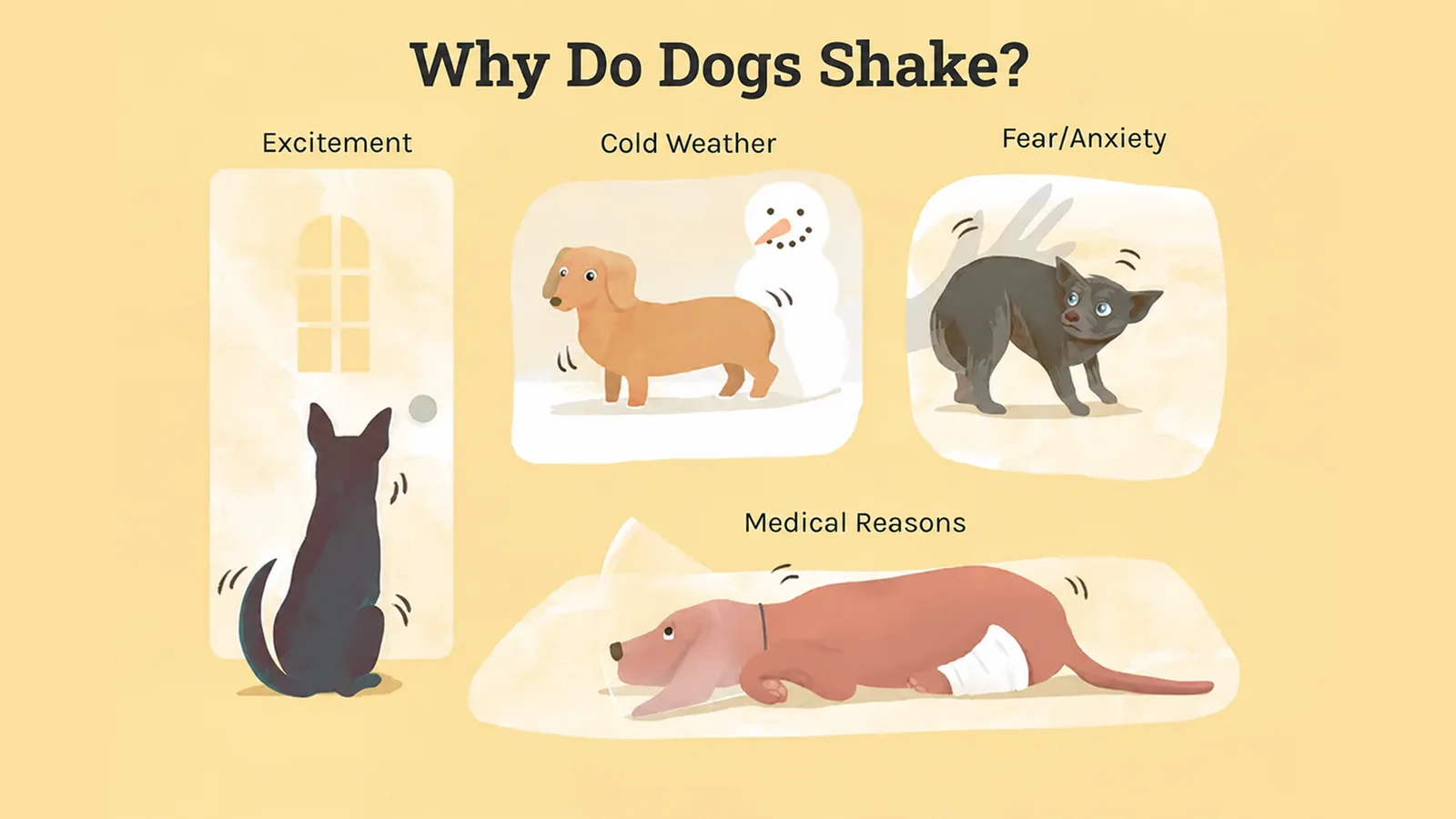
Few things put a dog owner on edge faster than watching their dog shake, tremble, or shiver for no obvious reason. Sometimes it’s completely harmless — your dog is cold, or simply vibrating with excitement. Other times, shaking is your dog’s way of telling you something is wrong, and a small number of causes need a vet right away.
The key is learning to read the context around the shaking. Below are the most common reasons dogs shake, grouped from harmless to serious, plus the red flags that mean it’s time to call your veterinarian.
Shaking vs. shivering: is it a problem?
“Shaking,” “shivering,” and “trembling” all describe the same thing — involuntary muscle movement — but the cause can range from a chilly morning to a medical emergency. A single shake to shed water is normal. Rhythmic trembling that won’t stop, happens in a warm room, or comes with other symptoms is worth paying attention to.
Think of shaking as one signal in a bigger picture. The questions that tell you what it means: Is your dog warm or cold? Calm or frightened? Was there a trigger? Are there other symptoms? The answers usually point you to the cause.
Harmless reasons dogs shake

They’re cold
Just like us, dogs shiver to generate body heat. Small breeds, puppies, seniors, and thin or short-coated dogs feel the cold fastest. If the trembling starts outdoors in cool weather and stops once your dog warms up inside, the cold is almost certainly the cause.
They’re excited or happy
An overjoyed dog may tremble when you come home, before a walk, or in anticipation of a treat. This kind of shaking is usually paired with a loose, wiggly body, a wagging tail, and bright, alert eyes — all signs of a happy dog, not a distressed one.
They’re shaking off water or tension
That full-body shake after a bath, a swim, or rolling in the grass is how dogs fling off excess water and reset. Dogs also “shake off” after a tense moment, like a tense greeting with another dog — a normal way to release stress.
They’ve learned it gets attention
Dogs are quick learners. If shaking or “shivering” has reliably earned your dog a cuddle, a treat, or a worried fuss in the past, some dogs will repeat the behavior to get your attention.
Emotional reasons: fear, anxiety, and stress

Trembling is one of the most common signs of fear and anxiety in dogs. Classic triggers include thunderstorms, fireworks, car alarms, vet visits, car rides, meeting new people, and separation from their owner. You’ll often see other stress signals alongside the shaking: a tucked tail, flattened ears, lip-licking, yawning, pacing, or hiding.
If your dog shakes mainly in these situations, the shaking itself isn’t dangerous — but the underlying anxiety is worth addressing for your dog’s wellbeing. Our guide on easing separation anxiety covers practical ways to help a worried dog feel safe, and why dogs whine or cry explains other distress signals to watch for.
Medical reasons dogs shake

When shaking isn’t explained by cold, excitement, or a clear stressor, a health issue may be behind it. These range from manageable to urgent.
Pain or injury
Dogs instinctively hide pain, so trembling is sometimes the only outward clue. Pain-related shaking may be localized (a shaking leg) or whole-body, and is often paired with reluctance to move, a hunched posture, panting, or sensitivity when touched.
Nausea
Feeling sick — from motion sickness, something they ate, or an underlying illness — can make a dog shake. Watch for drooling, lip-smacking, loss of appetite, or vomiting.
Low blood sugar (hypoglycemia)
A drop in blood sugar can cause trembling, weakness, and disorientation. It’s a particular risk in very small breeds, young puppies, and diabetic dogs. Hypoglycemia can become serious quickly and warrants prompt veterinary attention.
Generalized Tremor Syndrome
Sometimes called “white shaker syndrome” because it was first noted in small white dogs (though it affects dogs of any color), this condition causes full-body tremors. It’s typically diagnosed and managed by a veterinarian.
Poisoning or toxin exposure
Tremors and shaking can be a sign your dog has eaten something toxic — common culprits include chocolate, xylitol (a sweetener), certain plants, nicotine, and some human medications. Toxin exposure is an emergency. If you suspect it, contact your vet or an animal poison control line immediately.
Canine distemper
This serious viral infection can cause trembling and twitching, most often in unvaccinated dogs and young puppies. Keeping vaccinations current is the best prevention.
Seizures — and how they differ from shaking
It’s important to tell ordinary shaking apart from a seizure. During a seizure, a dog usually can’t respond to you, may fall over, paddle or jerk their legs, drool heavily, lose bladder or bowel control, and seem confused afterward. Ordinary shivering, by contrast, is something your dog can stop and they stay aware of their surroundings. Any suspected seizure should be evaluated by a vet.
Chronic conditions in older dogs
In senior dogs, new or worsening tremors can be linked to conditions like kidney disease, Addison’s disease, or age-related muscle weakness. Persistent shaking in an older dog deserves a veterinary check-up.
When to see a vet immediately
Most shaking is harmless, but call your veterinarian — or an emergency clinic — right away if the shaking comes with any of these:
- It happens in a warm environment and won’t stop
- Vomiting, diarrhea, or loss of appetite
- Weakness, stumbling, or collapse
- Signs of pain, or a swollen or tense belly
- You suspect your dog ate something toxic
- Confusion, unresponsiveness, or a suspected seizure
- It’s sudden, severe, or getting worse
When the cause isn’t obvious and the shaking doesn’t settle, it’s always safer to have your dog examined.
How to tell what your dog’s shaking is really saying
Because shaking can mean so many different things, the most useful skill is reading the whole context: your dog’s body language, the environment, and any changes in their normal patterns. A fearful dog looks different from a dog in pain, and both look different from a dog that’s simply cold.
This is exactly where Traini helps. The app is built to translate your dog’s emotional signals into plain language, so you can tell stress from excitement from discomfort — and the Traini smart collar continuously tracks heart rate and stress levels, which can help you catch health changes early rather than guessing. When you’re not sure what a behavior means, you can ask PetGPT about your specific situation and get an answer grounded in your dog’s context.
Frequently asked questions
Why is my dog shaking and acting weird all of a sudden?
Sudden shaking paired with unusual behavior — hiding, restlessness, disorientation — can signal fear, pain, nausea, low blood sugar, or toxin exposure. If it appears out of nowhere and you can’t link it to cold or a clear stressor, have your dog checked, especially if other symptoms are present.
Why does my dog shake at night?
Nighttime shaking is often about temperature (a cooler room) or anxiety when the house goes quiet. In older dogs it can also reflect discomfort or a chronic condition. If it’s new or frequent, mention it to your vet.
Why does my small dog shake so much?
Small and toy breeds lose body heat faster, tend to be more excitable, and are more prone to low blood sugar — so they shake more readily than larger dogs. Occasional shivering is usually normal, but persistent or unexplained trembling still deserves attention.
Should I comfort my dog when it’s shaking from fear?
Yes — calm, steady reassurance won’t “reward” fear. Help your dog reach a safe, quiet space, keep your own energy relaxed, and remove the trigger if you can. For ongoing anxiety, a longer-term plan (and sometimes your vet’s input) helps.
This article is for general information and isn’t a substitute for professional veterinary advice. If your dog’s shaking concerns you, or comes with any of the warning signs above, please contact your veterinarian.