

Can dogs eat rice? Yes — plain, cooked white or brown rice is safe for most dogs, and vets often recommend it to settle an upset stomach. The rules are simple: cook it fully, serve it plain with no salt, butter or seasoning, and keep it to a modest portion alongside a balanced diet. Skip anything fried or mixed with onion and garlic.
Chances are you’re here because your dog’s stomach is off and someone mentioned “chicken and rice,” or because a spoonful of dinner leftovers disappeared before you could stop it. Either way, rice is one of the more dog-friendly foods in your kitchen — as long as it’s served the right way, which we’ll walk through below.
Is rice actually good for dogs?
Plain cooked rice is a gentle, easily digestible carbohydrate, which is exactly why it turns up in so many dog foods and in the classic bland diet for a sick stomach. It gives quick energy and is easy on the gut. It isn’t a complete food on its own — your dog still needs their balanced diet for protein, fat and nutrients — but as a plain add-in or a short-term stomach-settler, it’s a safe, familiar option.
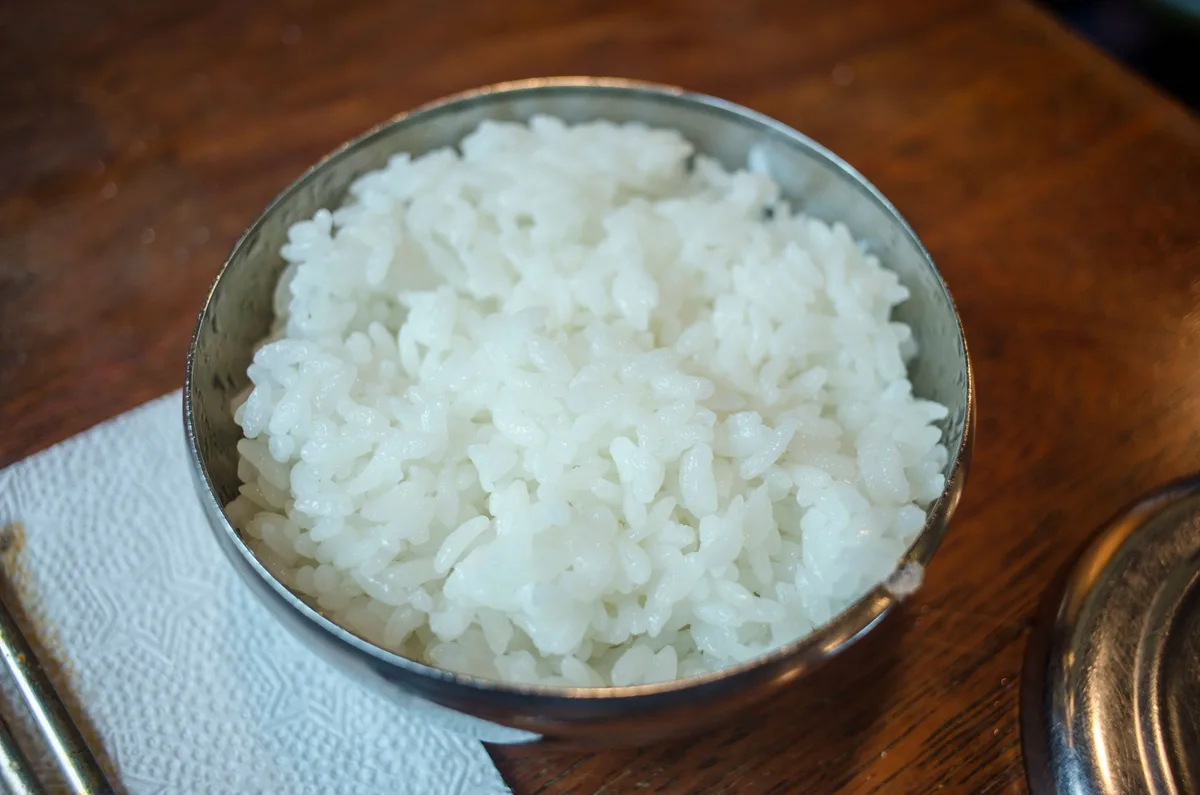
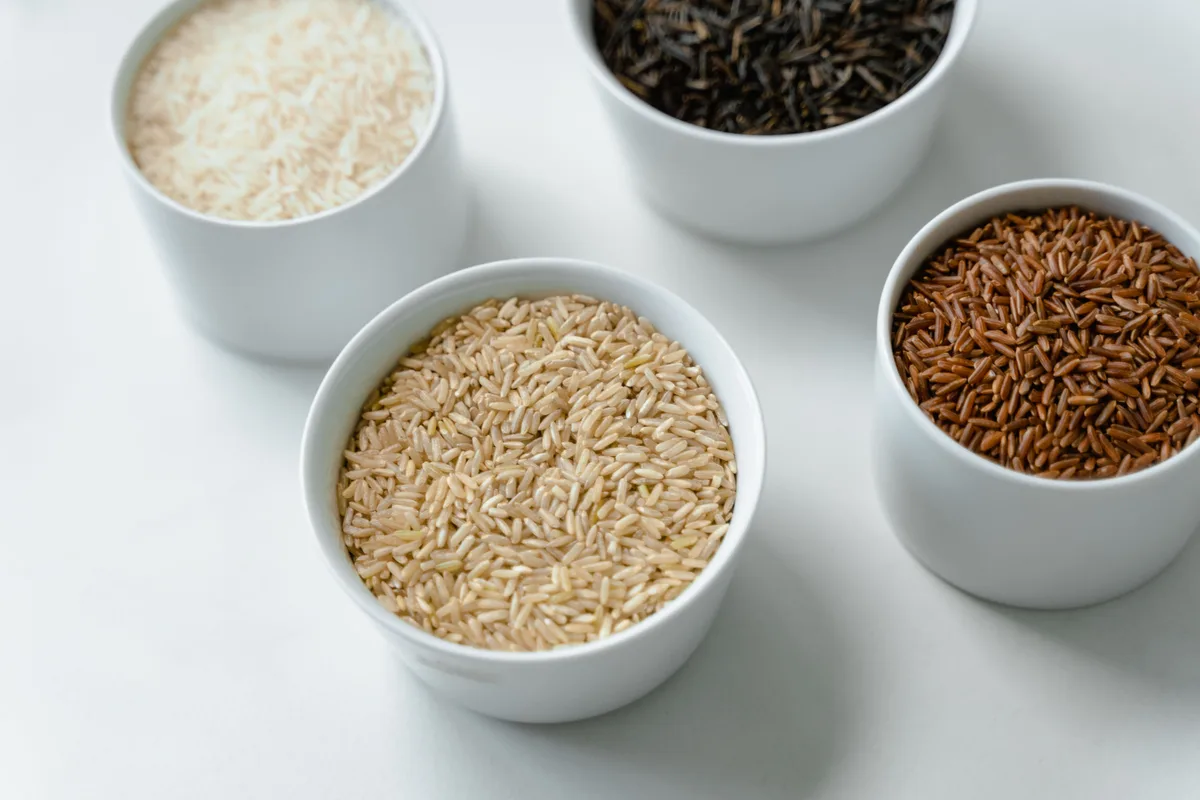
White rice vs brown rice for dogs
White rice
White rice is lower in fiber and the easiest to digest, which makes it the better choice when your dog’s stomach is upset. It’s also higher on the glycemic index, so it raises blood sugar more quickly — worth keeping in mind for diabetic or overweight dogs.
Brown rice
Brown rice keeps its bran, so it has more fiber and nutrients and digests more slowly. That’s a plus for everyday nutrition in a healthy dog, but the extra fiber makes it harder on a sensitive or recovering stomach. For a bland diet, reach for white; for an occasional healthy add-in, brown is fine.
Rice for an upset stomach
The go-to bland diet is plain boiled white rice with a little plain, skinless boiled chicken, usually around two parts rice to one part chicken. Serve it in small, frequent portions once your dog hasn’t vomited for several hours, and keep fresh water available. It’s meant to be a short bridge — a couple of days at most — not a long-term meal.
Call your vet instead of waiting it out if your dog is a young puppy or senior, if there’s blood in the vomit or stool, if they’re lethargic, in pain, or bloated, or if the upset lasts more than a day or two. A bland diet soothes a mild, passing tummy — it doesn’t treat the cause of a bigger problem.

How to serve rice safely
- Cook it fully — uncooked rice is hard to digest and can cause gas and discomfort.
- Keep it plain — no salt, butter, oil, stock or spices.
- No onion or garlic — both are toxic to dogs, which rules out most fried rice and takeaway rice.
- Let it cool and serve a modest amount, mixed into or alongside their normal food.
When rice isn’t the best idea
Rice is safe for most dogs, but it’s carbohydrate and calories. Diabetic dogs and dogs watching their weight do better with less, and white rice in particular can spike blood sugar — check with your vet on portions. A true rice allergy is uncommon but possible; if your dog gets itchy skin or ongoing digestive trouble, mention it to your vet. And because it isn’t complete nutrition, rice should stay a side, not the center of the bowl.
Reading your dog beyond the food bowl
A dog with a genuinely upset stomach often tells you in other ways too — going quiet, pacing, lip-licking, or turning away from food they’d normally love. Traini’s AI dog translator helps you read those signals, so you can tell an off day that a little rice will settle from the kind of discomfort that means it’s time to call the vet. Pair it with our guides on carrots and other dog-safe foods to build a snack list you can trust.
Frequently asked questions
Can dogs eat rice every day?
A small amount of plain rice mixed into a complete, balanced diet is fine for most healthy dogs, but rice shouldn’t be the main event. On its own it lacks the protein, fat and nutrients your dog needs, so keep it as a side and let their regular food do the heavy lifting.
Is white or brown rice better for dogs?
It depends on the goal. White rice is easier to digest and the right choice for an upset stomach; brown rice has more fiber and nutrients for everyday feeding but is harder on a sensitive gut. Both are safe plain and cooked.
Can dogs eat fried rice?
No. Fried rice is usually made with oil, salt, soy sauce and — most importantly — onion and garlic, which are toxic to dogs. Stick to plain boiled rice and skip anything from a takeaway container.
How much rice do I give a dog with an upset stomach?
A common bland-diet ratio is about two parts plain white rice to one part plain boiled chicken, fed in small, frequent portions. Keep it going for a day or two at most, and call your vet if your dog doesn’t improve or seems unwell.
Can dogs with diabetes eat rice?
Only with your vet’s guidance. White rice raises blood sugar quickly, which can be a problem for diabetic dogs; brown rice is gentler but still carbohydrate. Ask your vet about the right type and portion for your dog.
This article is for general information and isn’t a substitute for professional veterinary advice. If your dog has eaten something they shouldn’t have, or you’re worried about their health, contact your veterinarian or an animal poison control line.