
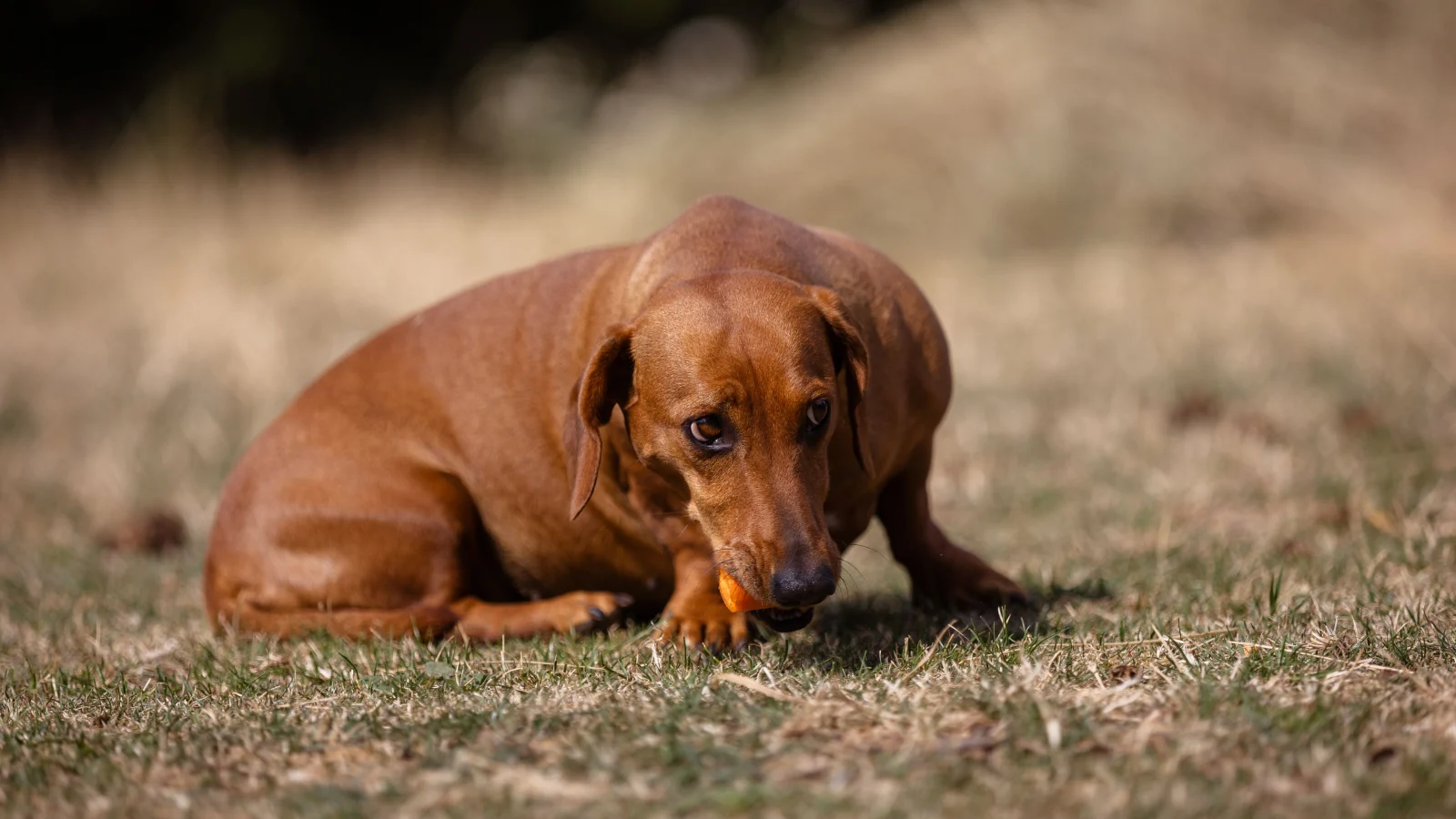
Yes, dogs can eat carrots — they’re one of the safest, healthiest treats around. Carrots are non-toxic, low in calories, and rich in beta-carotene, fiber, and vitamins, raw or cooked. Cut them to a safe size to avoid choking, and follow the 10% rule so treats stay a small part of the diet.
If you want a treat you can feel genuinely good about, carrots are hard to beat. They’re crunchy, naturally sweet, low in calories, and cheap — which is why so many dogs get a carrot as an everyday snack or a chew for a bit of dental benefit. Unlike higher-sugar fruits, carrots are forgiving enough to offer most days.
Here’s what to know about dogs and carrots — the benefits, the one real hazard to manage, how much is sensible, and how to serve them safely.
Can dogs eat carrots?
Yes. Carrots are non-toxic and safe for dogs, both raw and cooked, and they’re one of the best low-calorie treats you can offer. They’re rich in nutrients and low in sugar and fat, which makes them friendly even for dogs watching their weight. The main thing to manage is choking: a whole raw carrot or a large chunk can lodge in the throat, especially for small dogs or enthusiastic gulpers, so the fix is simply to cut carrots into appropriately sized pieces or sticks. Skip carrots cooked with butter, salt, onion, or garlic — plain is the rule.
Are carrots good for dogs?
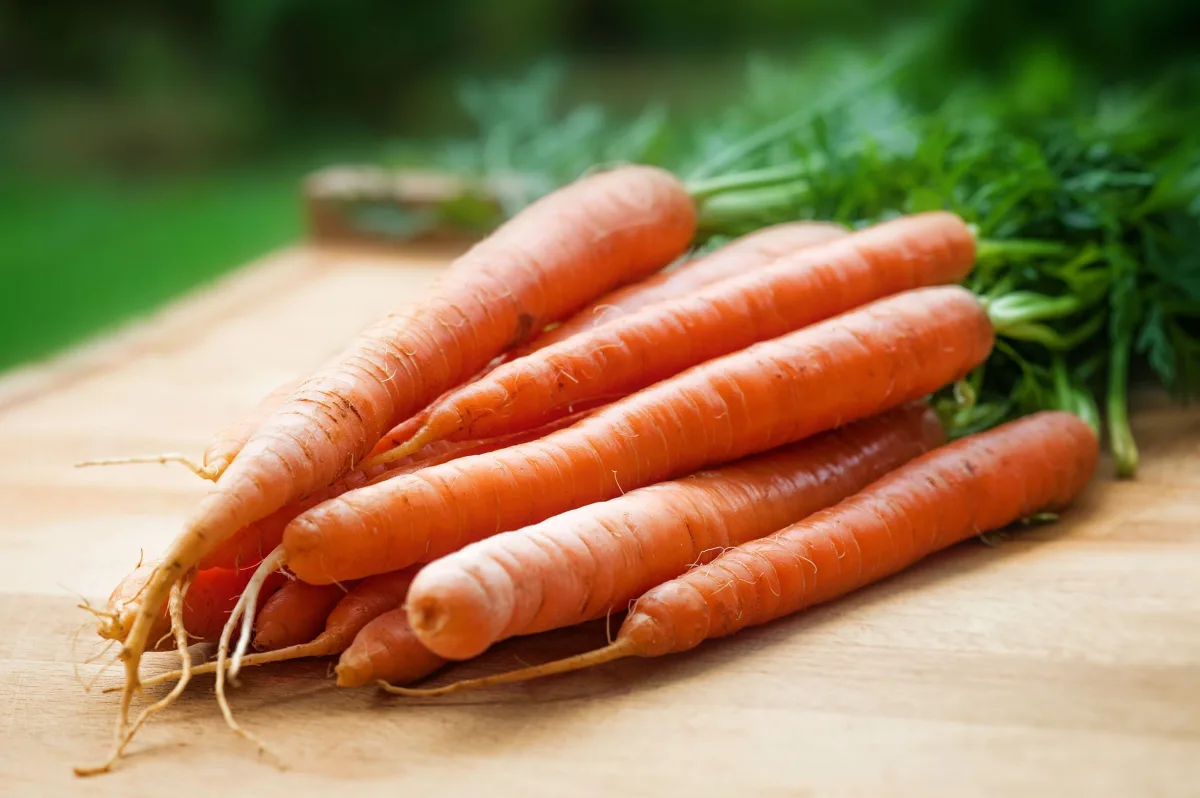
Carrots are a genuinely nutritious everyday treat:
- Beta-carotene: the body converts it to vitamin A, which supports vision, immune function, and healthy skin and coat.
- Fiber: aids digestion and helps your dog feel full — useful for weight management.
- Low in calories: one of the most guilt-free treats, ideal for frequent rewards or for dogs on a diet.
- Vitamins K and potassium: support bone health, clotting, and muscle and nerve function.
- A little dental benefit: gnawing a firm raw carrot or a frozen one can help scrape away soft plaque — a nice bonus, though not a replacement for brushing.
Because they’re low in sugar and calories, carrots are one of the few treats that are fine to offer most days.
When carrots can be a problem
Choking and blockages
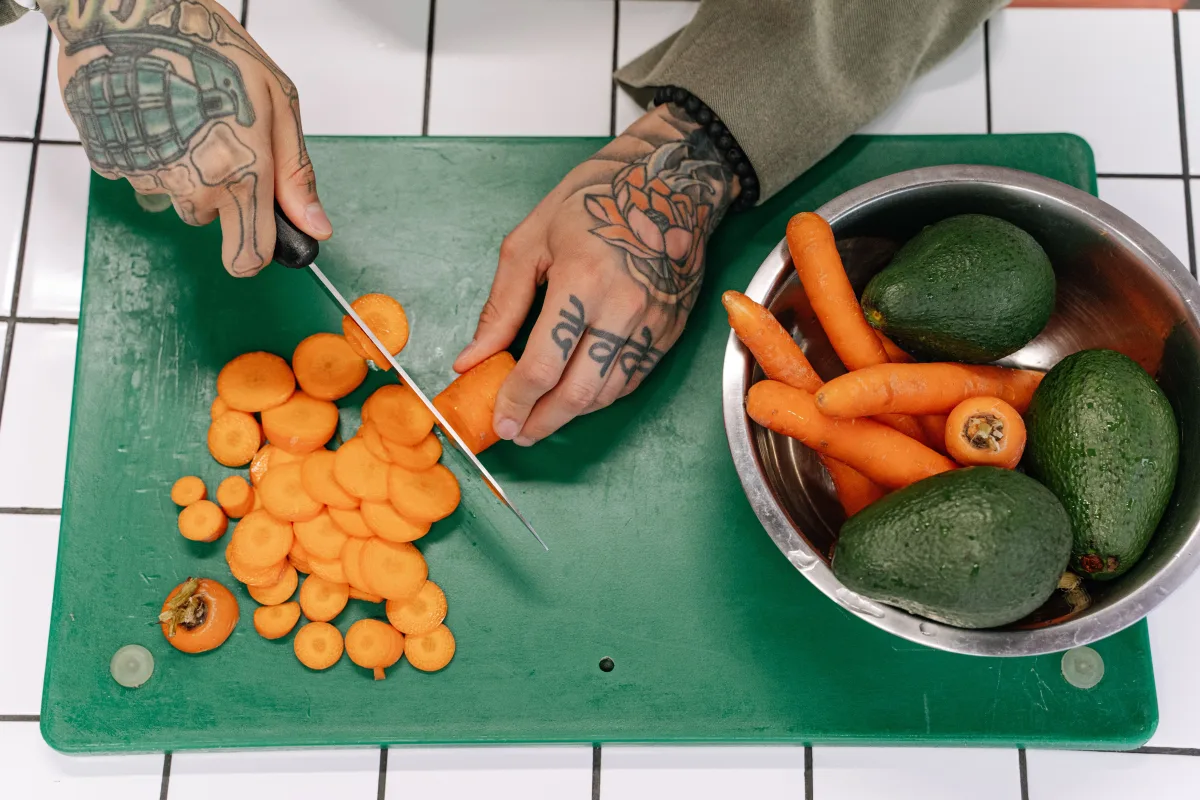
This is the real one. A whole raw carrot or a large chunk is a choking hazard, and a big piece swallowed by a small dog can cause an intestinal blockage. Always cut carrots down to a size that suits your dog — small cubes or thin sticks for small breeds.
Too many at once
Carrots are high in fiber, so a big serving can cause gas or loose stool. They also contain natural sugar and vitamin A, both of which are fine in treat amounts but not meant to replace meals. Keep them to the 10% rule.
Cooked with seasoning
Plain is the rule. Carrots roasted or boiled with butter, salt, onion, or garlic are a problem — onion and garlic are toxic to dogs, and the added fat and salt aren’t good for them. Serve carrots plain, raw or cooked.
Whole carrots and baby carrots
Baby carrots are convenient but still need cutting for small dogs. A whole carrot can make a good supervised chew for a large dog, but never leave a dog alone with one, and size it to the dog.
How many carrots can a dog eat?
Follow the 10% rule: treats, carrots included, should make up no more than 10% of your dog’s daily calories. Because carrots are so low in calories, they’re more forgiving than most treats — as a rough guide, a few baby carrots or a small handful of carrot pieces is fine for most dogs, scaled down for small breeds and up for large ones. They’re one of the few snacks you can reasonably offer most days.
How to feed carrots to your dog
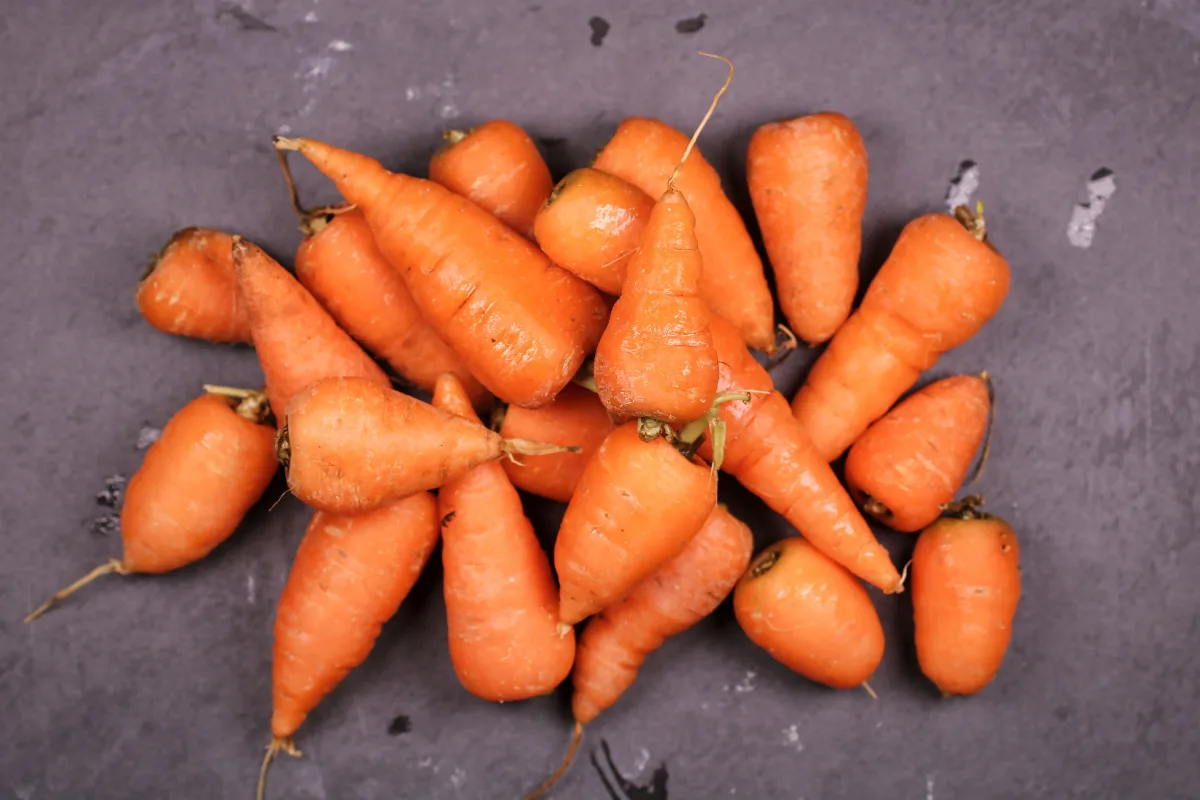
- Wash and peel if needed: rinse well; peeling is optional but removes dirt and any residue.
- Cut to the right size: small cubes or thin sticks sized to your dog — this is the key safety step.
- Raw or cooked, both work: raw carrots are crunchy and good for chewing; steamed or boiled plain carrots are softer and easier for seniors and puppies.
- Freeze for teething or hot days: a frozen carrot stick can soothe a teething puppy’s gums (with supervision).
- Use as a topper or training reward: small pieces make a low-calorie reward you can give generously.
- Serve plain: no butter, salt, onion, or garlic.
What if my dog ate a lot of carrots?
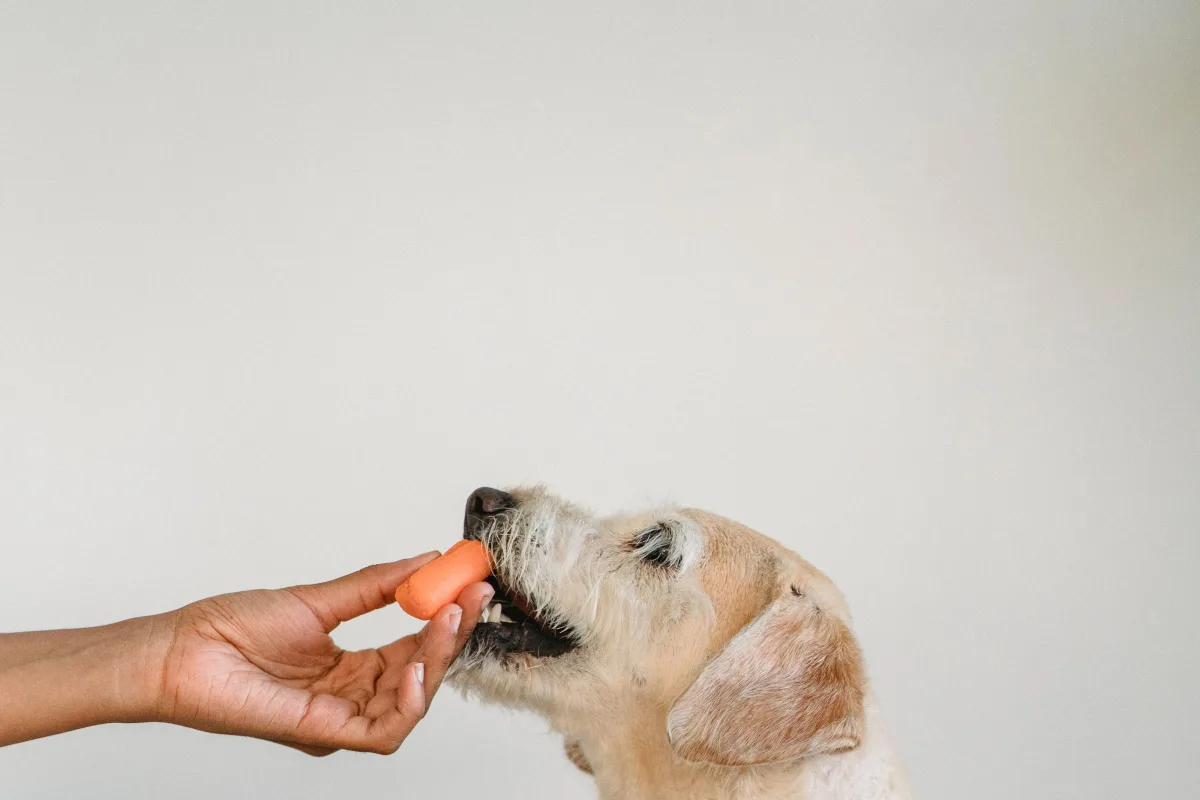
Carrots aren’t toxic, so a dog that got into a bag of them is very unlikely to be in danger — the most probable result is gas, loose stool, or a mildly upset stomach from all the fiber, and possibly orange-tinted poop, which is harmless. Keep fresh water available and watch for ongoing vomiting or diarrhea over the next day. The situation that deserves real attention is choking or a blockage: a dog that swallowed a large chunk or a whole carrot and is coughing, gagging, retching, straining, or going off food needs a vet right away. When a dog ate carrots cooked with onion or garlic, call your vet about those ingredients specifically. When in doubt about how your dog is doing, a quick call to your vet is always reasonable.
Reading your dog beyond the treat
Choosing safe snacks is one piece of caring for a dog; understanding what they’re asking for is another. Dogs tell us a lot — about hunger, excitement, and how they’re feeling — and learning to read those cues is what Traini’s AI dog translator is built for: translating your dog’s behavior and signals into plain language so you can respond with confidence. When your dog is begging nonstop or seems unsettled after trying something new, you can ask PetGPT about your specific situation. For more on the fruit and veg bowl, see our guides on bananas, apples, and blueberries.
Frequently asked questions
Can dogs eat raw carrots?
Yes. Raw carrots are safe, crunchy, and good for chewing — just cut them to a size that won’t be a choking hazard for your dog. For small dogs and seniors, small pieces or lightly steamed carrots are easier to handle.
Are cooked carrots good for dogs?
Yes, as long as they’re plain. Steamed or boiled carrots with no butter, salt, onion, or garlic are soft and easy to digest, which suits puppies and senior dogs. Cooking slightly increases how much beta-carotene the body can absorb.
Can puppies eat carrots?
Yes. Carrots are a healthy low-calorie treat for puppies, and a cold or frozen carrot stick can soothe teething gums under supervision. Cut pieces small and introduce them gradually to avoid upsetting a young stomach.
How many carrots can a dog eat in a day?
Keep to the 10% rule, but because carrots are so low in calories they’re forgiving — a few baby carrots or a small handful of pieces is fine for most dogs most days, scaled to your dog’s size. Too many at once can cause gas or loose stool.
This article is for general information and isn’t a substitute for professional veterinary advice. If your dog is choking, shows persistent vomiting or diarrhea after eating carrots, or has eaten carrots cooked with onion or garlic, please contact your veterinarian.