

Yes, dogs can eat bananas in moderation. They’re non-toxic and rich in potassium, vitamin B6, vitamin C, and fiber — a healthy low-fat treat. But bananas are high in natural sugar, so they’re an occasional snack, not a daily staple. Peel first and follow the 10% rule.
Bananas are one of the most popular fruits to share with a dog, and for good reason: they’re soft, easy to portion, free of toxic pits or seeds, and most dogs love the taste. Mashed into a puzzle toy or frozen into a hot-day treat, a little banana goes a long way.
Here’s what to know about dogs and bananas — the real benefits, the sugar catch, how much is sensible, and how to serve them safely.
Can dogs eat bananas?
Yes. Bananas are non-toxic and safe for dogs as an occasional treat. The flesh is soft, easy to digest, and packed with nutrients. The main thing to watch is sugar: bananas are higher in natural sugar than most dog-friendly fruits, so they’re best in small amounts rather than by the handful. A couple of practical cautions: skip the peel (it’s not toxic but is tough to digest and can cause a blockage or upset stomach), and avoid anything banana-flavored or baked — banana bread, chips, and chips often contain sugar, chocolate, or xylitol, a sweetener that’s toxic to dogs.
Are bananas good for dogs?
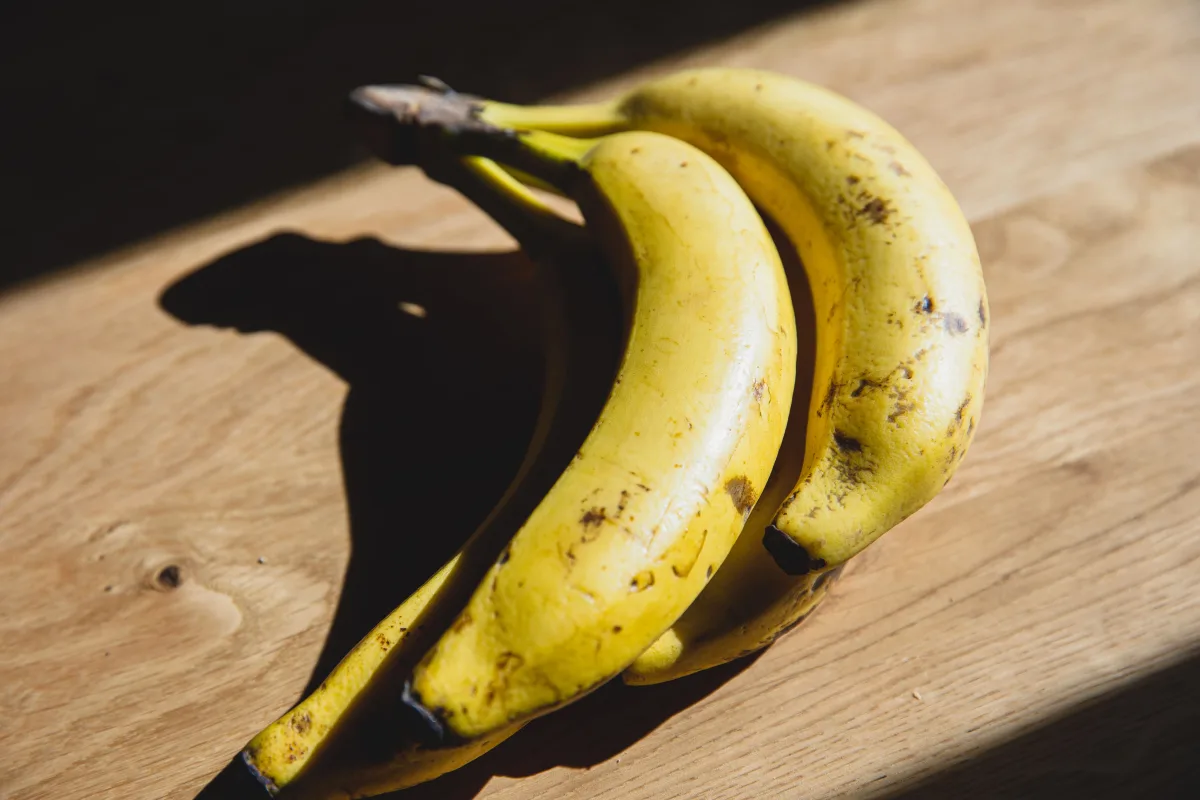
In the right amount, bananas offer real nutritional perks:
- Potassium: supports healthy heart and kidney function, muscle contraction, and fluid balance.
- Vitamin B6 and vitamin C: B6 aids protein metabolism and brain function; C acts as an immune-supporting antioxidant.
- Fiber: helps digestion and can firm up a mild bout of loose stool in small amounts.
- Low in fat and sodium: a lighter alternative to fatty or salty treats, which makes them vet-friendly for most dogs.
- Magnesium: supports bone health and helps the body absorb vitamins.
The catch is simply the sugar — which is exactly why portion size matters more with bananas than with a low-sugar fruit like blueberries.
When bananas can be a problem
The sugar content
Bananas are higher in sugar than most dog-safe fruits. Too much, too often can contribute to weight gain and isn’t ideal for dogs with diabetes. Keep bananas to small, occasional servings rather than an everyday treat.
The peel
Banana peels aren’t toxic, but they’re fibrous and hard to digest. A dog that eats a whole peel may vomit or, in a small dog, risk an intestinal blockage. Always peel bananas and throw the skin away where your dog can’t reach it.
Too much, too fast
Bananas are high in fiber, so a large amount at once can cause constipation or an upset stomach. Introduce them slowly and watch how your dog’s digestion responds before offering more.
Sugary and processed versions
Plain, fresh banana is the rule. Skip banana bread, banana chips, muffins, and banana-flavored snacks — they’re loaded with sugar and fat and may contain chocolate or xylitol. Stick to the real fruit.
How many bananas can a dog eat?
Follow the 10% rule: treats, bananas included, should make up no more than 10% of your dog’s daily calories. As a rough guide, that’s about two or three small slices for a small dog and up to half a banana for a large dog, offered a few times a week at most. Because bananas are higher in sugar, they’re less of an everyday treat than something like carrots or blueberries — think of them as a special reward.
How to feed bananas to your dog

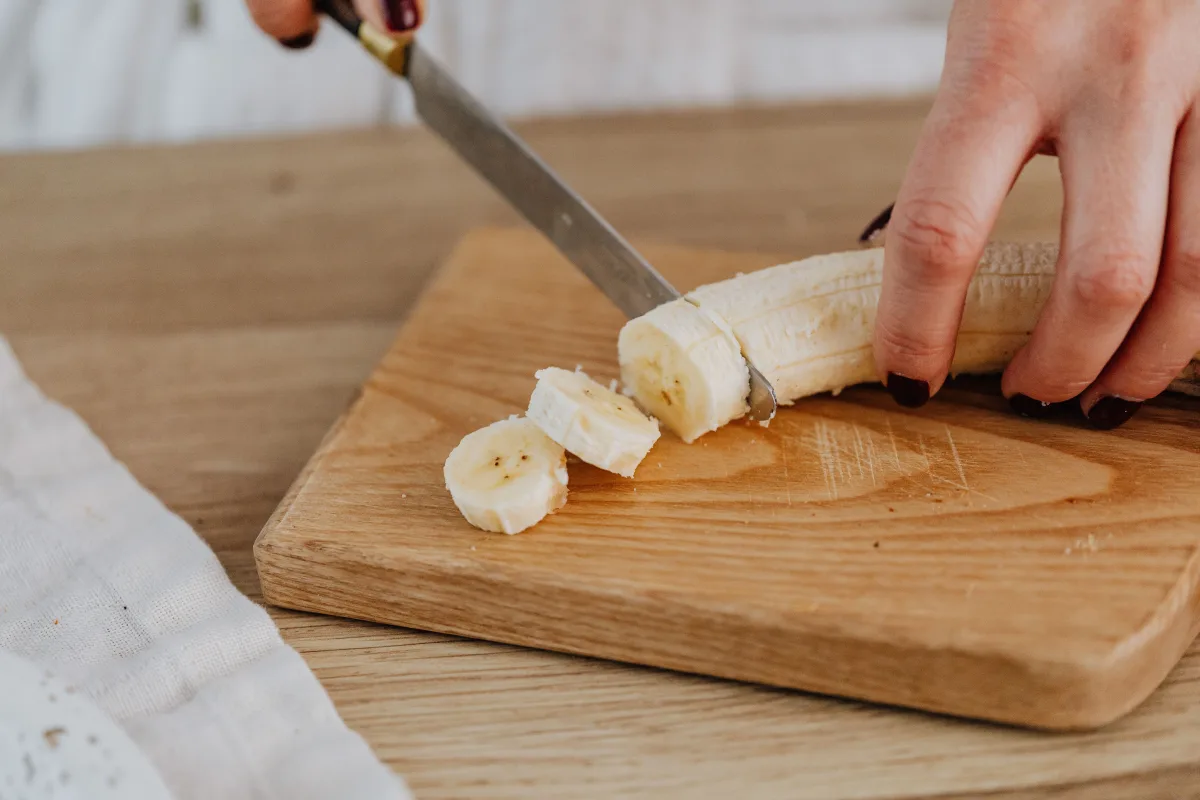
- Peel it first: always remove and discard the peel.
- Slice into bite-sized pieces: easy to portion and to use as a training reward.
- Mash it: stir a little into food or a puzzle toy, or spread it on a lick mat.
- Freeze for a treat: frozen banana slices or mashed-and-frozen banana make a cool summer snack.
- Serve it plain: no added sugar, chocolate, peanut-butter brands with xylitol, or baked-goods versions.
- Start small: a slice or two the first time, then watch your dog’s digestion.
What if my dog ate a lot of bananas?

Plain banana isn’t toxic, so a dog that got into more than intended is very unlikely to be in real danger — the most probable outcome is an upset stomach or constipation from the sugar and fiber. Keep fresh water available and watch for ongoing vomiting or a struggle to pass stool over the next day or two. Two situations deserve a vet call: a dog that swallowed a whole peel and then vomits repeatedly, strains, or goes off food could have a blockage; and a dog that got into banana bread or a xylitol-sweetened product needs attention right away, because the added ingredients — not the fruit — are the danger. When in doubt about how your dog is doing, a quick call to your vet is always reasonable.
Reading your dog beyond the treat
Choosing safe snacks is one piece of caring for a dog; understanding what they’re asking for is another. Dogs tell us a lot — about hunger, excitement, and how they’re feeling — and learning to read those cues is what Traini’s AI dog translator is built for: translating your dog’s behavior and signals into plain language so you can respond with confidence. When your dog is begging nonstop or seems unsettled after trying something new, you can ask PetGPT about your specific situation. For more on the fruit and veg bowl, see our guides on carrots, apples, and blueberries.
Frequently asked questions
Can dogs eat banana peels?
No — or rather, you shouldn’t let them. Peels aren’t toxic, but they’re fibrous and hard to digest, and a swallowed peel can cause vomiting or an intestinal blockage, especially in small dogs. Always peel bananas and discard the skin.
Can dogs eat frozen bananas?
Yes. Plain frozen banana slices or mashed-and-frozen banana make a refreshing hot-day treat. Keep portions small because of the sugar, and let very small dogs have them softened or mashed.
Are bananas good for dogs with an upset stomach?
A small amount of plain banana can be gentle and its fiber may help firm up mild loose stool, but it’s not a cure. If your dog has ongoing vomiting or diarrhea, skip the experiments and call your vet.
How much banana can a dog eat in a day?
Keep it to the 10% rule — roughly two or three small slices for a small dog and up to half a banana for a large dog, and only a few times a week. Because bananas are high in sugar, they’re a special treat rather than a daily one.
This article is for general information and isn’t a substitute for professional veterinary advice. If your dog has eaten a banana peel and is vomiting or straining, shows persistent digestive upset, or has eaten a xylitol-sweetened product, please contact your veterinarian.