

Yes, dogs can see color — just not the full range we do. The old belief that dogs see only in black and white is a myth. Dogs are red-green colorblind: their world is painted mostly in blues, yellows and grays. A bright red toy on green grass, which pops for us, looks like a dull grayish lump to them — which explains a lot about the toys they seem to lose.
If you’ve ever watched your dog walk right past the red ball you tossed, you’ve seen their color vision at work. Here’s what dogs actually see, why their eyes are built that way, and how to use it to pick toys and gear they can genuinely spot.
What colors can dogs actually see?
Color vision depends on cones, the cells in the eye that detect color. Humans have three types of cones, letting us see the full rainbow of red, green and blue. Dogs have only two types, so they see a narrower palette built around blue and yellow. To a dog, the world runs from blue through gray to yellow — reds and greens blur into muddy yellow-gray tones. This two-color vision is called dichromatic, and it’s very similar to a person with red-green colorblindness.
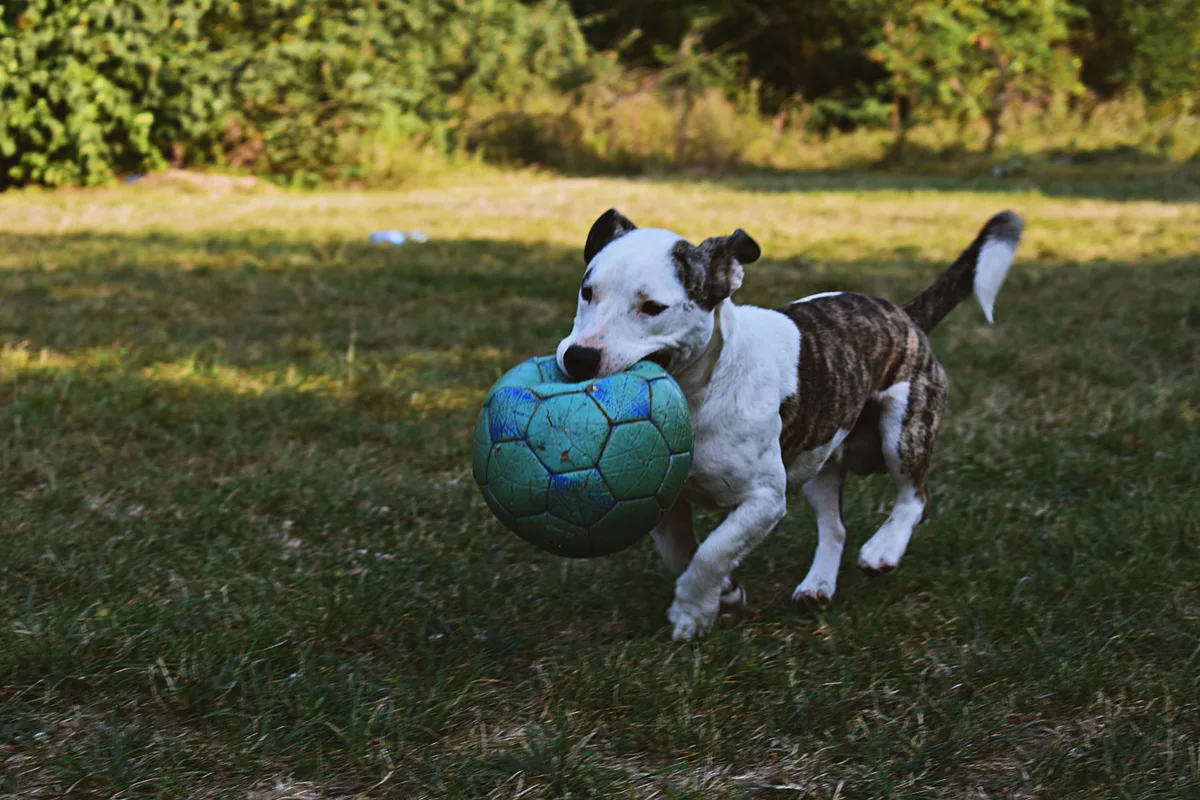
The science: why dogs’ eyes trade color for other strengths
Dogs evolved as crepuscular hunters — most active at dawn and dusk — and their eyes are tuned for that life rather than for seeing a rainbow. Where they give up color range, they gain elsewhere:
Better in low light
Dogs have far more rods (the cells for dim-light and motion vision) than we do, plus a reflective layer behind the retina called the tapetum lucidum — the thing that makes their eyes glow in a photo. Together these let dogs see much better than us in near-darkness.
Sharper at catching motion
That rod-rich retina also makes dogs excellent at detecting movement, even faint motion at a distance. A still object may be easy to miss, but the smallest twitch or dart will catch their eye instantly.
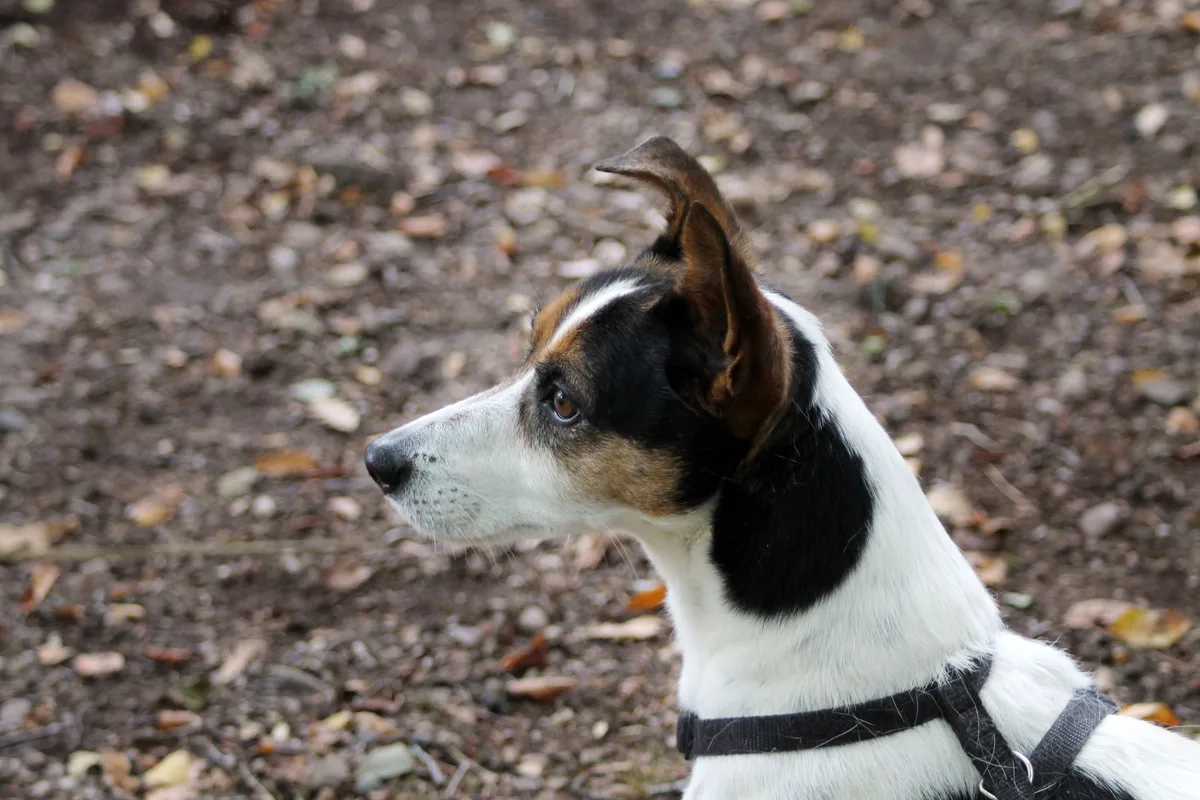
A wider view, a little blurrier
With eyes set more to the sides of the head, dogs have a wider field of view than humans but less sharp detail and depth perception straight ahead. They trade fine, sharp, colorful close-up vision for a broad, motion-sensitive, low-light-friendly view of the world.
How to use this when picking toys and gear
Because reds and greens wash out, a lot of pet products are, from your dog’s point of view, surprisingly hard to see:
- Choose blue and yellow: toys in blue or yellow stand out clearly to dogs against most backgrounds; red and orange tend to disappear, especially on grass.
- Mind the background: a red ball on green lawn is nearly invisible to your dog — a blue one will be far easier for them to track and fetch.
- Don’t assume they’re “bad” at fetch: a dog that loses sight of a thrown toy may simply not be able to see its color against the ground, not be stubborn or slow.
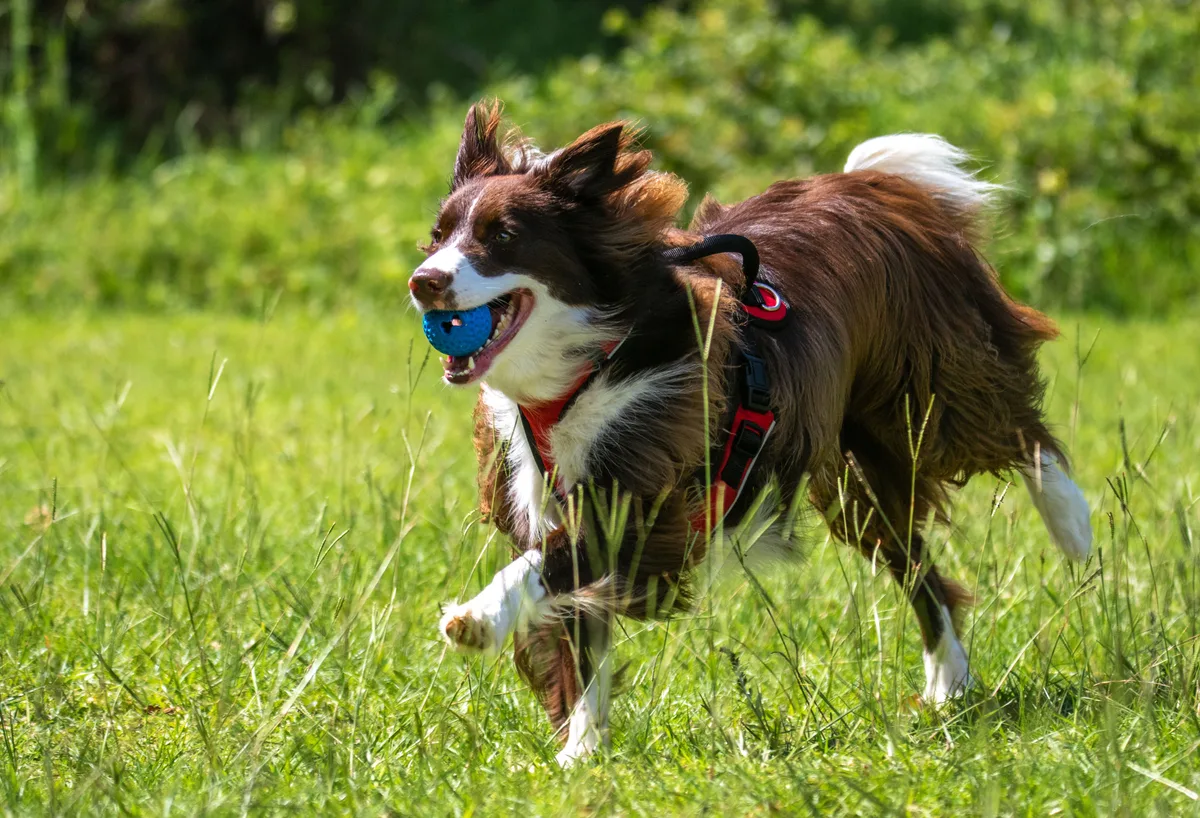
Reading your dog beyond what they see
How your dog sees the world shapes how they act in it — why they track a tossed toy by its bounce, hesitate in a dim hallway, or lock onto distant movement on a walk. Traini’s AI dog translator turns your dog’s behavior and body signals into plain language, so when something about how they’re reacting puzzles you, you can ask PetGPT about your specific situation and get an answer grounded in your dog’s context. For more dog facts, see our guide on how many teeth dogs have.
Frequently asked questions
Do dogs see in black and white?
No — that’s a long-standing myth. Dogs do see color, just a narrower range than humans. They’re red-green colorblind and see the world mainly in blues, yellows and grays, rather than the full rainbow we perceive.
What colors can dogs not see?
Dogs struggle to distinguish red and green, which appear as muddy yellow-gray tones to them. A red toy, an orange cone or green grass don’t stand out the way they do for us, which is why those colors seem to “disappear” for dogs.
What colors show up best for dogs?
Blue and yellow are the clearest colors to a dog’s eye. Toys, training targets and gear in those shades are much easier for dogs to spot against grass, carpet or dirt than red, orange or pink items.
Can dogs see better than humans at night?
Yes. Dogs have more low-light-sensitive rod cells and a reflective layer behind the retina (the tapetum lucidum), so they see considerably better than we do in dim light and are better at detecting motion — trade-offs for their reduced color range and detail.
Is my dog’s vision as sharp as mine?
Not for fine detail. Dogs generally have lower visual acuity than humans and see straight-ahead detail less sharply, but they make up for it with a wider field of view, better night vision and far better motion detection.
This article is for general information and isn’t a substitute for professional veterinary advice. If you notice sudden changes in your dog’s vision, cloudiness, redness, or bumping into things, please contact your veterinarian.