
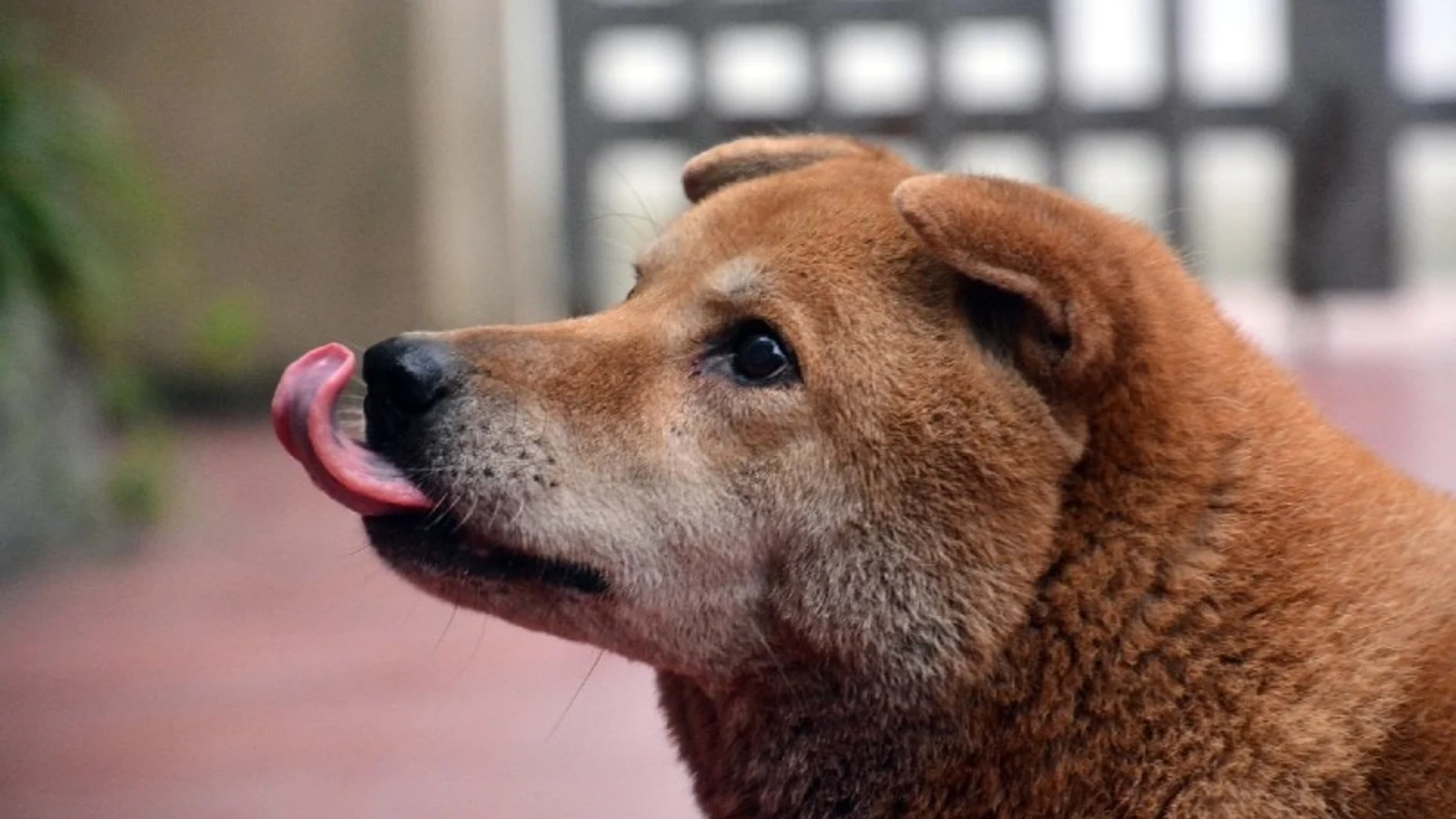
Your dog flicks their tongue across their nose and lips — a quick, almost unnoticeable little lick — and then does it again. Sometimes it’s obvious why: dinner is on its way, and they’re practically drooling. But just as often a dog licks their lips when there’s no food in sight at all, and that’s when this small gesture becomes one of the most useful things a dog can show you, because a lip-lick is frequently a quiet signal that your dog is uneasy.
Here’s what lip-licking really means, how to tell hungry anticipation from stress, and when it’s worth a closer look.
Is it normal for my dog to lick his lips?
Yes — occasional lip-licking is completely normal. Dogs lick their lips around food, to clean their muzzle, and as a routine part of communicating. It only becomes worth investigating when it’s frequent, happens out of any food context, or comes paired with other signs of stress or illness. The key isn’t the lick itself but the situation it happens in: the same flick of the tongue can mean “dinner smells great” or “I’m not comfortable right now.”
The science: lip-licking as a calming signal
Beyond hunger, lip-licking is one of a set of behaviors that researchers and trainers call “calming signals” — small, low-key gestures dogs use to defuse tension and communicate that they mean no harm. A dog who licks their lips in a tense moment is often trying to soothe themselves and signal appeasement to whoever or whatever is making them uneasy. Because it’s so easy to miss, lip-licking is one of the most overlooked early signs that a dog is stressed — long before any growl or snap, there’s often a lick.
Why do dogs lick their lips?
Anticipating food
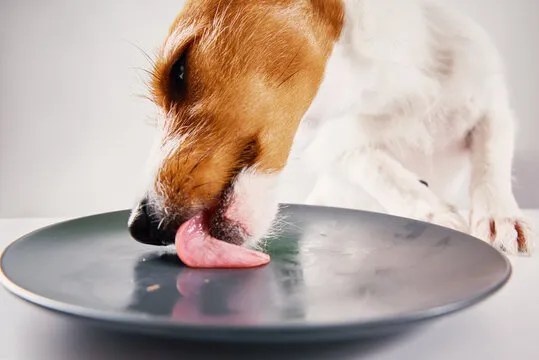
The most obvious reason is food. The sight or smell of a meal, a treat, or something tasty triggers salivation, and licking the lips is the natural result. This kind of lip-licking is relaxed and comes with other happy, food-focused cues.
Stress, anxiety, or appeasement
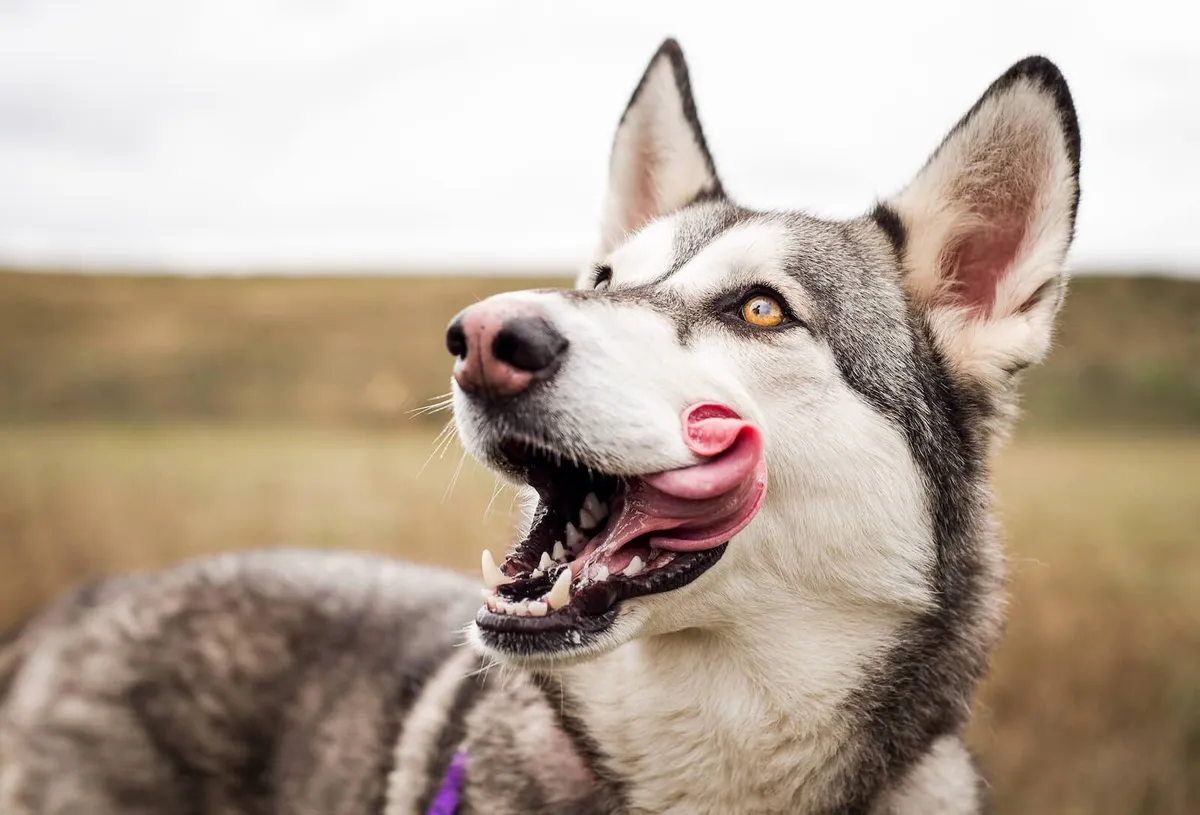
This is the big one to recognize. When there’s no food around, a lip-lick is often a calming signal — a sign your dog feels uneasy and is trying to defuse the moment. It frequently shows up in tense situations and is one of the earliest, quietest signs that a dog is uncomfortable.
Nausea or an upset stomach
Dogs often lick their lips and drool when they feel queasy, sometimes just before vomiting. If the licking comes with excessive drooling, lip-smacking, or loss of appetite, nausea may be the cause.
Dental or mouth problems
Pain or irritation in the mouth — dental disease, a sore gum, something stuck between the teeth, or a mouth injury — can make a dog lick their lips repeatedly. Persistent licking with bad breath or trouble eating is worth a dental check.
Thirst or a dry mouth
Sometimes the explanation is simple: a thirsty dog with a dry mouth may lick their lips. Make sure fresh water is always available, especially in warm weather or after exercise.
Communication with you or other dogs
Lip-licking is part of the social toolkit dogs use with each other and with us. A dog may lick their lips to signal “I’m no threat” to another dog, or in response to your tone and body language, as a way of keeping the peace.
Lip-licking in specific situations
During training or when being told off
A dog who licks their lips when you raise your voice or loom over them is very likely stressed, not guilty. It’s an appeasement signal — a sign to soften your approach and keep training calm and positive.
Around other dogs or new people
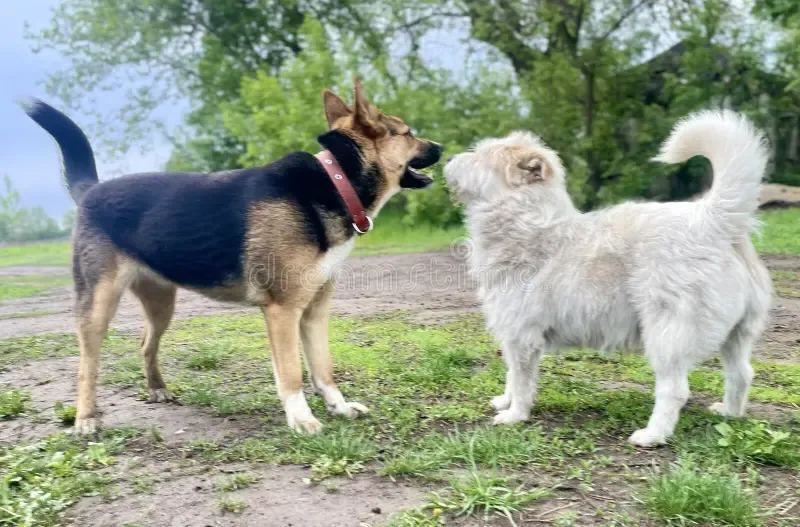
Lip-licking during a greeting or a tense standoff is a dog saying “I come in peace.” It’s a normal, healthy piece of canine communication — and a cue to watch whether your dog is comfortable or would rather have space.
With excessive drooling
Repeated lip-licking combined with heavy drooling often points to nausea or a mouth problem rather than emotion. If it’s persistent or comes with other symptoms, it’s worth a vet visit.
When lip-licking could signal a problem
Lip-licking becomes a concern when it’s frequent and clearly not about food, or when it comes with other warning signs. Watch for licking paired with heavy drooling, lip-smacking, pawing at the mouth, bad breath, or trouble eating (which point to nausea or a dental issue), and for licking that accompanies a stiff body, pinned ears, a tucked tail, or avoidance (which point to stress). Constant stress-licking, or any sudden change alongside other symptoms, is worth a conversation with your vet, who can separate a physical cause from an emotional one.
How to respond to a lip-licking dog
- Read the context first: food nearby usually means anticipation; no food usually means something else, most often stress.
- Ease the pressure if it’s stress: if your dog licks their lips when cornered, scolded, or overwhelmed, give them space and soften your body language rather than pushing on.
- Keep water available: rule out simple thirst or a dry mouth, especially after activity or in the heat.
- Watch for illness clues: pair lip-licking with drooling, appetite changes, or bad breath and treat those as reasons to see your vet.
- Don’t punish it: lip-licking is communication, not misbehavior — scolding a dog for a stress signal only raises the stress.
Reading your dog beyond the lip-licking
A lip-lick is a tiny gesture that can mean hunger, nausea, or quiet anxiety — and telling those apart, in the moment, is the whole challenge. That’s exactly what Traini is built for: translating your dog’s behavior and emotional signals into plain language so you can understand why they’re doing what they do. When you’re not sure whether a lip-lick means “feed me” or “I’m stressed,” you can ask PetGPT about your specific situation and get an answer grounded in your dog’s context — and know when it’s worth a vet’s eyes. For more on reading your dog’s signals, see our guides on why your dog shakes or trembles and easing separation anxiety.
Frequently asked questions
Why does my dog keep licking his lips when there’s no food?
Lip-licking with no food around is most often a calming signal — a sign your dog feels a little anxious or uneasy. It can also point to nausea, a dry mouth, or a dental problem, so look at the context and any other symptoms to narrow it down.
Is lip-licking a sign of stress in dogs?
Very often, yes. Lip-licking is one of the earliest and most commonly missed signs of stress in dogs, usually appearing well before more obvious signals. If your dog licks their lips in a tense moment, treat it as a request to lower the pressure.
Why does my dog lick his lips and swallow a lot?
Repeated lip-licking and swallowing, especially with drooling, often signals nausea or an upset stomach — sometimes just before vomiting. If it’s frequent or comes with other symptoms, check with your vet.
Should I worry about my dog licking his lips?
Occasional lip-licking is normal. Worry if it’s constant, happens with no food around, or comes with drooling, bad breath, trouble eating, or clear signs of stress. Those combinations are worth a veterinary check to find the cause.
This article is for general information and isn’t a substitute for professional veterinary or behavioral advice. If your dog’s lip-licking is frequent, happens outside of mealtimes, or is paired with drooling, appetite changes, bad breath, or signs of stress, please contact your veterinarian.