



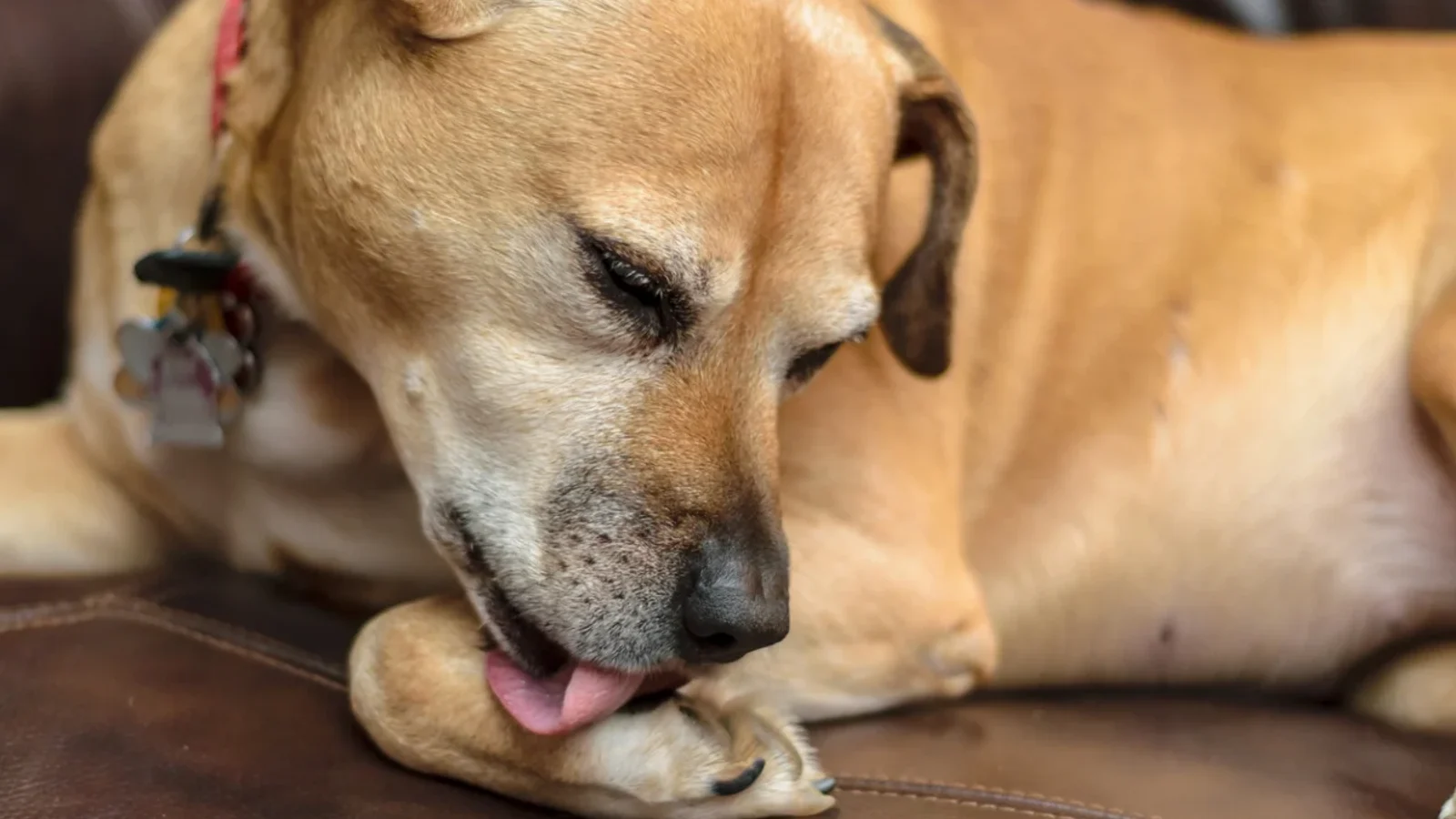
A dog licking a paw now and then is as ordinary as a person washing their hands. But when the licking becomes constant — the same paw, for long stretches, sometimes through the night — it stops being simple grooming and starts being a message. Dogs can’t tell us when something itches, aches, or worries them, so they show us, and a well-worn paw is one of the most common ways they do.
Here’s why dogs lick their paws, how to tell harmless grooming from a problem, and what to do about it.
Is it normal for my dog to lick his paws?
A certain amount of paw-licking is completely normal. Dogs groom themselves, and tidying up their feet — after a walk, before a nap, or to remove a bit of dirt — is part of that. The behavior becomes worth investigating when it’s frequent, focused on one spot, intense enough to wet or stain the fur, or paired with redness, limping, or a smell. Occasional licking is self-care; relentless licking is usually a sign of something that needs attention.
Why does my dog lick his paws?
Normal grooming
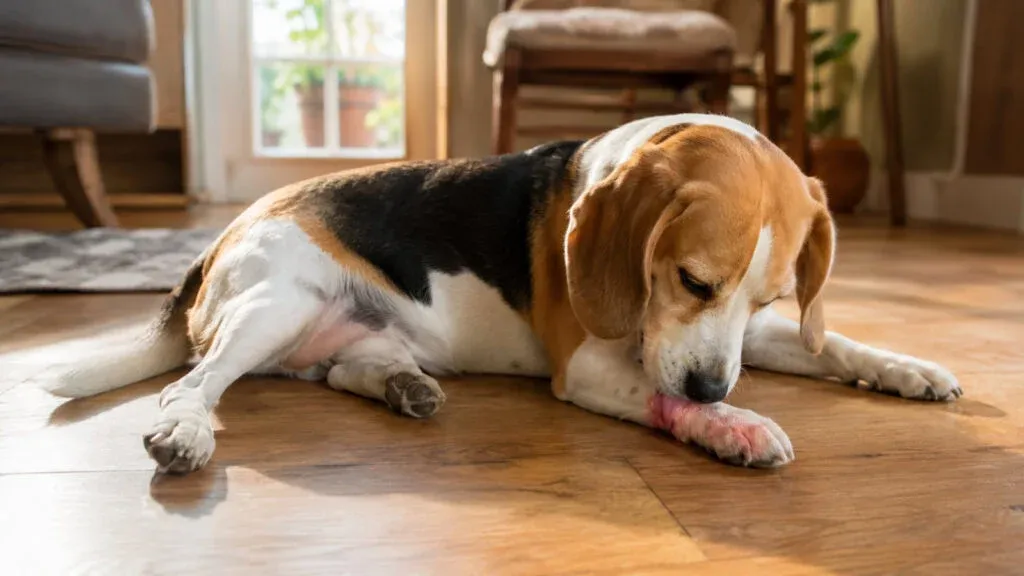
The simplest reason is routine cleaning. Many dogs give their paws a quick lick to remove dirt, debris, or moisture, particularly after being outside. Brief, occasional licking with no redness or irritation is nothing to worry about.
Allergies
Allergies are one of the most common reasons for persistent paw-licking. Environmental allergens (pollen, grass, dust) and food sensitivities can make a dog’s paws itchy and inflamed, and licking is their way of trying to relieve the itch. Allergy-related licking often affects multiple paws and may come with itchy ears or skin.
Skin irritation or dryness
Contact with irritants — road salt, lawn chemicals, harsh cleaning products — or simply dry, cracked pads can leave paws sore and itchy. Winter weather and hot pavement are common culprits.
Pain or injury
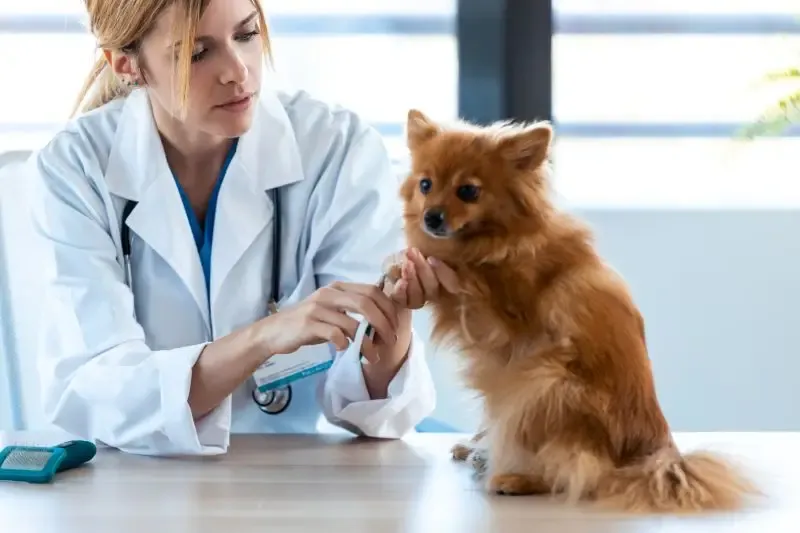
A dog who suddenly fixates on one paw may be dealing with pain: a cut, a torn nail, a thorn or splinter, a stone lodged between the pads, a burn, or a sprain. Licking is an instinctive response to a sore spot, so a single, intensely licked paw deserves a close look.
Parasites and infection
Fleas, mites, and ticks can make paws itch, and persistent licking can itself break the skin and allow a bacterial or yeast infection to set in. Infected paws often look red, swollen, or moist and may give off a distinct smell.
Boredom, stress, or anxiety
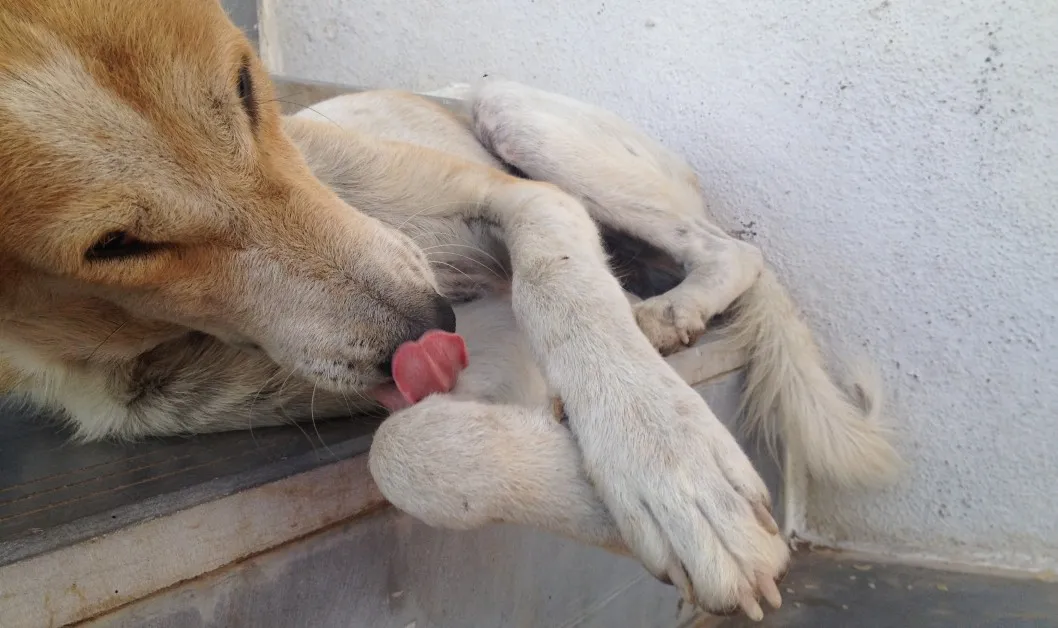
Like other repetitive behaviors, paw-licking can be a way for a dog to self-soothe. A bored or anxious dog may lick as a coping mechanism, and over time it can become a hard-to-break habit — sometimes even a compulsive one — that continues after any original physical cause has gone.
How to tell normal licking from a problem
The context tells you a lot. Reach for your vet when you notice any of these alongside the licking: redness, swelling, or sores; hair loss or saliva-stained (pink or brown) fur; a bad smell; limping or favoring a foot; obsessive licking that disrupts rest; or licking that comes on suddenly and intensely. Normal grooming is brief, occasional, and leaves healthy paws behind; a problem looks raw, smells off, or won’t stop.
When to see a vet
Because paw-licking has so many possible causes — from allergies to pain to infection to anxiety — a vet visit is the fastest way to get to the bottom of persistent licking. Your vet can examine the paw, check for injuries or parasites, test for allergies or infection, and help you tell a physical cause from a behavioral one. This matters because treating an allergy, a wound, and a stress habit each calls for a very different approach.
How to help a paw-licking dog
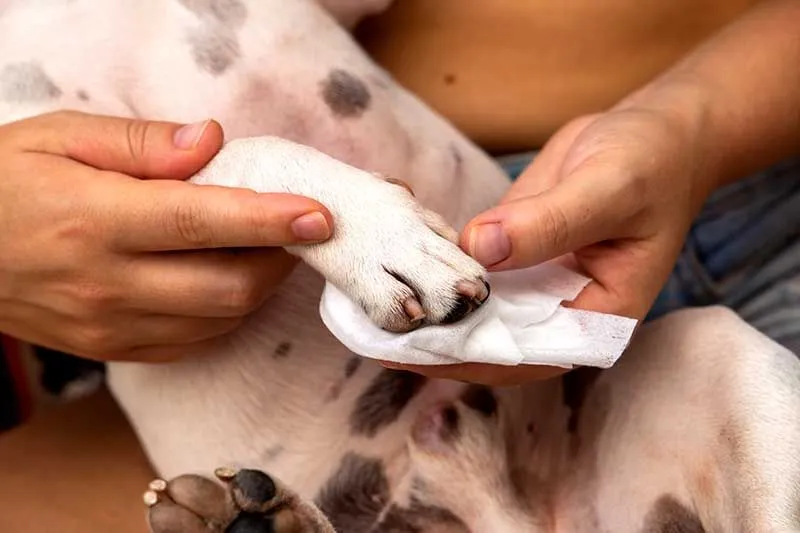
- Check the paws: look between the pads and toes for cuts, thorns, swelling, stuck debris, or broken nails.
- Wipe after walks: clean your dog’s paws after outings to remove allergens, salt, and chemicals that irritate the skin.
- Don’t punish the licking: it’s a symptom, not defiance — scolding an anxious or itchy dog tends to make things worse.
- Treat the cause with your vet: allergy management, parasite control, or wound care depends on the diagnosis, so follow your vet’s plan rather than guessing.
- Address boredom and stress: if licking is a coping habit, more exercise, enrichment, and routine — plus professional help for anxiety — can reduce it.
Reading your dog beyond the licking
Paw-licking sits right at the crossroads of physical and emotional health — it can mean an itch, an injury, or anxiety, and telling those apart is the whole challenge. That’s what Traini is built for: translating your dog’s behavior and emotional signals into plain language so you can understand why a habit has taken hold. When you’re not sure whether your dog’s licking is an allergy or a stress response, you can ask PetGPT about your specific situation and get an answer grounded in your dog’s context — and know when it’s time to see the vet. For more on canine behavior, see our guides on why your dog licks you so much and easing separation anxiety.
Frequently asked questions
Why does my dog keep licking his paws?
Persistent paw-licking is most often caused by allergies, skin irritation, pain or injury, parasites, or anxiety. Because the causes are so varied, constant licking — especially with redness, a smell, or limping — is worth a vet check to pinpoint the reason.
Why does my dog lick his paws at night?
Night-time licking often comes down to itch or discomfort that’s more noticeable when the house is quiet, or to a self-soothing habit as your dog winds down. If it’s disrupting sleep or fixed on one paw, have your vet take a look.
Should I stop my dog from licking his paws?
Gently interrupting and redirecting is fine, but don’t just suppress it — the licking is a signal. The goal is to find and treat the underlying cause (an allergy, a wound, or anxiety) rather than only stopping the behavior.
When should I worry about paw-licking?
See your vet if the licking is constant or obsessive, focused on one paw, or comes with redness, swelling, sores, hair loss, a bad smell, or limping. These point to a physical or behavioral cause that needs treatment.
This article is for general information and isn’t a substitute for professional veterinary or behavioral advice. If your dog’s paw-licking is constant, focused on one paw, or paired with redness, swelling, a smell, or limping, please contact your veterinarian.