
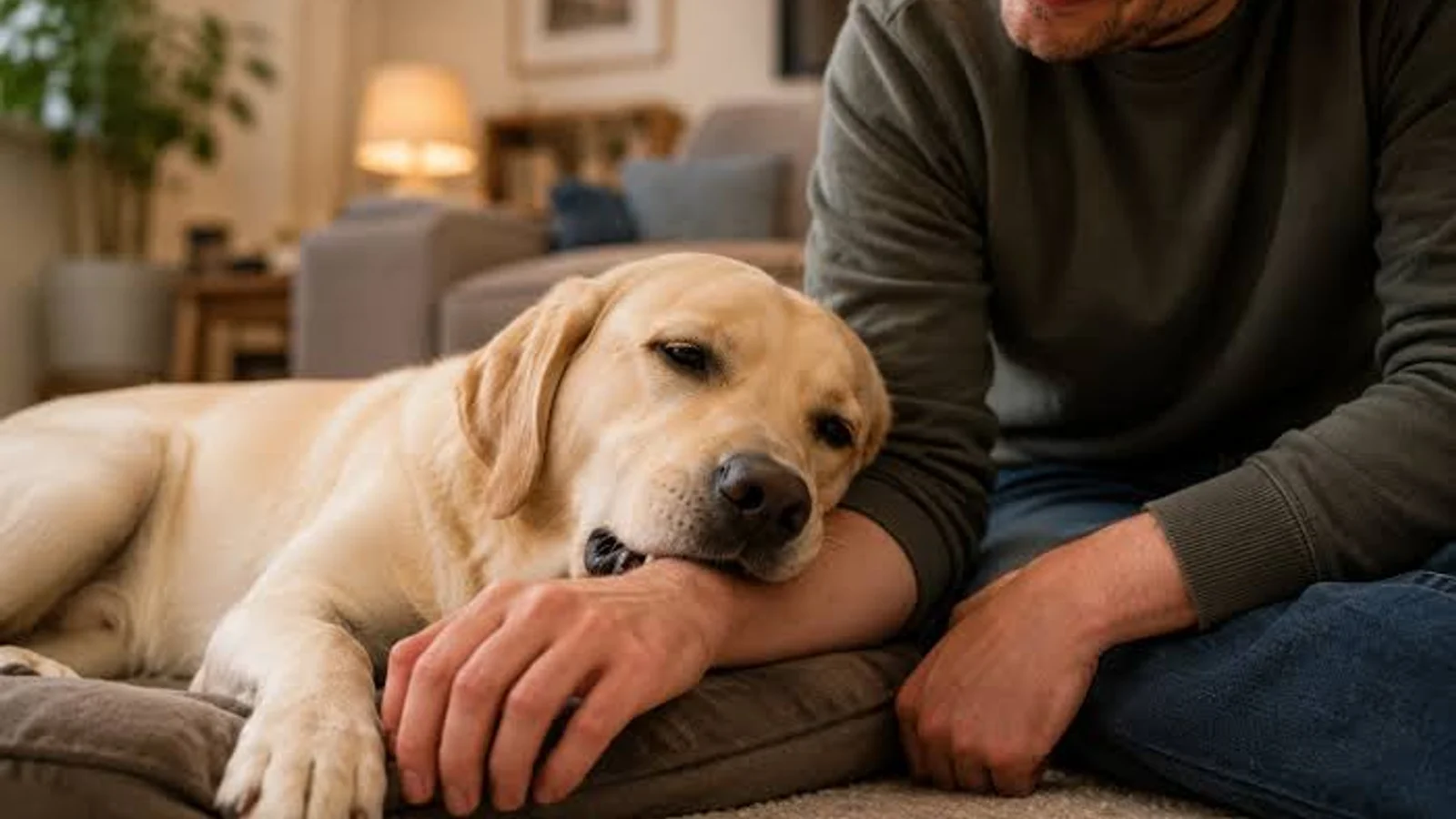
Your dog takes a fold of your sleeve, or the side of your hand, between their front teeth and gives it a soft, rapid little chatter — gentle, almost ticklish, with no real pressure behind it. It can look alarming the first time, but this nibbling is one of the most affectionate things a dog does, and it even has a nickname among dog people: “cobbing,” because it looks exactly like a dog eating corn on the cob.
Here’s what nibbling really means, why dogs do it, and how to tell sweet little love-bites from nibbling you should gently redirect.
Is it normal for my dog to nibble on me?
For most dogs, gentle nibbling is completely normal and usually a sign of affection or playfulness. It uses the front incisors in a soft, controlled way and isn’t meant to hurt — it’s very different from a real bite. It’s only worth a second look when the nibbling becomes hard, obsessive, or comes with clear signs of stress or overstimulation rather than contentment.
The science: nibbling, grooming, and “cobbing”
Much of this behavior traces back to grooming. Dogs groom one another with those small front teeth — a social, bonding activity called allogrooming — and a dog who cobs on you is essentially treating you like a member of their own group. The soft, nibbling “corn-on-the-cob” motion mimics the way a mother dog grooms her puppies and the way bonded dogs nibble each other’s coats. In other words, when your dog nibbles you, they’re often grooming you, and grooming is an act of trust and affection.
Why does my dog nibble on me?
Affection and bonding
The most common reason is love. Cobbing is a social, grooming-rooted behavior, and a dog who gently nibbles your hand, arm, or clothing is usually showing contentment and closeness — the canine equivalent of a fond fuss.
Grooming instinct
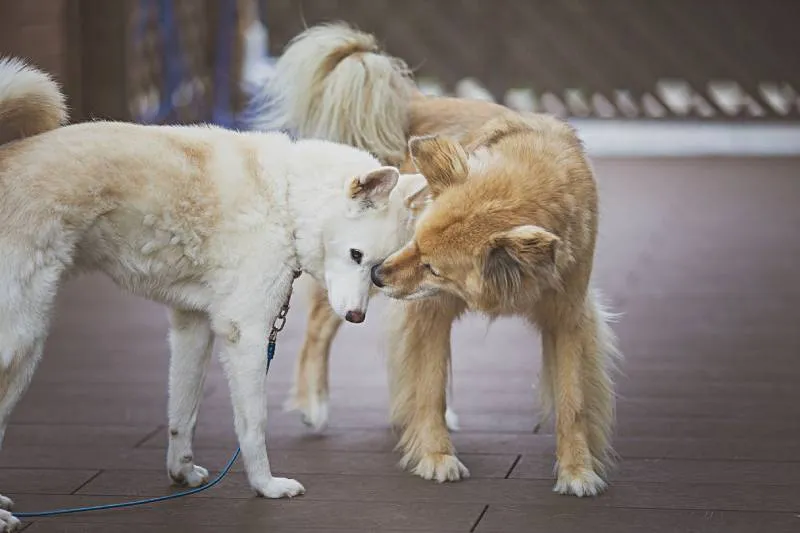
Nibbling is how dogs tidy up — themselves, each other, and sometimes you. If your dog works away at one spot with their front teeth, they may simply be “grooming” you the way they would a packmate.
Play
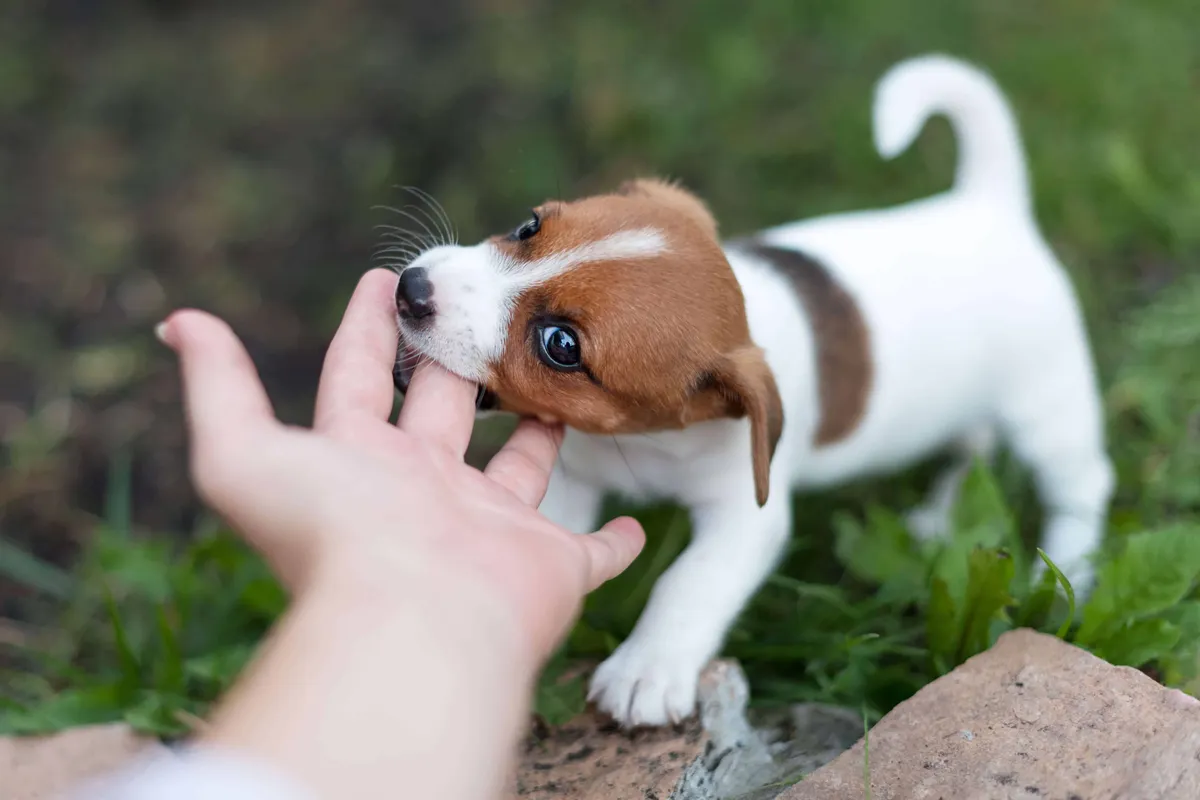
Nibbling is also part of play. During a game, soft mouthing and gentle nibbles are a normal way for dogs to interact, and most dogs naturally keep their bite soft — a skill called bite inhibition that they learn as puppies.
Teething (in puppies)
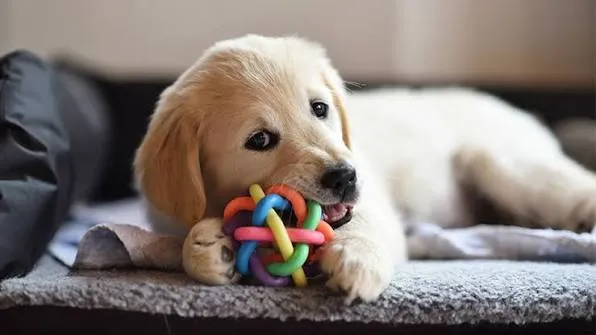
Young puppies explore the world with their mouths and chew to relieve the discomfort of teething. A puppy nibbling on your hands is often just a teething, exploring baby — one who needs to be gently redirected to appropriate chew toys.
Attention-seeking
If a nibble has ever earned a laugh, a cuddle, or a game, your dog may have learned that it gets your attention. Dogs repeat what works, and a soft nibble is an easy way to say “notice me.”
Overstimulation or stress
Nibbling isn’t always contentment. An overstimulated, frustrated, or anxious dog may nibble or mouth more insistently as a way to self-soothe or release tension. Context is everything — the same motion means something different in a loose, happy dog than in a tense one.
Nibbling in specific situations
The gentle “cobbing” chatter
The soft, rapid front-teeth nibble on your skin or clothes, often while your dog is relaxed and leaning into you, is classic affectionate cobbing. A loose body and calm eyes tell you this is a happy, bonding behavior.
Nibbling your clothes or hair
Some dogs fixate on a sleeve, blanket, or lock of hair. This is usually grooming or comfort-seeking — the texture is satisfying — and is harmless as long as it’s gentle and they’re not swallowing fabric.
Nibbling that turns harder
Nibbling that ramps up into firmer mouthing, especially during play, is a sign your dog is getting overexcited. That’s the moment to pause the game and let them settle, so soft nibbling doesn’t tip into using teeth too freely.
When it could signal a problem
Gentle nibbling is rarely a concern, but a few things are worth attention. Watch for nibbling that becomes genuinely hard or painful, obsessive nibbling or licking fixed on one spot (which can point to skin irritation, allergies, or anxiety rather than affection), or nibbling paired with stiff body language, a hard stare, or growling — signs of discomfort or overstimulation rather than love. A sudden change in how or how much your dog mouths you, especially alongside other behavior changes, is worth mentioning to your vet or a qualified trainer.
How to respond to a nibbling dog
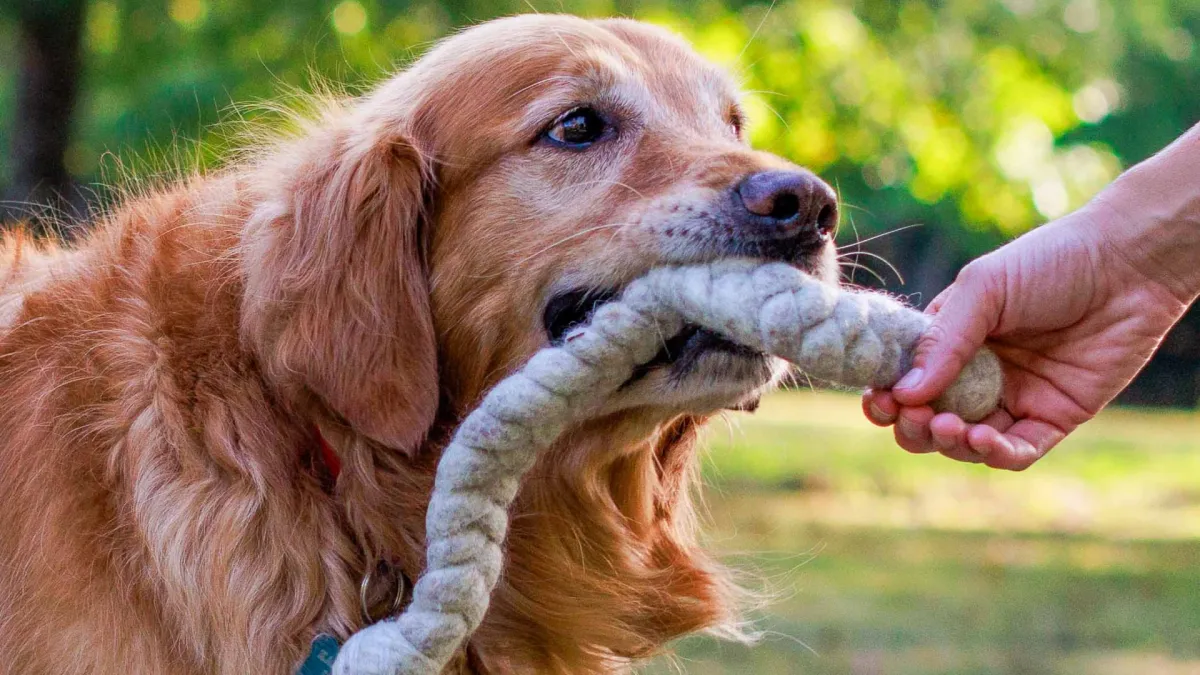
- Enjoy the gentle stuff: soft, affectionate cobbing from a relaxed dog is a compliment — there’s no need to stop it if you don’t mind.
- Redirect when it’s too much: if nibbling gets firm or you’d rather it stopped, calmly offer a chew toy or end the interaction so teeth-on-skin doesn’t become a habit.
- Don’t punish it: scolding an affectionate or anxious nibbler tends to confuse or stress them — redirect to something appropriate instead.
- Help teething puppies: give young dogs plenty of suitable chew toys and gently swap your hand for a toy every time, so they learn what’s fair game.
- Read the whole dog: loose and wiggly means affection; stiff, fixed, or frantic means back off and give them space.
Reading your dog beyond the nibbling
A nibble can mean love, play, or stress, and telling those apart is the entire challenge — the same little chatter of teeth can be a cuddle or a sign your dog has had enough. That’s what Traini is built for: translating your dog’s behavior and emotional signals into plain language so you can understand why they’re doing what they do. When you’re not sure whether your dog’s nibbling is affectionate cobbing or overstimulation, you can ask PetGPT about your specific situation and get an answer grounded in your dog’s context. For more on canine affection, see our guides on why your dog licks you so much and easing separation anxiety.
Frequently asked questions
What is cobbing in dogs?
Cobbing is the name for the gentle, rapid nibbling dogs do with their front teeth, so called because it looks like a dog eating corn on the cob. It’s rooted in social grooming and is usually a sign of affection and contentment.
Why does my dog nibble on me with his front teeth?
The front-teeth nibble is a grooming behavior. Dogs groom each other with their incisors as a bonding activity, so nibbling you with those small front teeth is often your dog “grooming” you as a member of their family.
Is my dog nibbling me out of affection or aggression?
Affectionate nibbling is soft, controlled, and comes with a loose, relaxed body. Nibbling driven by discomfort looks and feels different — harder pressure, stiff body language, a hard stare, or growling. Read the whole dog, not just the teeth.
How do I stop my dog from nibbling too hard?
Calmly pause the interaction or the game the moment nibbling gets firm, and redirect your dog to a chew toy. Consistently ending the fun when teeth get too strong teaches your dog to keep their mouth gentle, without any need for punishment.
This article is for general information and isn’t a substitute for professional veterinary or behavioral advice. If your dog’s nibbling becomes hard, obsessive, or is paired with stiff body language, growling, or other changes in behavior, please contact your veterinarian or a qualified trainer.