
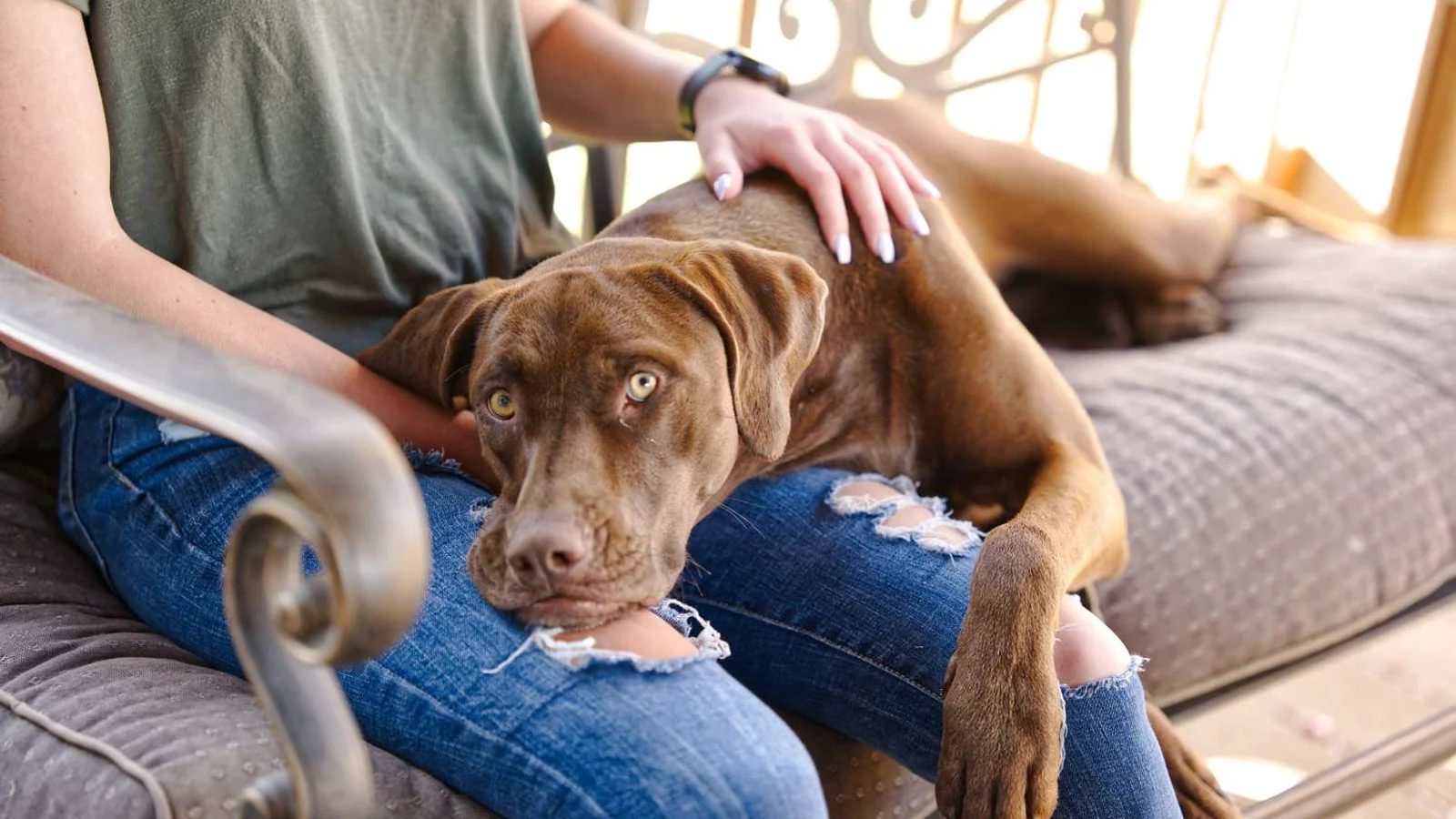
You sit down on the sofa and, within seconds, your dog climbs up and plants themselves squarely on top of you — all forty pounds of them, perfectly content, as if your lap were the only reasonable place in the house to be. For a lot of dog owners this is a daily ritual, and most of the time it’s a warm, slightly squashing sign of just how bonded your dog is to you.
Here’s what it really means when your dog sits on you, why some dogs do it more than others, and the rare times it’s worth paying closer attention.
Is it normal for my dog to sit on me?
Yes — for most dogs, sitting on or leaning into their favorite person is completely normal and usually a good sign. Dogs are social animals that seek closeness with the people they trust, and physical contact is one of the simplest ways they stay connected and feel safe. It only becomes something to look at more closely when it’s paired with signs of stress, when it’s new and out of character, or when it tips into behavior you can’t interrupt at all.
The science: why dogs seek physical closeness
Dogs are one of the few species that form deep attachment bonds with humans, and research comparing the dog-owner relationship to a child-parent bond describes you as a “secure base” — a source of comfort your dog returns to when they want to feel safe. Pressing their body against you, or settling right on top of you, is a direct way of drawing on that bond. There’s a physical layer too: close contact with a trusted person is calming, and body heat and a steady heartbeat are genuinely soothing to a dog winding down.
Why does my dog sit on me?
Affection and bonding
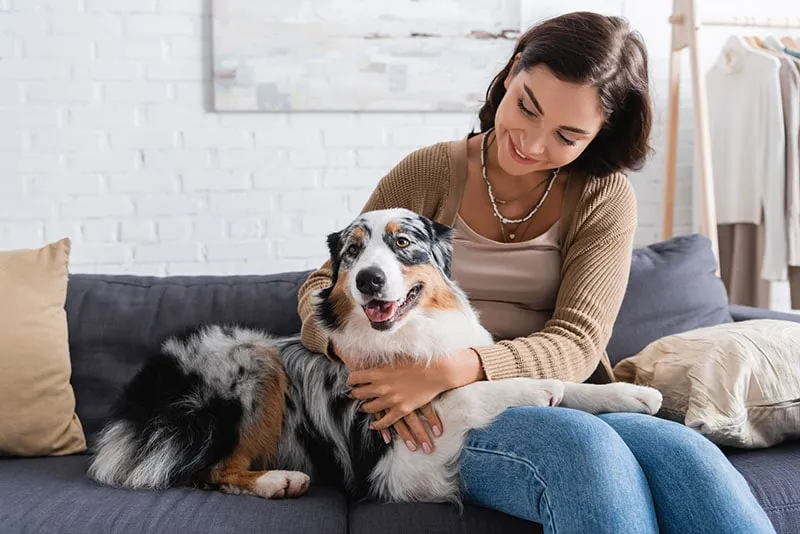
The simplest and most common reason is love. Sitting on you is about as clear a statement of attachment as a dog can make — they’d rather be touching you than resting anywhere else in the room, and the closeness feels good to both of you.
Comfort and security
You are your dog’s safe place. Settling onto you can be a way of feeling protected and reassured, especially in a busy household, during a thunderstorm, or around unfamiliar people. The contact tells your dog that all is well.
Warmth

Dogs are drawn to warmth, and a person is a reliable source of it. Smaller breeds and thin-coated dogs in particular may climb onto you simply because you’re the coziest spot available.
Attention-seeking
If sitting on you has reliably earned petting, talking, or eye contact, your dog has learned that it works. Dogs repeat what pays off, and a lapful of dog is a very effective way to get your attention.
Scent and belonging
Dogs are deeply scent-driven, and being close to you lets them mix their scent with yours. For a social animal, sharing scent is part of belonging to the same group — it’s less about “claiming” you and more about feeling like one unit.
Anxiety or insecurity
Sometimes the drive to be on top of you comes from unease rather than contentment. An anxious, newly adopted, or under-socialized dog may seek constant body contact for reassurance. If your dog can only settle when they’re physically on you and becomes distressed otherwise, anxiety may be part of the picture.
Sitting on you in specific situations
On your lap
The classic lap-sit is usually pure affection and comfort-seeking, and in smaller dogs it’s often simply their favorite resting spot. A relaxed dog who sighs and settles is enjoying your company, nothing more.
On your feet
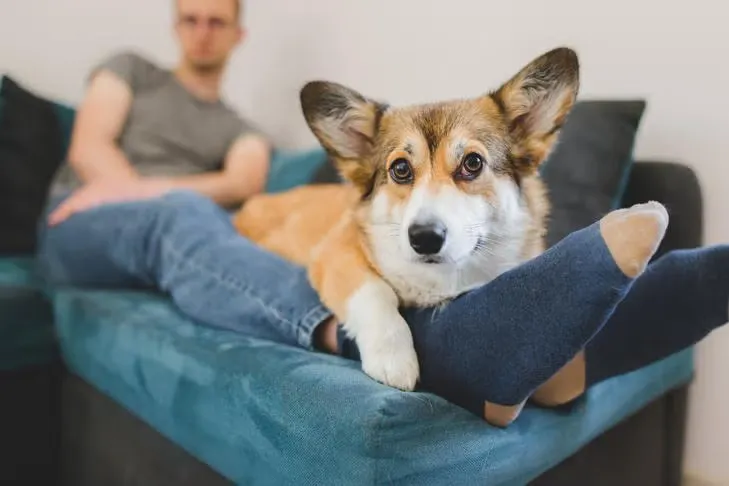
A dog who parks themselves on or against your feet is staying connected while keeping an eye on the room. For many dogs it’s a low-key way of being close and knowing the moment you get up to move.
Only when guests are over
If your dog mostly climbs onto you when visitors arrive, they may be looking for reassurance in a situation that feels a little overwhelming. Treat it as a request for security rather than a demand, and give them a calm, safe spot to retreat to.
When it could signal a problem
Sitting on you is only a concern when it comes with distress rather than contentment. Watch for clinginess that’s paired with pacing, panting, trembling, or an inability to settle unless they’re touching you; a dog who panics the moment you move away; or a sudden new need to be on top of you alongside other changes like reduced appetite, lethargy, or signs of pain. Any abrupt, out-of-character shift — especially in an older dog — is worth a quick word with your vet, since sudden clinginess can occasionally point to discomfort or age-related changes rather than simple affection.
How to respond to a dog who sits on you
- Enjoy it if you both like it: there’s nothing wrong with a dog who wants to be close, and affectionate, relaxed contact is good for your bond.
- Set gentle limits if you need them: if a large dog on your lap isn’t practical, teach an alternative — reward them for settling in their own bed right beside you instead.
- Don’t reward pushy demands: if the sitting is really insistent attention-seeking, calmly wait for a quieter moment to give affection so you’re not reinforcing the pushiness.
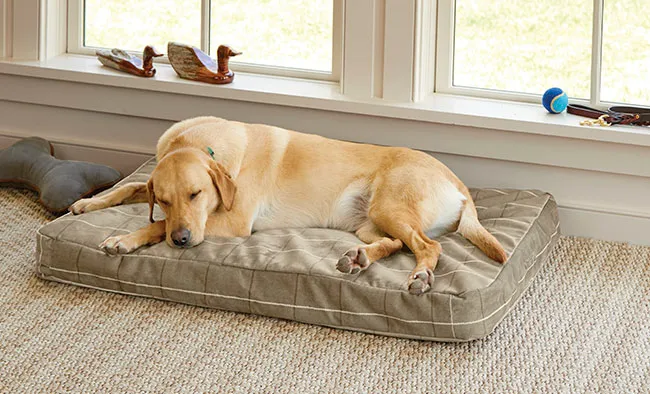
- Give a cozy alternative: a warm, comfortable bed your dog genuinely likes gives them a second-best spot when your lap isn’t available.
- Watch for distress, not just closeness: if the behavior looks anxious rather than content, address the underlying worry rather than just the sitting.
Reading your dog beyond the sitting
A dog sitting on you is one line in a much bigger conversation about how they feel — secure and affectionate, or anxious and in need of reassurance. Telling those two apart is the whole point. That’s what Traini is built for: translating your dog’s behavior and emotional signals into plain language so you can understand why they’re acting a certain way. When you’re not sure whether your dog’s need to be on top of you is happy attachment or anxiety, you can ask PetGPT about your specific situation and get an answer grounded in your dog’s context. For more on canine closeness, see our guides on why your dog follows you everywhere and easing separation anxiety.
Frequently asked questions
Why does my dog sit on me and not anyone else?
Dogs usually choose the person they feel most bonded to and safest with — often whoever feeds, walks, and spends the most time with them. Sitting on you rather than others is a sign you’re your dog’s chosen source of comfort and security.
Is my dog sitting on me to show dominance?
Almost always, no. The old idea that lap-sitting is a dog “asserting dominance” has largely been set aside by modern behavior science. Sitting on you is far more likely to be about affection, comfort, warmth, and reassurance than control.
Why does my dog sit on me when I’m lying down?
Many dogs gravitate to you most when you’re still and relaxed, because that’s when you’re most available for closeness. Lying down is an invitation your dog is happy to accept — it’s comfort-seeking and bonding.
Should I let my dog sit on me?
If you both enjoy it and the dog is a comfortable size, there’s no harm in it. If it’s not practical or the contact feels anxious rather than relaxed, it’s perfectly fine to teach your dog to settle beside you instead, with their own cozy spot.
This article is for general information and isn’t a substitute for professional veterinary or behavioral advice. If your dog’s need for contact is sudden, frantic, or paired with distress when you move away or other changes in behavior, please contact your veterinarian.