

No — dogs should never eat raisins or grapes. Both are toxic to dogs and can cause sudden kidney failure, even in very small amounts. There is no known safe dose, and no way to predict which dogs will react, so every raisin counts as a potential emergency. If your dog has eaten any, call your vet or an animal poison control line immediately — fast treatment makes a real difference.
Raisins are especially easy to overlook because they hide in everyday foods — cookies, trail mix, cereal, hot cross buns. If your dog snagged something off the counter, the sooner you act, the better the outcome, and below we’ll explain exactly why and what to do.
Why are raisins toxic to dogs?
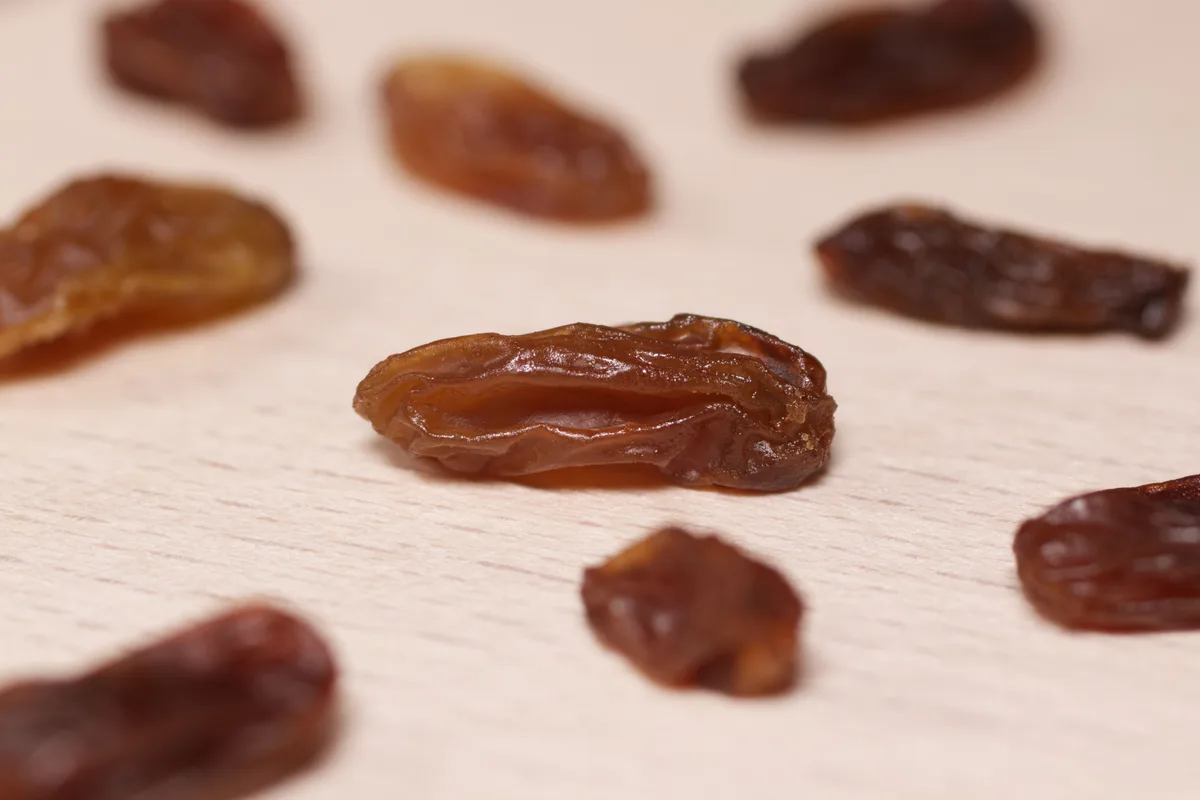
Raisins are simply dried grapes, so they carry the same toxin in an even more concentrated form. The exact substance responsible is still being studied, but recent research points to tartaric acid, which some dogs can’t process. What’s known for certain is the effect: raisins and grapes can trigger acute kidney failure in dogs, sometimes within a day or two of eating them.
How many raisins are dangerous?
This is what makes raisins so frightening: there’s no reliable safe amount. Some dogs eat a handful with no obvious effect, while others develop kidney failure from just a few — and there’s currently no way to know in advance which dog is which. Because raisins are more concentrated than grapes, the risk per piece is higher. The only safe approach is to treat any amount as potentially toxic and act quickly.
Foods that often contain raisins
Many poisonings happen because an owner didn’t realize a food contained raisins:
- Cookies, oatmeal bars and baked goods
- Trail mix and snack mixes
- Cereal and granola
- Hot cross buns, fruit cake, scones and malt loaf
- Some chocolate-covered snacks (a double danger)

Symptoms of raisin poisoning in dogs
Signs can start within hours and progress over a day or two as the kidneys are affected:
- Vomiting (often the first sign, sometimes with raisin pieces in it)
- Diarrhea and belly tenderness
- Lethargy, weakness and loss of appetite
- Increased thirst and either more or less urination
- Dehydration, bad breath with an ammonia smell, and in severe cases, no urine at all
By the time kidney-failure signs are obvious, damage may already be done — which is why you shouldn’t wait for symptoms before calling.
What to do if your dog ate raisins
- Call immediately: contact your vet or an animal poison control line the moment you know, even if your dog seems completely fine. This is a genuine emergency.
- Act fast: if caught early, your vet may be able to induce vomiting and give treatment to protect the kidneys before the toxin is absorbed.
- Bring the details: tell them roughly how many, when, and your dog’s weight.
- Don’t wait and see — the window where treatment is most effective is early.

Safe treats to offer instead
Plenty of fruits make great, safe snacks in place of grapes and raisins. Our guides on blueberries, strawberries and apples cover sweet, dog-friendly options you can share without worry.
Reading your dog beyond the food bowl
After eating something toxic, a dog often shows subtle changes — drooling, restlessness, going quiet, or turning away from food — before the serious symptoms arrive. Traini’s AI dog translator helps you read those early behavioral and emotional cues, so you can act on a worrying change rather than second-guess it. For more on foods to avoid, see our guide on whether dogs can eat onions.
Frequently asked questions
My dog ate one raisin — should I worry?
Yes, take it seriously. Because there’s no known safe dose and dogs vary enormously in sensitivity, even a single raisin is worth a call to your vet or a pet poison line. They’ll advise based on your dog’s size and how many were eaten — it’s always better to check.
Are grapes as dangerous as raisins?
Both are toxic, but raisins are dried and more concentrated, so piece for piece they can carry more of the toxin. Grapes, raisins, currants and sultanas should all be treated as dangerous to dogs.
How quickly do symptoms appear?
Vomiting can start within a few hours, with signs of kidney trouble developing over the next 24 to 72 hours. Because early treatment is most effective, you shouldn’t wait for symptoms — call as soon as you know your dog ate raisins.
Why are raisins toxic to dogs but not people?
Dogs appear to process a compound in grapes and raisins — likely tartaric acid — very differently from humans, and some individuals can’t handle it at all. The result is a risk of kidney damage that doesn’t exist for most people, which is why a snack that’s harmless to you can be dangerous for your dog.
This article is for general information and isn’t a substitute for professional veterinary advice. If your dog has eaten grapes, raisins, currants or sultanas, contact your veterinarian or an animal poison control line immediately.