
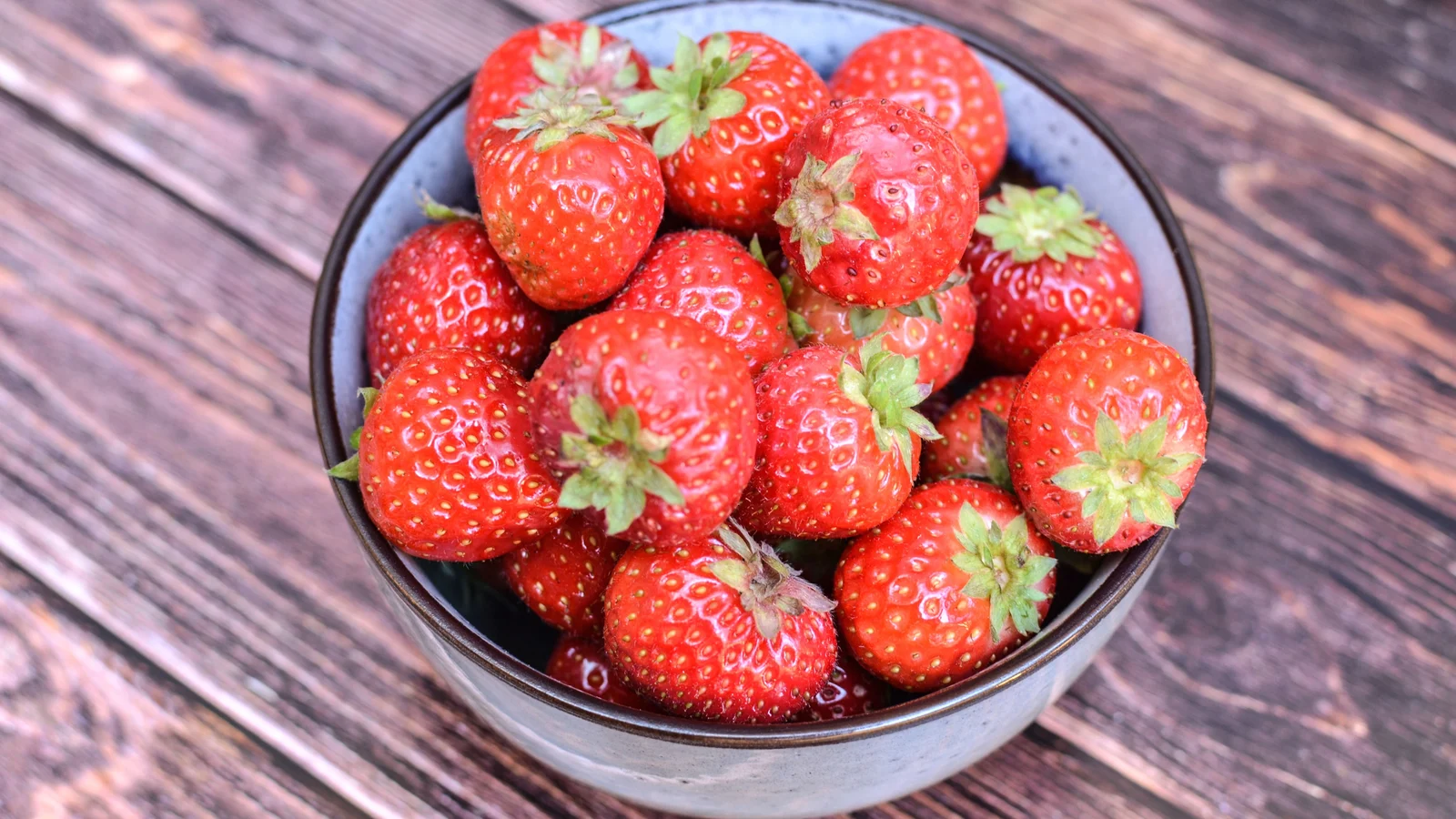
Few fruits say “summer” like a bowl of ripe strawberries, and if your dog is giving you the hopeful stare while you snack, you’re probably wondering whether it’s safe to share. Good news: strawberries are one of the healthier fruit treats you can offer a dog. The things to get right are keeping them plain, cutting them down to size, and not overdoing the sugar.
Here’s what to know about dogs and strawberries — the benefits, the few ways they can go wrong, how much is sensible, and how to serve them safely.
Can dogs eat strawberries?
Yes. Strawberries are non-toxic and safe for dogs in moderation. Fresh, plain strawberries make a sweet, vitamin-rich, low-calorie treat that most dogs enjoy. The cautions are practical rather than toxic: strawberries are high in natural sugar, so they’re a treat and not a daily staple, and a whole berry can be a choking hazard for a small dog, so it’s best to cut them into pieces. What you want to avoid is the sugary stuff strawberries often come in — canned berries in syrup, chocolate-covered strawberries, or anything sweetened with xylitol, which is toxic to dogs.
Are strawberries good for dogs?
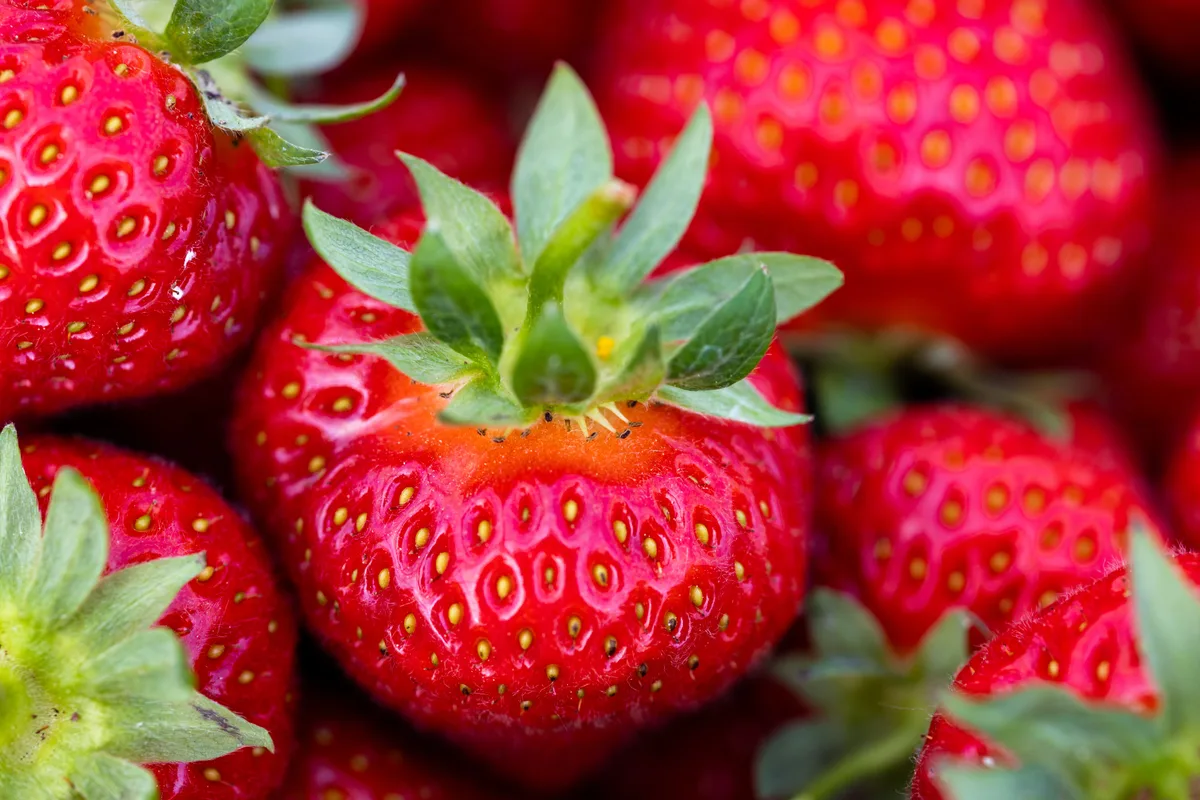
In small amounts, they genuinely are:
- Vitamin C and antioxidants: strawberries are rich in vitamin C and antioxidants that support the immune system and help fight free radicals.
- Fiber and low calories: they provide fiber to aid digestion while staying low in calories, making them a smart treat for most dogs.
- Hydrating and rich in minerals: their high water content is refreshing, and they offer potassium, manganese, and folate.
- A teeth-whitening myth, with a grain of truth: strawberries contain malic acid, sometimes said to help whiten teeth — it’s no substitute for brushing, but it’s a harmless bonus.
For a dog with a sweet tooth, a few berries are a wholesome way to indulge it.
When strawberries can be a problem

Natural sugar
Strawberries are sweet because they’re high in natural sugar. For most dogs an occasional few berries are fine, but large amounts can cause an upset stomach, and the sugar matters more for dogs that are overweight or diabetic — check with your vet before offering them to a dog on a restricted diet.
Choking and size
A whole strawberry is about the size of a small dog’s throat. Cut berries into bite-sized pieces, or mash them, so they’re easy to swallow — especially for small breeds and enthusiastic gulpers.
Sugary and processed versions
Plain and fresh is the rule. Skip canned strawberries in syrup, strawberry-flavored sweets, chocolate-covered berries, and anything containing xylitol or added sugar. These add risks that a fresh berry doesn’t carry.
Too much, too fast
As with any new food, introducing a lot at once can cause gas, loose stool, or vomiting. Start with a small amount and see how your dog’s stomach handles it.
How many strawberries can a dog eat?
Follow the 10% rule: treats, strawberries included, should make up no more than 10% of your dog’s daily calories. As a rough guide, that’s around one cut-up strawberry for a small dog and up to four or five for a large dog, offered occasionally rather than daily. Introduce them gradually, keep portions modest because of the sugar, and always serve them cut into manageable pieces.
How to feed strawberries to your dog

- Wash them well: rinse to remove dirt and any pesticide residue.
- Remove the stem and leaves: take off the green top and cut the berry into bite-sized pieces.
- Mash for small dogs: mashing or pureeing makes strawberries easy and safe for little dogs to swallow.
- Serve them plain: no sugar, syrup, chocolate, or whipped cream.
- Freeze for a summer treat: frozen strawberry pieces make a cool, crunchy snack on a hot day — just mind very small dogs and sensitive teeth.
- Use as a topper or in a puzzle toy: a few mashed berries mixed into food or frozen into a toy make a nice low-calorie reward.
What if my dog ate a lot of strawberries?
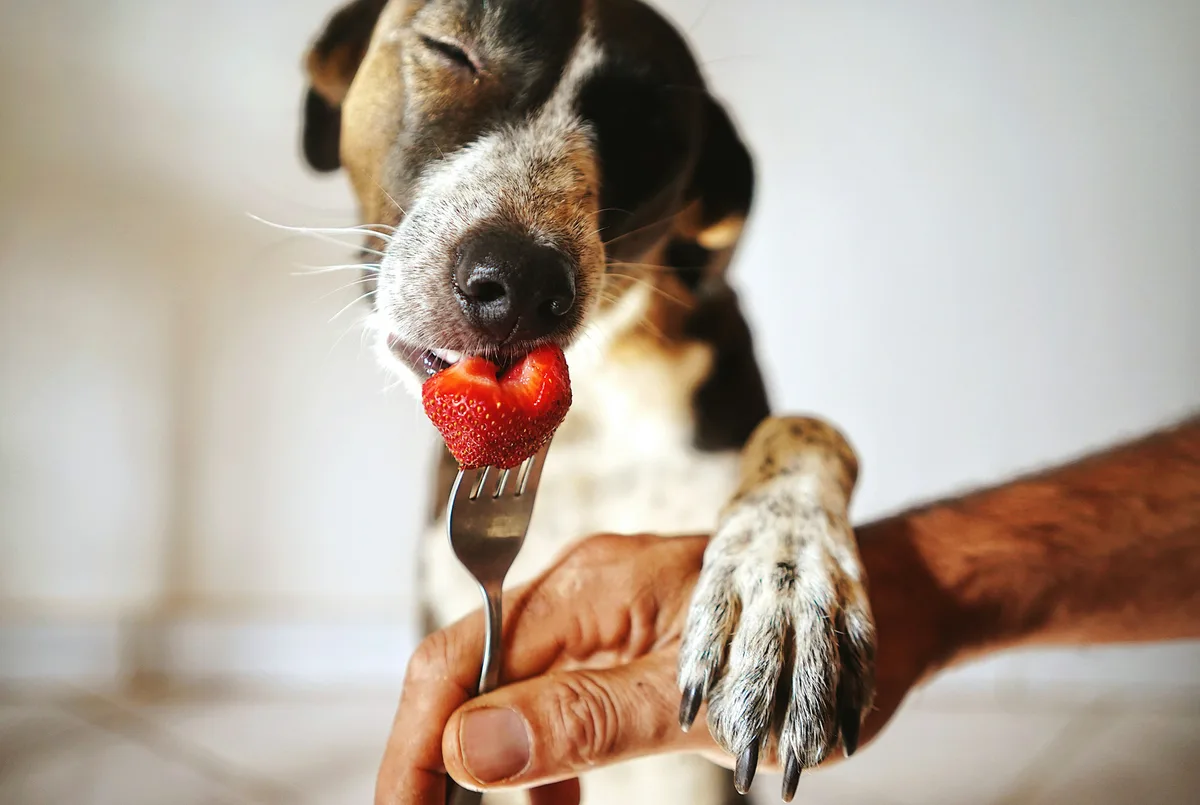
Strawberries aren’t toxic, so a dog that raided more than intended is unlikely to be in danger — the most probable result is an upset stomach, gas, vomiting, or loose stool from the sugar and fiber. Keep fresh water available and watch for ongoing vomiting or diarrhea over the next day. Two situations deserve more attention: a small dog that swallowed a whole berry and is choking (coughing, gagging, pawing at the mouth, or struggling to breathe) is an emergency — contact your vet right away; and a dog that got into chocolate-covered strawberries or a xylitol-sweetened product needs a vet call immediately, because those ingredients, not the fruit, are the real danger. When in doubt about how your dog is doing, a quick call to your vet is always reasonable.
Reading your dog beyond the treat
Choosing safe snacks is one piece of caring for a dog; understanding what they’re asking for is another. Dogs tell us a lot — about hunger, excitement, and how they’re feeling — and learning to read those cues is what Traini is built for: translating your dog’s behavior and signals into plain language so you can respond with confidence. When your dog is begging nonstop or seems unsettled after trying something new, you can ask PetGPT about your specific situation. For more on healthy snacks and the fruit bowl, see our guides on watermelon, celery, and green beans.
Frequently asked questions
Can dogs eat strawberry tops and leaves?
The green tops and leaves aren’t toxic, but they’re fibrous and hard to digest and offer little benefit. It’s best to remove them and offer just the fruit, cut into pieces.
Can dogs eat frozen strawberries?
Yes. Plain frozen strawberries make a refreshing hot-weather treat. Cut them into pieces first, and go easy with small dogs or dogs with dental issues, since frozen fruit is hard.
Can dogs eat strawberry yogurt or strawberry ice cream?
It’s best to skip them. Strawberry-flavored products are usually high in sugar and may contain xylitol, which is toxic to dogs. A little plain, unsweetened yogurt with a few fresh strawberry pieces is a safer homemade alternative.
How many strawberries can a dog have in a day?
Keep it to the 10% rule — roughly one cut-up berry for a small dog and up to four or five for a large dog, as an occasional treat rather than every day. Because of the natural sugar, less is better for overweight or diabetic dogs.
This article is for general information and isn’t a substitute for professional veterinary advice. If your dog is choking, or shows persistent vomiting, diarrhea, or other concerning symptoms after eating strawberries — or has eaten a chocolate-covered or xylitol-sweetened product — please contact your veterinarian.