

On a hot afternoon, few things look more tempting to a dog than the slice of watermelon in your hand. The good news is that watermelon is one of the best warm-weather treats you can share — it’s safe, hydrating, and low in calories. The catch is in the parts you don’t eat: the seeds and the rind. Get rid of those, and watermelon is a refreshing snack most dogs love.
Here’s what to know about dogs and watermelon — the benefits, the parts to avoid, how much is sensible, and how to serve it safely.
Can dogs eat watermelon?
Yes — the flesh of a watermelon is non-toxic and safe for dogs, and it’s often recommended as a healthy, hydrating treat. The important qualifier is seedless and rind-free: the seeds can cause an intestinal blockage, especially in small dogs, and the tough green rind is hard to digest and can also cause a blockage or stomach upset. Serve plain, deseeded watermelon flesh in moderation and it’s a wholesome snack; skip the seeds, the rind, and any watermelon-flavored candy or products, which are loaded with sugar and sometimes xylitol.
Is watermelon good for dogs?
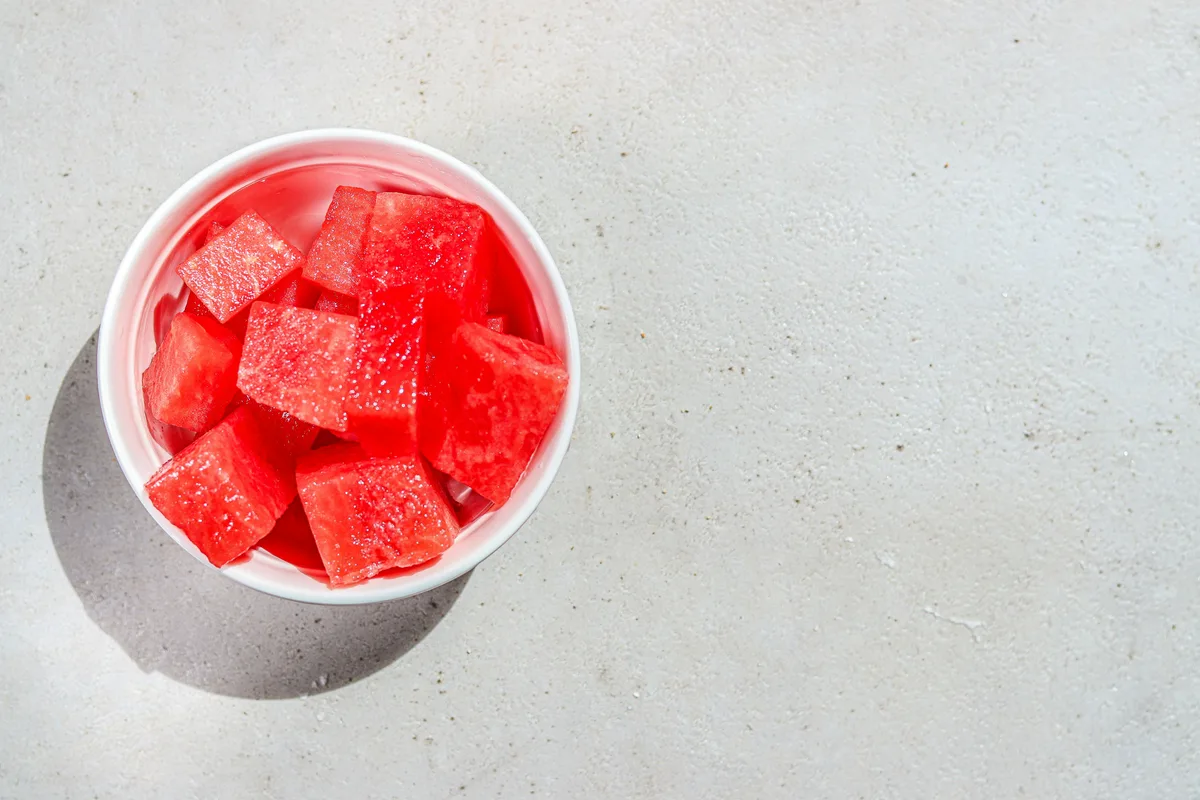
It’s one of the more nutritious fruit treats, especially in summer:
- Hydrating: watermelon is about 92% water, which makes it a refreshing way to help a dog stay hydrated on a hot day.
- Low in calories: it’s light and fat-free, so it’s a guilt-free treat for most dogs, including those watching their weight.
- Vitamins and antioxidants: it provides vitamins A, B6, and C, plus potassium and the antioxidant lycopene.
- Fiber: a modest amount of fiber supports healthy digestion.
For a dog panting in the heat, a few cold watermelon cubes are about as refreshing as treats get.
When watermelon can be a problem
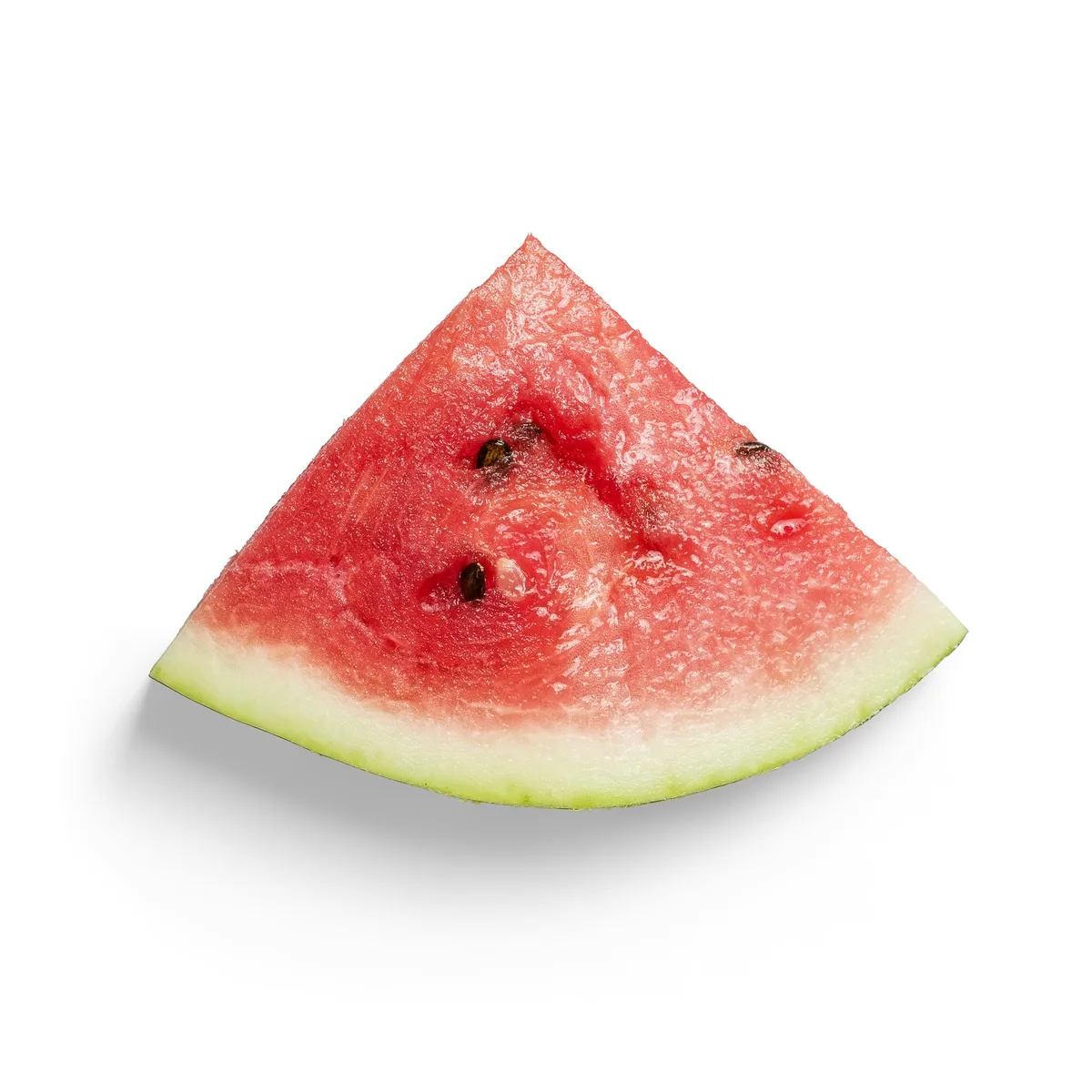
The seeds
Watermelon seeds are the main hazard. A stray seed or two will usually pass without trouble, but a mouthful can cause an intestinal blockage, particularly in small dogs. Use seedless watermelon, or pick out the seeds before serving.
The rind
The green rind — and the pale flesh closest to it — is tough and difficult to digest. Dogs that chew or swallow rind can end up with a stomach upset, or in the worst case a blockage. Cut the flesh away from the rind and don’t let your dog gnaw the peel.
Too much at once
Watermelon’s water and natural sugar mean a large serving can cause diarrhea or a loose, upset stomach. It’s a treat, not a meal — keep portions modest, especially the first time.
Processed “watermelon” products
Watermelon-flavored candy, gum, and sweets are not the same as fruit. They’re high in sugar and may contain xylitol, which is toxic to dogs. Stick to fresh watermelon only.
How much watermelon can a dog eat?
Follow the 10% rule: treats, watermelon included, should be no more than 10% of your dog’s daily calories. In practice that’s a few small cubes for a little dog and a small handful for a large one, offered occasionally. Introduce it gradually and watch how your dog’s stomach handles the water and sugar — too much at once is the usual cause of loose stool.
How to feed watermelon to your dog
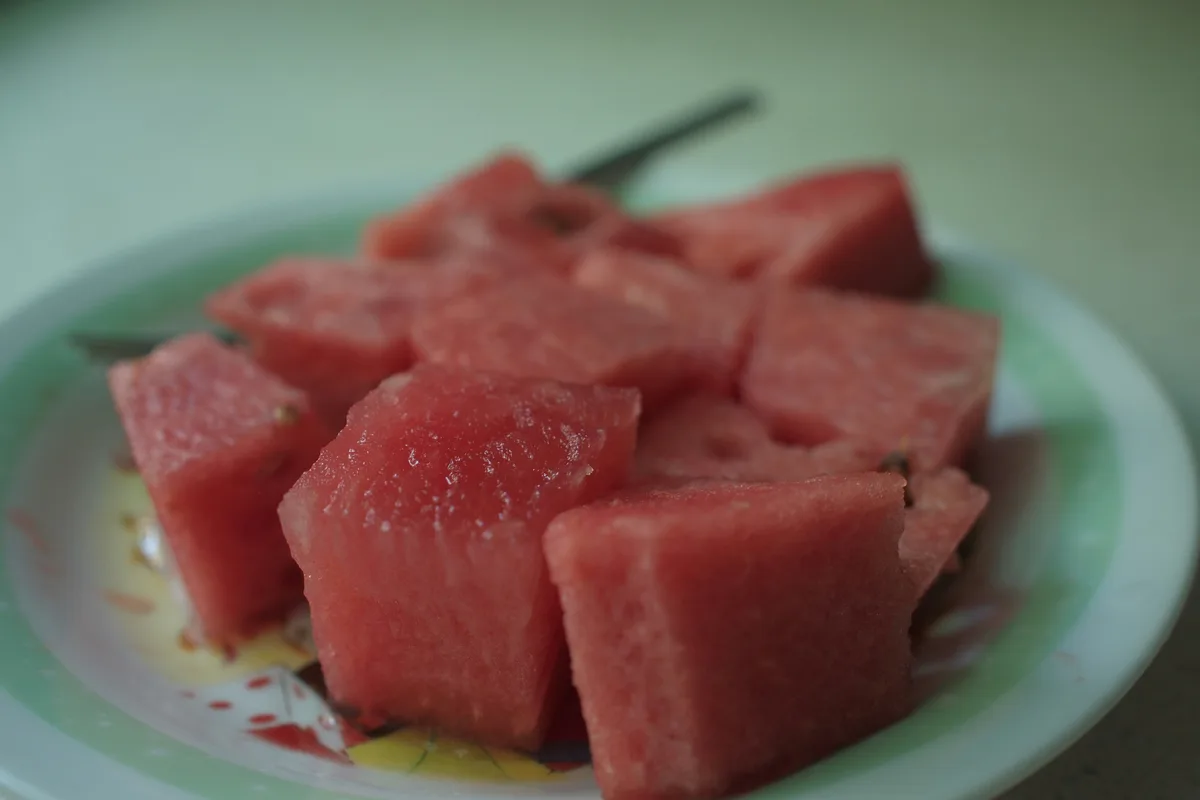
- Remove all the seeds: use seedless watermelon, or pick out every seed before serving.
- Cut away the rind: offer only the soft red flesh, never the green peel.
- Cut into bite-sized cubes: small pieces are easy to chew and swallow.
- Serve it plain: no salt, sugar, or syrup.
- Freeze it for summer: frozen watermelon cubes make a cooling treat on a hot day — go easy with small dogs and sensitive teeth.
- Blend it into a frozen snack: puree seedless, rind-free flesh and freeze in a puzzle toy or ice tray for a longer-lasting reward.
What if my dog ate watermelon seeds or rind?

Don’t panic over a few seeds — a small number will usually pass through without any problem, and the flesh itself isn’t toxic. The concern is quantity: a dog that swallowed a lot of seeds, or chewed through a chunk of rind, can be at risk of an intestinal blockage. Watch for signs over the next day or two — vomiting, loss of appetite, straining or failing to poop, lethargy, or a tender, bloated belly — and contact your vet promptly if any appear, as a blockage can become an emergency. A dog that simply ate a bit too much plain flesh is more likely to just have a loose stomach; keep water available and let it settle. When in doubt about how your dog is doing, a quick call to your vet is always reasonable.
Reading your dog beyond the treat
Choosing safe snacks is one piece of caring for a dog; understanding what they’re asking for is another. Dogs tell us a lot — about thirst, heat, and how they’re feeling — and learning to read those cues is what Traini is built for: translating your dog’s behavior and signals into plain language so you can respond with confidence. When your dog is panting hard in the heat or seems unsettled after a new treat, you can ask PetGPT about your specific situation. For more on healthy snacks and the fruit bowl, see our guides on strawberries, celery, and potatoes.
Frequently asked questions
Can dogs eat watermelon seeds?
It’s best they don’t. A stray seed or two will usually pass, but a mouthful of seeds can cause an intestinal blockage, especially in small dogs. Use seedless watermelon or remove the seeds before serving.
Can dogs eat watermelon rind?
No. The tough green rind is hard to digest and can cause a stomach upset or a blockage. Offer only the soft red flesh and keep the peel away from your dog.
Can dogs eat frozen watermelon?
Yes. Seedless, rind-free frozen watermelon cubes make a great cooling treat in hot weather. Go easy with very small dogs or dogs with dental issues, since frozen fruit is hard.
Is watermelon good for dogs in the heat?
It can be a helpful, refreshing treat because it’s about 92% water. It’s a nice supplement on a hot day, but it isn’t a replacement for fresh drinking water — always make sure your dog has plenty of that available.
This article is for general information and isn’t a substitute for professional veterinary advice. If your dog has eaten watermelon seeds or rind and shows vomiting, loss of appetite, straining to poop, lethargy, or a bloated belly, please contact your veterinarian.