
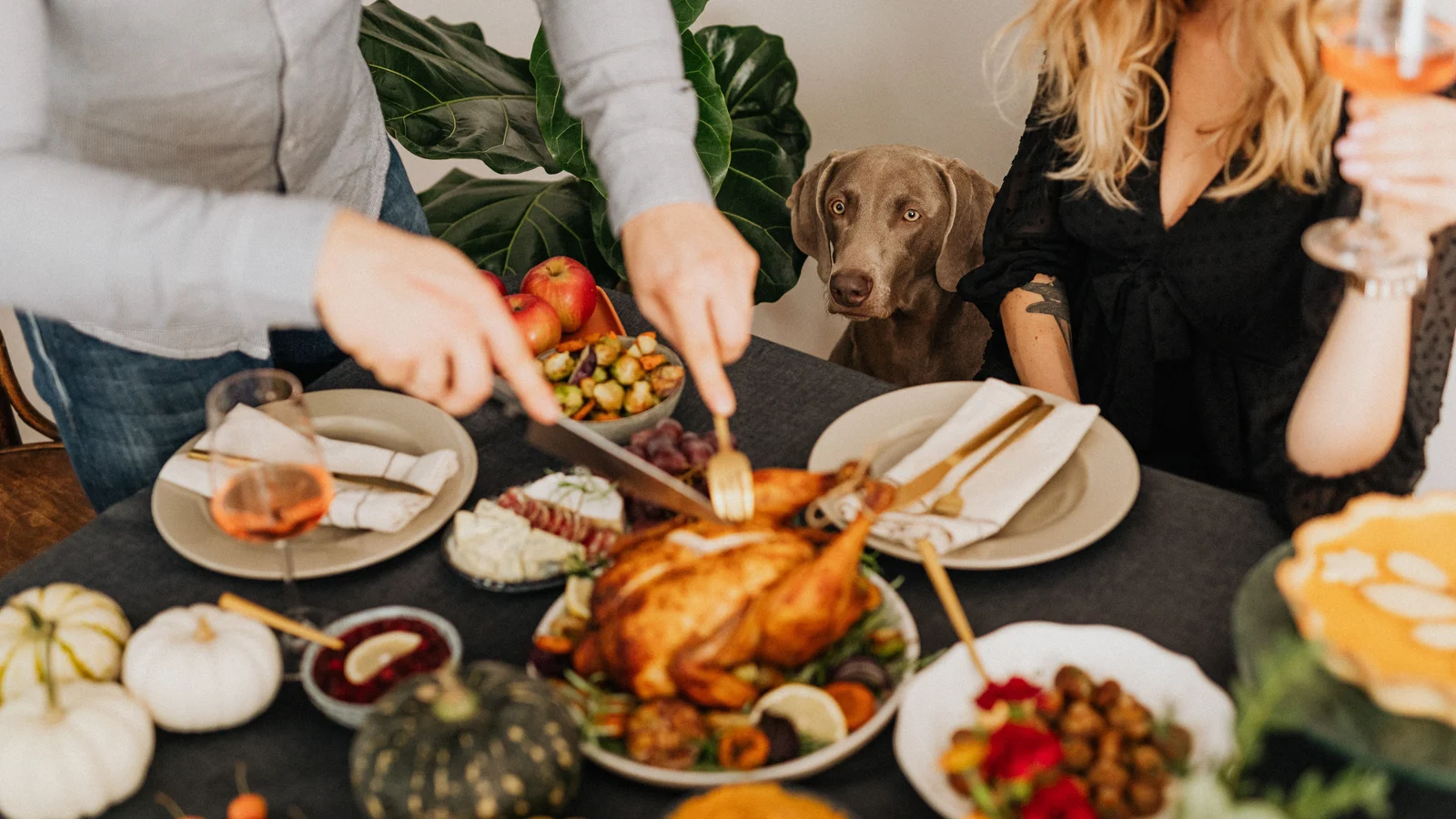
The Thanksgiving turkey is out of the oven, the whole family is gathered around the table — and so is your dog, parked hopefully by your chair with the most convincing “I’ve never been fed in my life” stare they can manage. It’s tempting to slip them a piece, and the good news is that plain turkey is one of the safer human foods for dogs. But how you share it matters enormously, because the way turkey usually appears on a holiday table comes with real hazards.
Here’s exactly when turkey is safe for your dog, when it becomes dangerous, how much is sensible, and what to watch for if they manage to steal something they shouldn’t.
Can dogs eat turkey?
Yes — in most cases dogs can safely eat turkey, and it’s actually a common ingredient in commercial dog food. The key word is plain: cooked, unseasoned, skinless, boneless turkey meat is a lean, high-protein treat that’s fine for most healthy dogs in moderation. The problems start when turkey comes with everything a holiday bird usually carries — bones, fatty skin, salt, butter, garlic, onion, and rich seasonings. So the meat itself is safe; the way it’s typically served often isn’t.
Is turkey good for dogs?
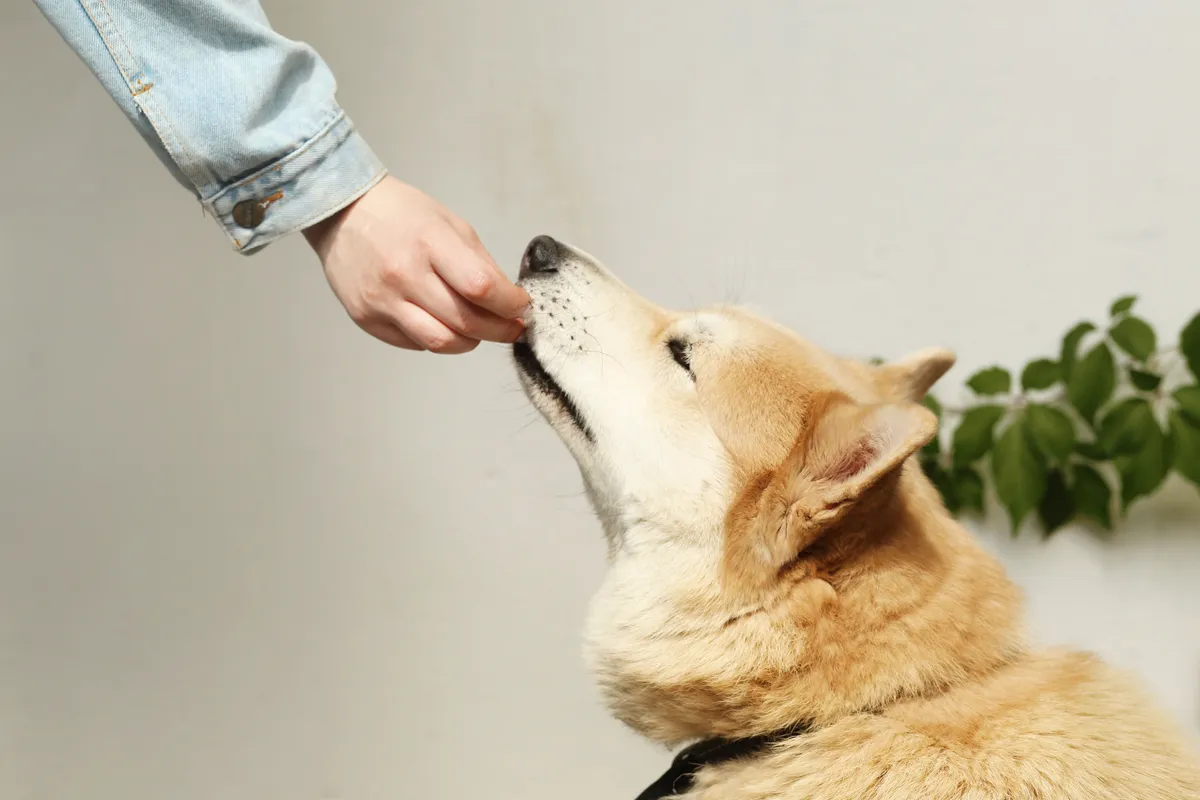
Plain turkey has genuine nutritional value for dogs. It’s an excellent source of lean protein, which supports muscle, skin, and coat health, and it’s relatively low in fat when the skin is removed. Turkey also provides nutrients like riboflavin and phosphorus, and because it’s easy to digest, it’s often recommended as part of a bland diet for dogs recovering from an upset stomach. For a healthy dog, a few bites of plain cooked turkey is a perfectly good, protein-rich treat.
When turkey is dangerous for dogs
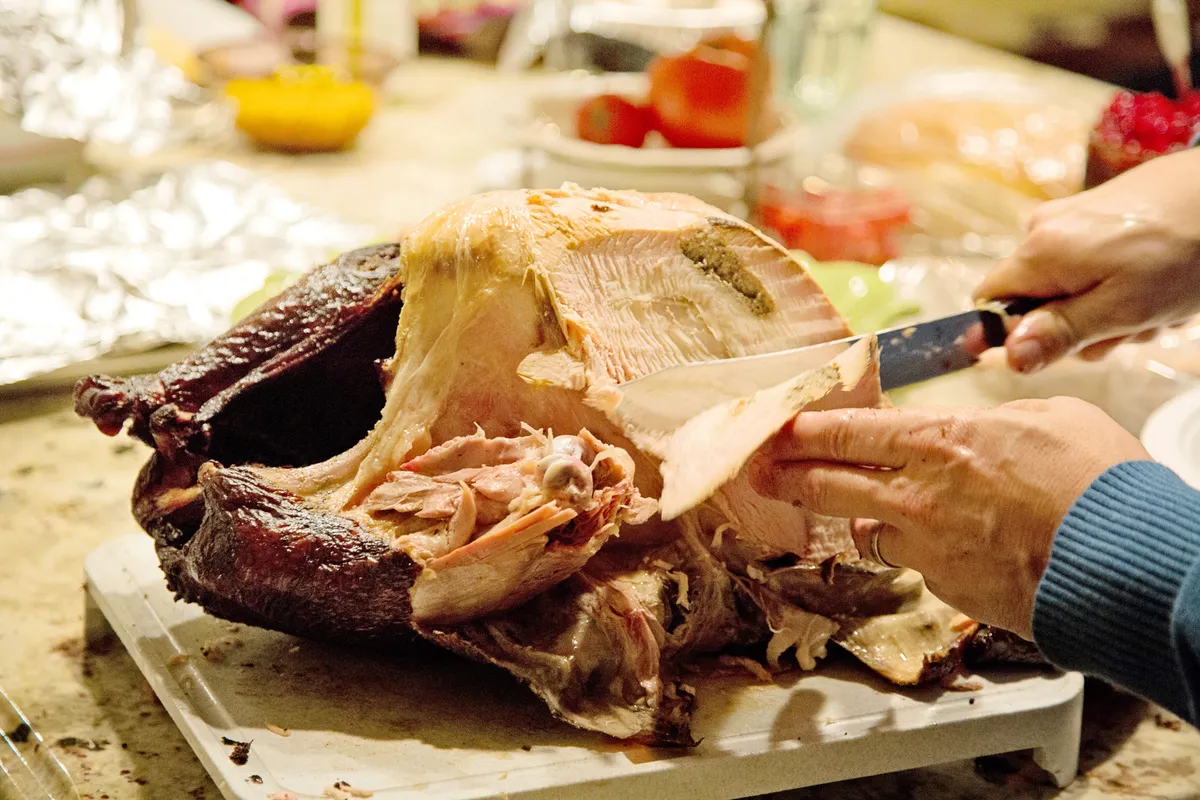
Cooked bones
Never give your dog turkey bones. Cooked bones become brittle and splinter easily, and they can crack teeth, lodge in the throat, or cause dangerous blockages and tears in the digestive tract. This is one of the most serious holiday hazards for dogs.
Skin, fat, and drippings
Turkey skin and fatty trimmings are loaded with grease — often cooked in butter, oil, and seasoning. A sudden hit of rich, fatty food can trigger pancreatitis, a painful and potentially serious inflammation of the pancreas that’s sadly common after big holiday meals.
Seasonings, garlic, and onion
The herbs, salt, and butter that make turkey delicious for us are a problem for dogs. Garlic and onion — common in rubs, gravies, and stuffing — are toxic to dogs and damage their red blood cells. Heavy salt and spices can also upset the stomach.
Stuffing, gravy, and leftovers
Stuffing is often made with onion, garlic, raisins, and rich fats — a combination of several canine hazards at once. Gravy is salty and greasy, and processed turkey like deli slices or smoked turkey is far too high in sodium and additives. Keep all of these off your dog’s plate.
How much turkey can a dog eat?
Treats, including turkey, should make up no more than about 10% of your dog’s daily calories — the rest should come from their balanced regular diet. For a small dog that might mean a tablespoon or two of plain meat; for a large dog, a few small pieces. Introduce it in a small amount the first time to make sure it agrees with them, and if your dog has a sensitive stomach, pancreatitis history, or a health condition, check with your vet before offering any.
How to safely feed your dog turkey
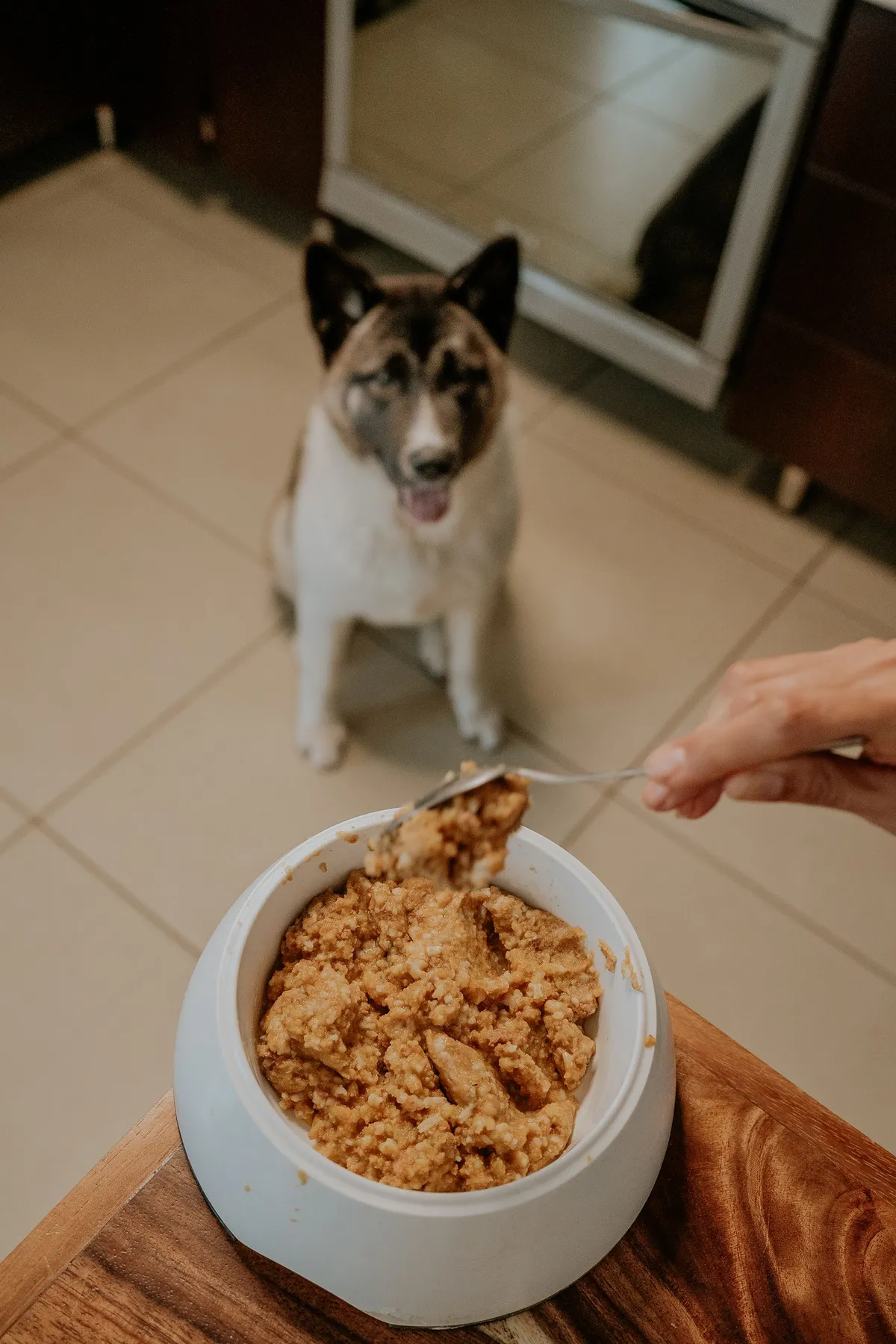
- Serve it plain: use only cooked, unseasoned, skinless, boneless white or dark meat — no rubs, butter, or gravy.
- Remove every bone: double-check the piece for small bones before giving it, and never offer the carcass or scraps from a plate.
- Cut it into small pieces: bite-sized portions are easier to digest and lower the risk of choking, especially for small dogs.
- Keep portions small: a few bites as an occasional treat, not a plateful, and not every day.
- Secure the leftovers: a dog’s nose will find an unattended carcass or trash bag — keep the bird, bones, and scraps well out of reach.
What to do if your dog ate something they shouldn’t
If your dog swallows a turkey bone or raids the leftovers, don’t panic, but do pay close attention. Watch for choking, retching, vomiting, diarrhea, a hunched or painful posture, loss of appetite, lethargy, or signs of bloating — these can indicate a blockage, pancreatitis, or toxicity from seasonings. If your dog ate bones, a large amount of fatty or seasoned food, anything with onion or garlic, or shows any of these symptoms, contact your veterinarian or an emergency animal hospital right away. When it comes to a possible obstruction or pancreatitis, acting early makes a real difference.
Reading your dog beyond the dinner table

Holidays are wonderful, but they’re also overwhelming for a lot of dogs — new people, rich smells, changes in routine, and a lot of “no” from their favorite humans. Telling genuine hunger from begging-out-of-habit, or spotting when your dog is stressed by all the commotion rather than simply hoping for turkey, is the whole challenge. That’s what Traini is built for: translating your dog’s behavior and signals into plain language so you can understand what they actually need. When you’re not sure whether your dog’s behavior around food is normal or worth a closer look, you can ask PetGPT about your specific situation. For more on your dog’s diet and digestion, see our guides on whether dogs can eat pumpkin and what dogs can safely drink.
Frequently asked questions
Can dogs eat cooked turkey?
Yes, plain cooked turkey is safe for most dogs — as long as it’s boneless, skinless, and completely unseasoned. Avoid turkey that’s been cooked with butter, salt, garlic, onion, or herbs, and never give cooked bones.
Can dogs eat turkey bones?
No. Cooked turkey bones splinter easily and can cause choking, broken teeth, or serious blockages and tears in the digestive tract. Keep all bones and the carcass well out of your dog’s reach.
Is turkey skin bad for dogs?
Yes, it’s best avoided. Turkey skin is very fatty and often cooked with seasoning, and that rich fat can trigger pancreatitis. Stick to small pieces of lean, plain meat instead.
How much turkey can I give my dog?
Keep it to an occasional treat — no more than about 10% of your dog’s daily calories. A small dog might have a tablespoon or two of plain meat; a larger dog, a few small pieces. Check with your vet if your dog has any health concerns.
This article is for general information and isn’t a substitute for professional veterinary advice. If your dog has eaten turkey bones, fatty or seasoned food, or anything containing onion or garlic, or shows vomiting, lethargy, or signs of pain, please contact your veterinarian or an emergency animal hospital right away.