
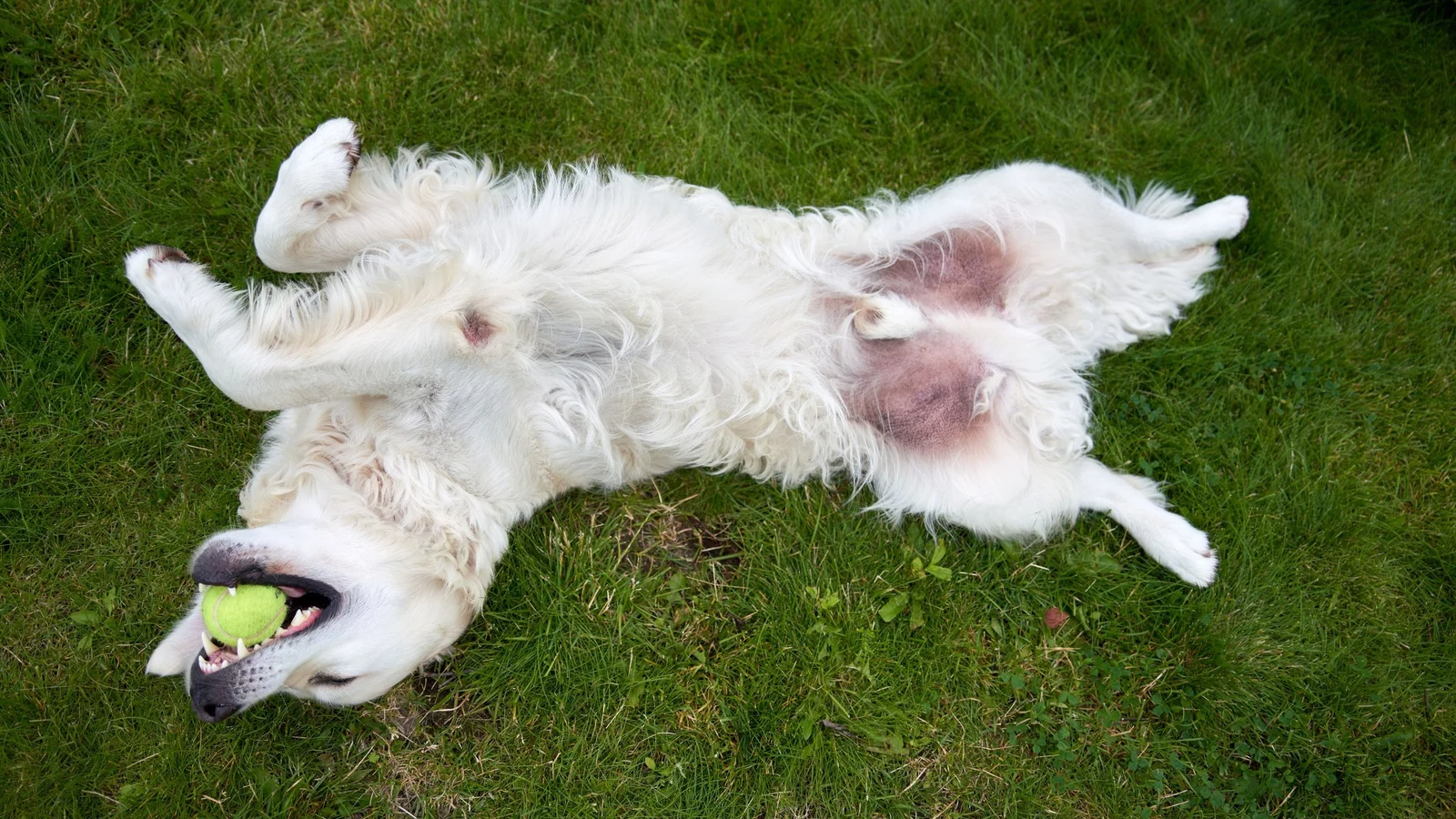
Do dogs have belly buttons? Yes — every dog has one. Like all placental mammals, puppies are connected to their mother by an umbilical cord in the womb, and the small scar left behind when it detaches is the belly button. You just rarely notice it: a dog’s navel is a flat, faint mark hidden under fur, not a round “innie” or “outie” like a human’s.
It’s one of those facts that sounds surprising until you think about where puppies come from. Here’s where to find it, why it looks so different from ours, and the one belly-button issue worth watching for.
Do dogs really have belly buttons?
They do. In the womb, each puppy receives nourishment and oxygen through an umbilical cord attached to the placenta. After birth, the mother chews the cord off close to the puppy’s body, and within a few days the stub dries up and falls away, leaving a small scar. That scar is the belly button — the same thing we have, just far less obvious.
Where is it, and what does it look like?
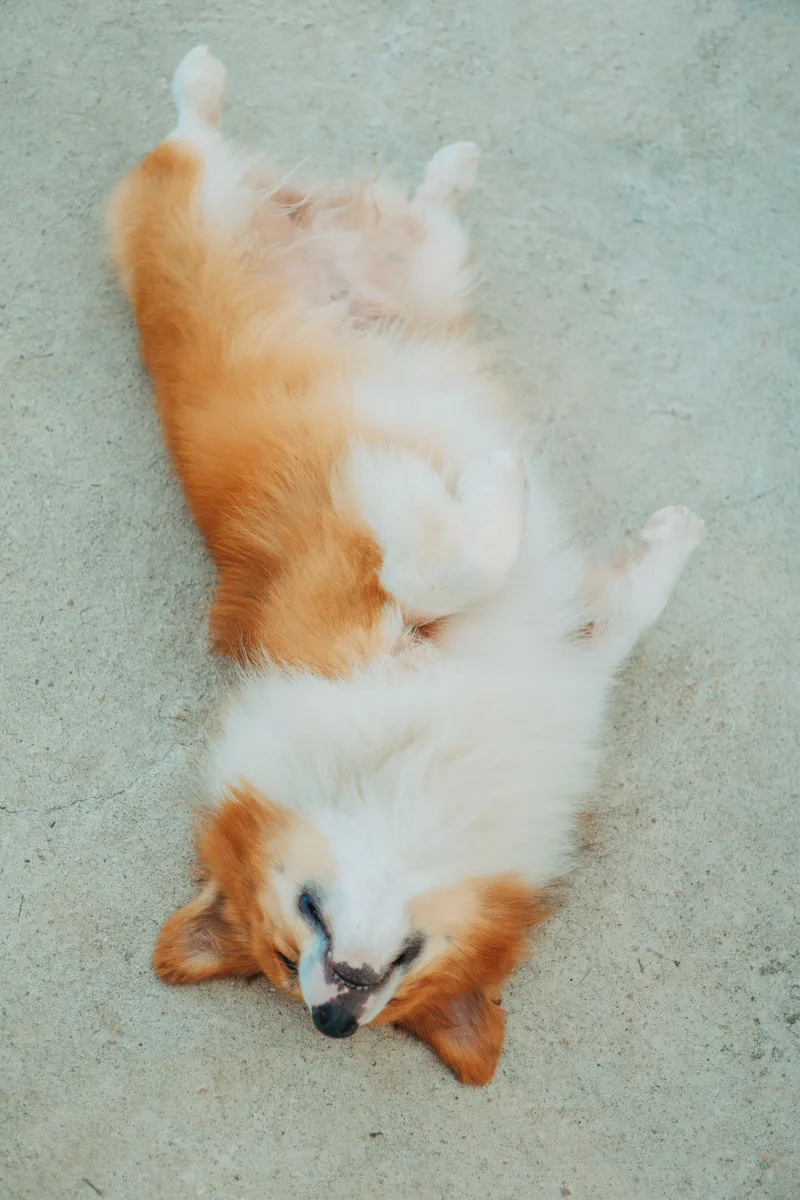
A dog’s belly button sits on the midline of the abdomen, just below the ribcage and above where the belly narrows toward the back legs. Rather than a dimple or a bump, it usually shows up as a small, flat scar — sometimes just a faint seam or a little swirl in the fur. On short-haired dogs you might spot a thin line or a slightly different patch of skin; on fluffy dogs it’s often invisible under the coat.
Why it looks so different from ours
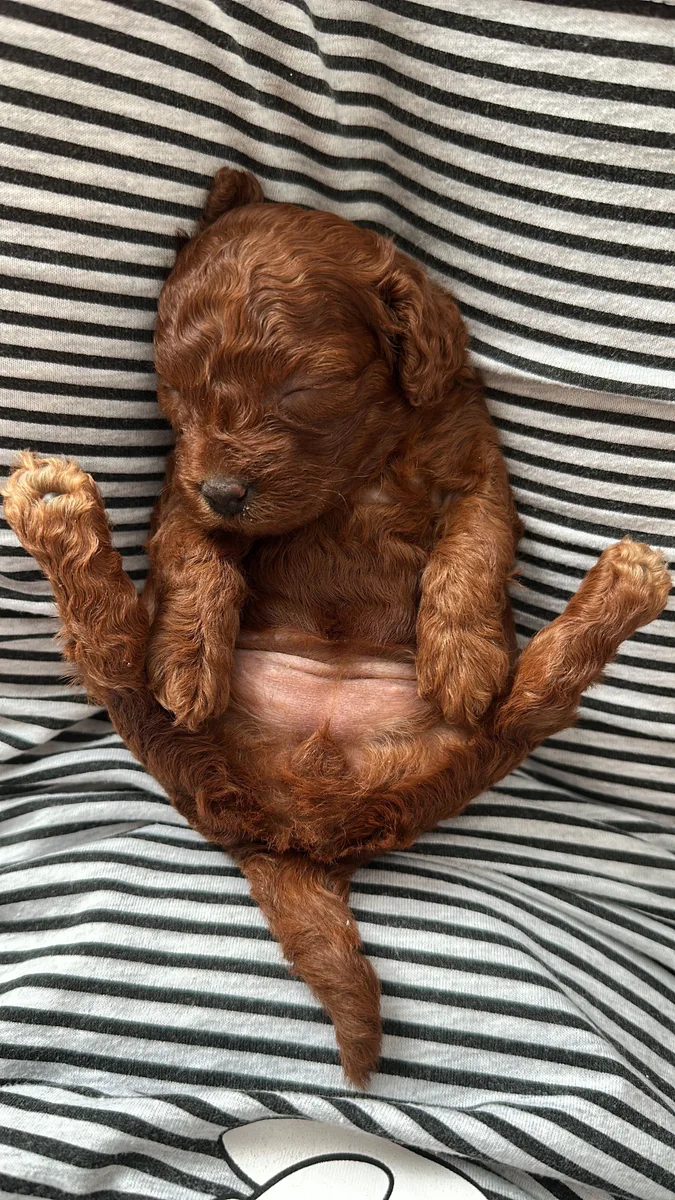
Human belly buttons are prominent because the cord is clamped and cut, leaving a longer stump that heals into the familiar innie or outie. In dogs, the mother bites the cord very close to the body and there’s no clamp, so it heals almost completely flat. Add a layer of fur over the top, and the result is a navel most owners never notice — which is exactly why people wonder whether dogs have one at all.
Can a dog’s belly button cause problems?
Usually not, but there’s one thing to know about: an umbilical hernia. This happens when the abdominal wall doesn’t fully close where the cord was, leaving a soft, squishy bulge at the navel. Small hernias in puppies are common and often close on their own or are minor, but larger ones can occasionally let abdominal contents through and need surgical repair. If you feel a soft lump at your puppy’s belly button, have your vet check it — many are fixed easily during a routine spay or neuter.
More curious dog facts
Once you start noticing these things, dogs get even more interesting. You might wonder how many teeth dogs have, or whether dogs can see color the way we do — both have answers that catch most people off guard.
Dogs can’t tell us where it’s tender, so a gentle belly check now and then is a good habit. Traini’s AI dog translator can help you read the subtle signals of discomfort, so you know when a lump or a flinch is worth a vet’s eyes.
Frequently asked questions
Can you actually see a dog’s belly button?
Sometimes, faintly. On short-haired dogs it may appear as a small flat scar or a little swirl of fur on the midline of the belly. On long-haired dogs it’s usually hidden under the coat.
Do dogs have innies or outies?
Neither, really. A dog’s navel heals almost completely flat, so it doesn’t form the raised or recessed shape we associate with human belly buttons. A noticeable bulge is more likely an umbilical hernia than an “outie.”
What is an umbilical hernia in dogs?
It’s a soft bulge at the navel where the abdominal wall didn’t fully close. Small ones are common and often harmless, but have your vet assess any lump — larger hernias may need surgical repair, often done during spaying or neutering.
Do all animals have belly buttons?
Placental mammals like dogs, cats and humans do, because they develop with an umbilical cord. Animals that hatch from eggs, such as birds and reptiles, don’t have one.
This article is for general information and isn’t a substitute for professional veterinary advice. If you notice a soft lump, swelling or tenderness at your dog’s belly button, have your veterinarian examine it.