
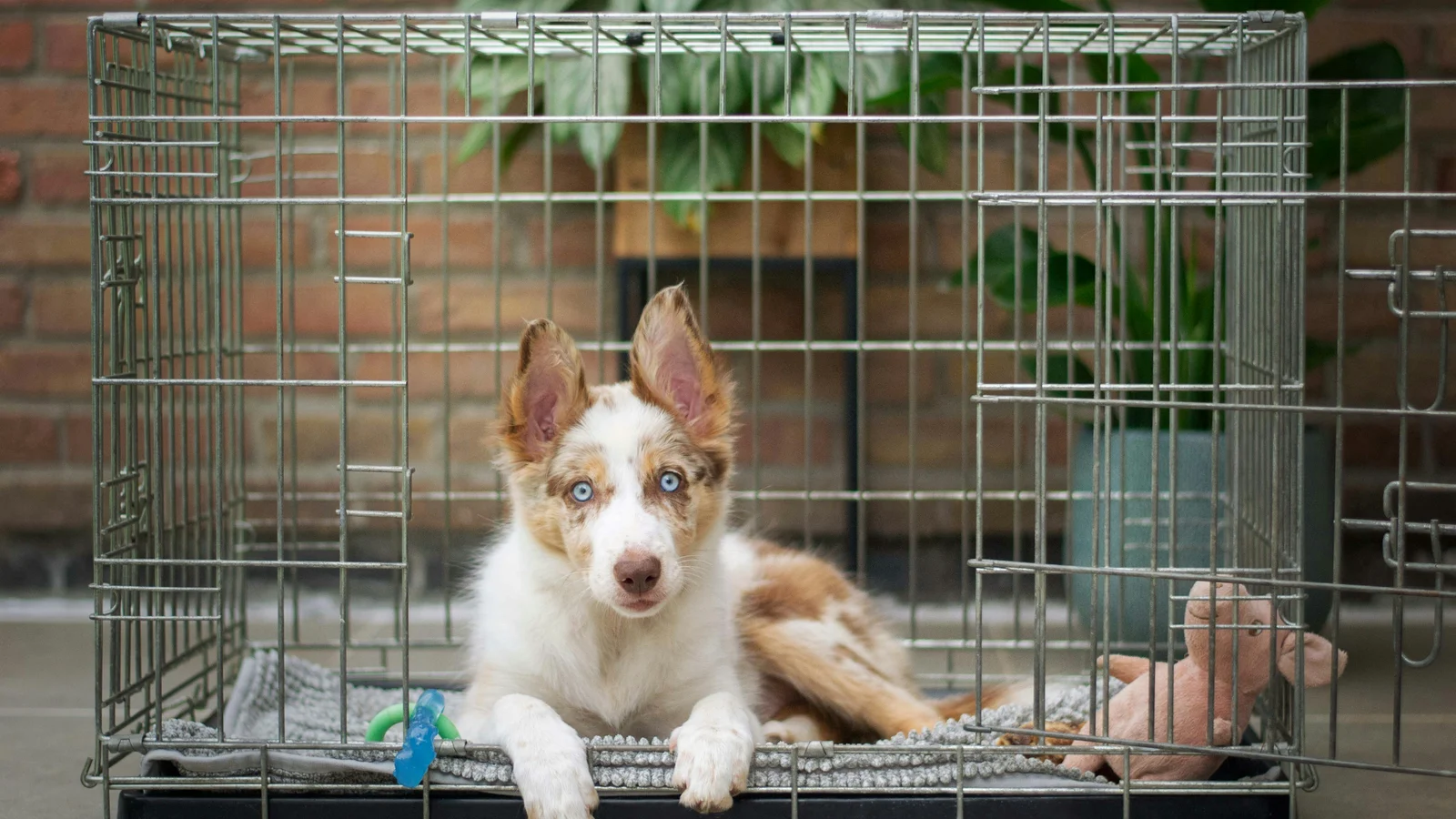
Bringing home a new puppy is joyful and a little chaotic, and somewhere in the first week most owners hear the same advice: crate train them. Done right, a crate isn’t a cage — it becomes your puppy’s own safe den, a place they choose to rest in, and one of the fastest routes to a calm, house-trained dog. Done wrong, it can backfire into fear and endless whining.
Here’s a practical, step-by-step guide to crate training a puppy the gentle way — why it works, what crate to buy, how long it takes, and the mistakes that trip people up.
Why crate training works
Dogs are den animals by instinct: a small, enclosed space feels secure rather than confining. A crate taps into that instinct and gives your puppy a spot that’s reliably theirs. The practical payoffs are big:
- Faster house-training: puppies naturally avoid soiling where they sleep, so a correctly sized crate helps them learn to hold it and build a potty routine.
- Safety when you can’t supervise: a crated puppy can’t chew a cord, swallow something dangerous, or hurt themselves while you’re out or asleep.
- A calm-down space: a crate gives an overtired or overstimulated puppy a quiet place to settle, much like a crib for a toddler.
- Easier travel and vet visits: a dog who’s comfortable in a crate handles car rides, trips, and overnight stays far better.
Choosing the right crate
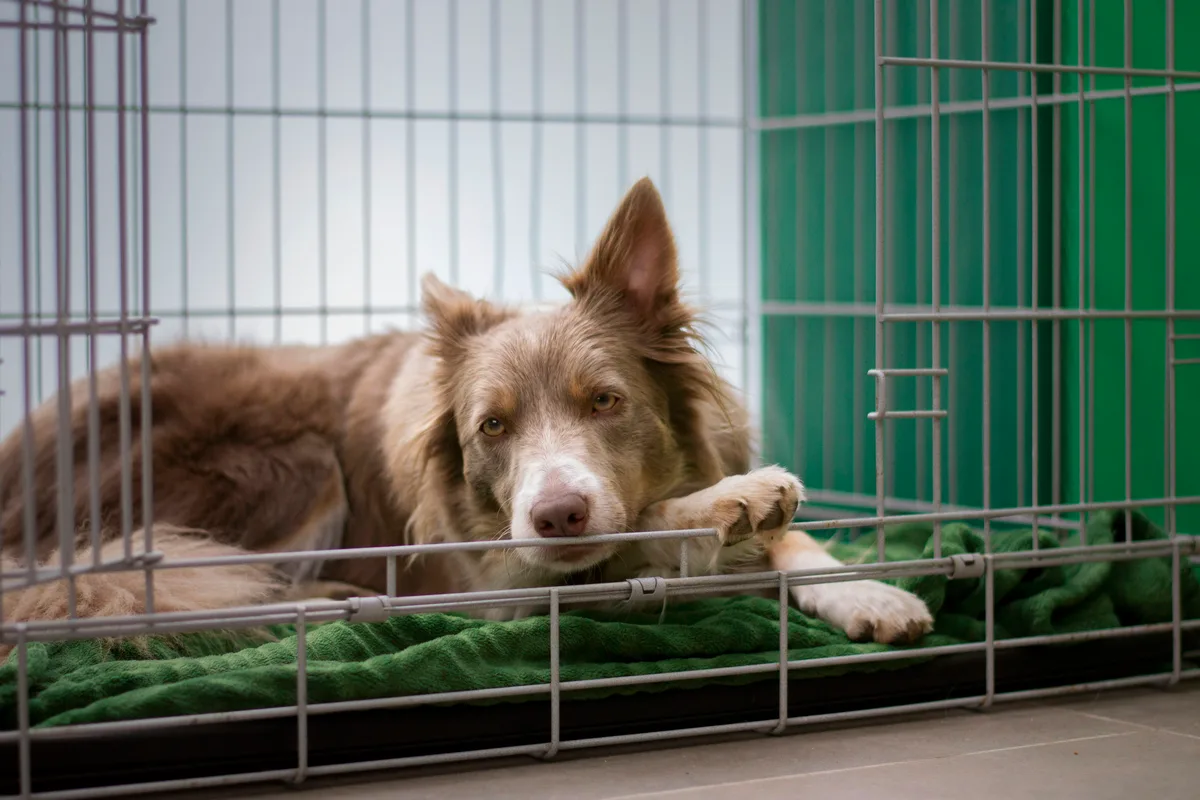
The single most important factor is size. The crate should be just big enough for your puppy to stand up, turn around, and lie down comfortably — no bigger. Too much space lets them use one corner as a bathroom, which defeats house-training. Because puppies grow fast, buy a crate sized for their adult weight and use a divider to shrink the usable space while they’re small.
- Wire crates: well-ventilated, collapsible, and usually come with a divider — a great all-rounder for home use.
- Plastic travel crates: cozier and enclosed, often required for air travel, and nice for dogs who prefer a darker den.
- Soft-sided crates: light and portable, but easy for a determined chewer to destroy — better once a dog is already trained.
Add soft, washable bedding, and keep the crate in a part of the home where the family spends time, so your puppy doesn’t feel isolated.
How to crate train a puppy, step by step

1. Introduce the crate as something good
Set up the crate with the door open and let your puppy explore it at their own pace. Toss a few treats inside, and feed meals near — then inside — the crate. The goal is simple: crate equals good things happen.
2. Feed meals inside
Once your puppy will step in for a treat, start placing their food bowl at the back of the crate. While they eat, sit nearby. After a few successful meals, gently close the door while they eat and open it as soon as they finish.
3. Build up short closed-door sessions
With the door closed, stay beside the crate for a minute or two, then let your puppy out — but only when they’re quiet, not mid-whine. Slowly extend the time, and start stepping out of the room for a few seconds, then minutes, so they learn that you always come back.
4. Practice longer stays and departures
Give your puppy a safe chew or stuffed toy, settle them in the crate, and go about your day. Keep absences short at first and build gradually. A tired, recently exercised, freshly potty-ed puppy will settle far more easily than a restless one.
5. Introduce overnight crating
Place the crate in or near your bedroom for the first nights so your puppy isn’t alone. Expect to get up once or twice — young puppies can’t hold their bladder all night. Take them out calmly, then straight back to the crate, with no playtime, so night stays boring and sleepy.
How long does crate training take?
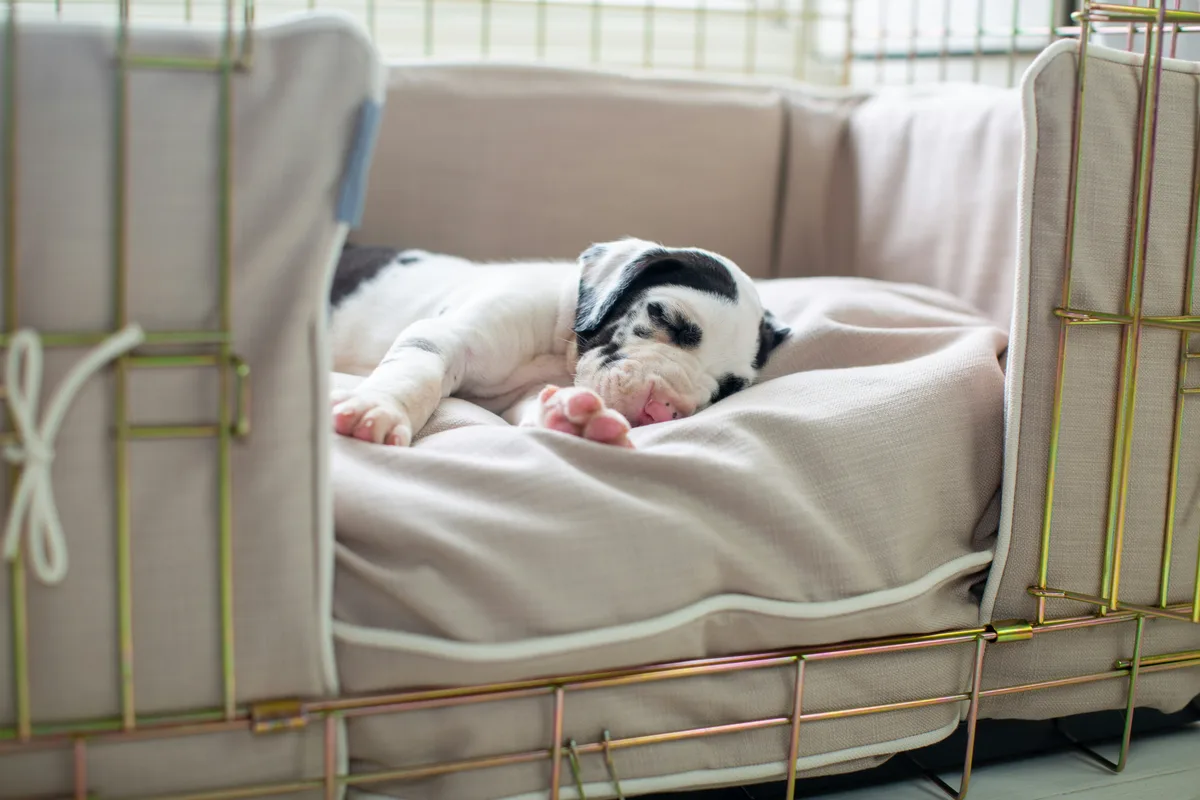
Most puppies get comfortable with a crate within a few days to a few weeks, but it varies with age, temperament, and consistency. Go at your puppy’s pace — rushing is the fastest way to create fear. A realistic rule for how long a puppy can hold their bladder is roughly one hour per month of age, up to about eight hours for an adult, so a three-month-old shouldn’t be crated much longer than three to four hours during the day.
Common crate training mistakes to avoid
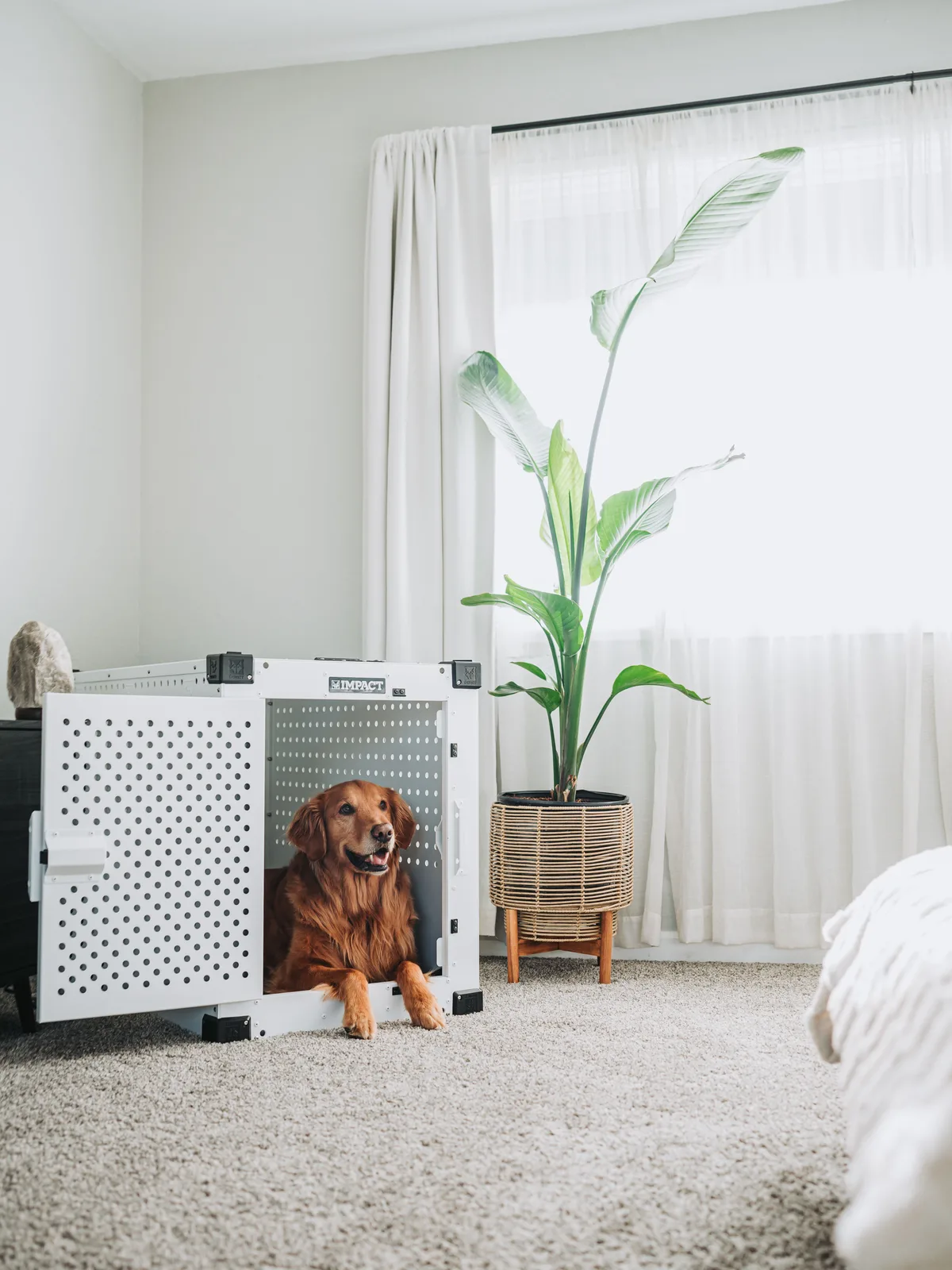
- Using the crate as punishment: never send your puppy to the crate in anger — it has to stay a positive place.
- Too much too soon: leaving a puppy crated for long stretches before they’re ready builds anxiety instead of comfort.
- Letting them out mid-whine: opening the door while they cry teaches that whining works. Wait for a quiet moment, even a brief one, to release them.
- A crate that’s too big: extra room invites accidents and slows house-training.
- Skipping exercise: a puppy with pent-up energy can’t settle. Crate after a walk and a potty break, not before.
Reading your puppy beyond the crate
Crate training is really about communication — learning when your puppy is anxious versus simply protesting, tired versus bursting with energy. Reading those signals is exactly what Traini is built for: translating your dog’s behavior and body language into plain language so you can respond with the right thing at the right moment. If your puppy’s crate whining sounds more like distress than protest, you can ask PetGPT about your specific situation. For more on settling a new dog, see our guides on stopping nuisance barking, why dogs howl, and heavy panting.
Frequently asked questions
Should I let my puppy cry it out in the crate?
Not entirely. A few minutes of settling-in fuss is normal, but prolonged or panicked crying means the step was too big. Scale back to shorter sessions and build up more slowly rather than ignoring real distress — and make sure the crying isn’t a signal they need the toilet.
Where should the crate go at night?
For the first week or two, keep it in your bedroom. Being near you reduces nighttime anxiety and lets you hear when your puppy genuinely needs a bathroom break. You can gradually move it to its permanent spot once they’re settled.
How long can a puppy stay in a crate?
Use the one-hour-per-month-of-age guide during the day, up to around 3–4 hours for a young puppy, and never longer than they can comfortably hold their bladder. Crating should be part of a routine with plenty of play, exercise, and company — not where your puppy spends most of the day.
Is it too late to crate train an older dog?
No. Adult dogs can absolutely learn to love a crate using the same gradual, positive steps. It may take a little more patience, especially if they’ve had a bad experience, but the approach is the same: make the crate a rewarding, safe place at their own pace.
This article is for general training guidance. Every dog is different, and if your puppy shows signs of severe distress, self-injury, or extreme anxiety around the crate, consider consulting a certified dog trainer or your veterinarian.