

A dog who won’t stop barking can fray everyone’s nerves — yours, your neighbors’, and often the dog’s own. But barking isn’t misbehavior for its own sake; it’s communication. The key to quieter days isn’t silencing your dog, it’s figuring out what the barking is trying to say and addressing the cause. Do that, and the noise usually takes care of itself.
Here’s how to stop nuisance barking the right way — starting with why dogs bark, then the step-by-step fixes, what to avoid, and when barking is a sign something’s wrong.
Why dogs bark

Before you can reduce barking, you need to know which kind you’re dealing with. Most barking falls into a handful of types:
- Alert or territorial: barking at the doorbell, passersby, or other dogs — “something’s happening out there.”
- Attention-seeking: barking aimed squarely at you to get food, play, or a door opened.
- Boredom or loneliness: repetitive barking from a dog with too little to do or too much time alone.
- Fear or anxiety: barking at scary sounds, strangers, or when left alone (separation-related).
- Excitement or greeting: happy, bouncy barking when you come home or before a walk.
The fix for each is different, so spend a few days noticing when and at what your dog barks before you change anything.
How to stop nuisance barking, step by step
1. Remove or manage the trigger
If your dog barks at people passing the window, close the curtains or use window film. If it’s the yard, bring them in during busy times. Managing the environment stops the barking from being rehearsed while you work on training.
2. Don’t reward the barking — even with attention
For attention-seeking barkers, any response — talking, eye contact, even scolding — can be a reward. Wait for a pause in the barking, however brief, then calmly reward the quiet. You’re teaching that silence, not noise, is what gets your attention.
3. Teach a “quiet” cue
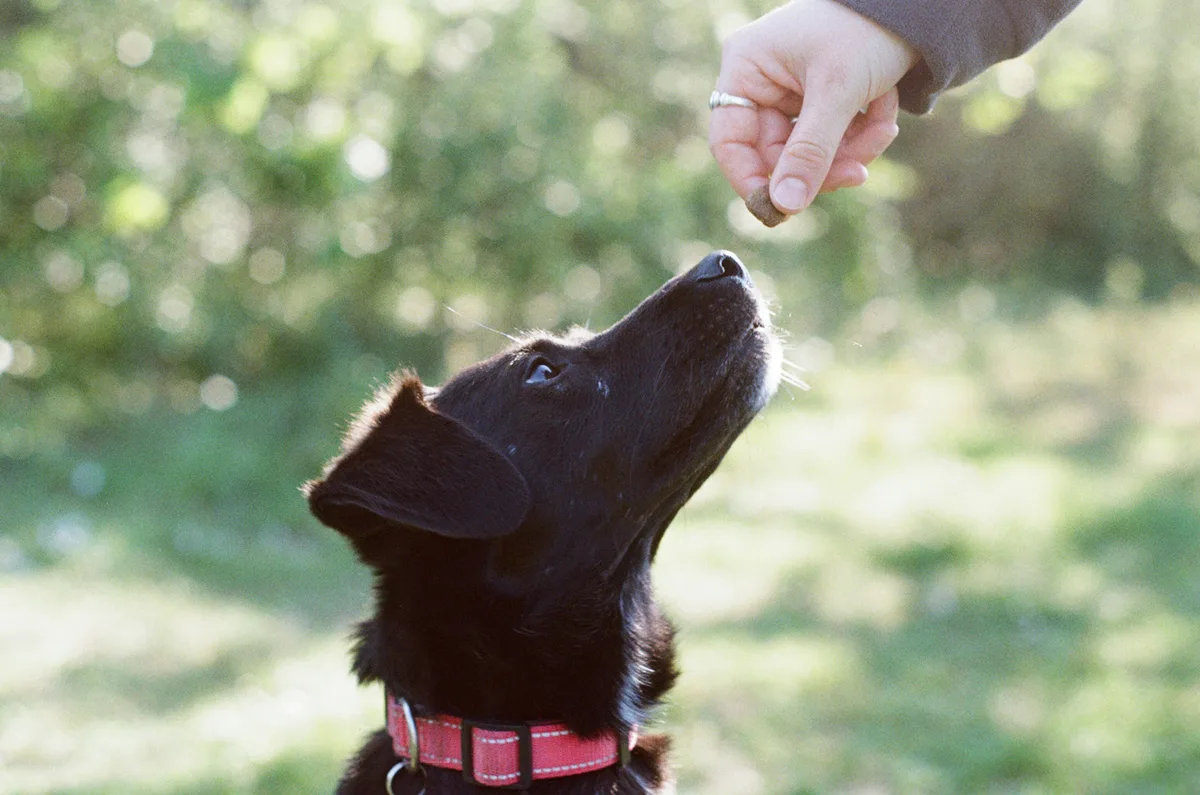
When your dog barks, let them bark two or three times, then say “quiet” in a calm voice and hold a treat near their nose. Most dogs stop to sniff. The moment they’re quiet, mark it (“yes!”) and give the treat. With repetition, “quiet” becomes a reliable cue.
4. Give an incompatible job
Teach your dog to do something they can’t do while barking — like going to a mat or fetching a toy when the doorbell rings. Rewarding the alternative behavior replaces the barking with a calmer habit.
5. Meet their needs for exercise and enrichment
A tired, mentally satisfied dog barks far less. Daily walks, play, sniff-time, and puzzle feeders take the edge off boredom barking before it starts.
What not to do

- Don’t yell: shouting sounds like you’re barking along, and it adds energy to the moment rather than calming it.
- Don’t punish after the fact: your dog won’t connect a scolding to barking that happened minutes ago; they’ll just learn to be wary of you.
- Be cautious with anti-bark collars: shock, citronella, and ultrasonic collars suppress a symptom without addressing the cause, and can increase fear or aggression. They’re not a substitute for training.
- Don’t reward inconsistently: if barking sometimes gets the door opened or the treat, it’ll persist. Everyone in the house needs to respond the same way.
When barking is a sign of a problem

Sometimes barking points to something that needs more than training. Sudden, excessive barking in a normally quiet dog can signal pain, cognitive decline in a senior, or a health issue worth a vet check. Frantic barking, pacing, and destruction when left alone may be separation anxiety, which usually needs a dedicated behavior plan rather than simple quiet training. And barking paired with growling, stiff posture, or lunging is a warning sign of fear or reactivity that’s best addressed with a certified trainer or behaviorist before it escalates.
Reading your dog beyond the barking
Quieting nuisance barking starts with understanding it — telling an “I’m bored” bark from an “I’m scared” one changes everything you do next. Reading those signals is exactly what Traini is built for: translating your dog’s vocalizations and body language into plain language so you can respond to the real need instead of just the noise. When you’re not sure whether your dog is anxious, demanding, or alerting to something, you can ask PetGPT about your specific situation. For more on decoding and settling your dog, see our guides on why dogs howl, crate training a puppy, and heavy panting.
Frequently asked questions
How do I get my dog to stop barking at the doorbell?
Manage the trigger (a doorbell-less knock or a muffled chime helps), then teach an incompatible behavior like going to a mat for a treat when the bell rings. Practice with a helper ringing repeatedly at low intensity until the doorbell predicts “go to your spot” instead of “bark.”
Why does my dog bark when I leave the house?
Brief barking as you go is often protest or excitement, but prolonged barking, pacing, or destruction can indicate separation anxiety. Mild cases respond to gradual alone-time practice and enrichment; more severe cases need a structured desensitization plan, often with professional help.
Do anti-bark collars work?
They may suppress barking short-term, but they don’t address why the dog is barking and can worsen fear or aggression. Positive, cause-based training is safer and more effective for lasting results.
How long does it take to stop nuisance barking?
With consistent daily practice, many dogs improve noticeably within a few weeks, though deeply ingrained or anxiety-driven barking takes longer. Consistency across everyone in the household is the biggest factor in how fast it sticks.
This article is for general training guidance. If your dog’s barking is sudden, excessive, or paired with signs of pain, anxiety, or aggression, consider consulting your veterinarian or a certified dog trainer or behaviorist.