
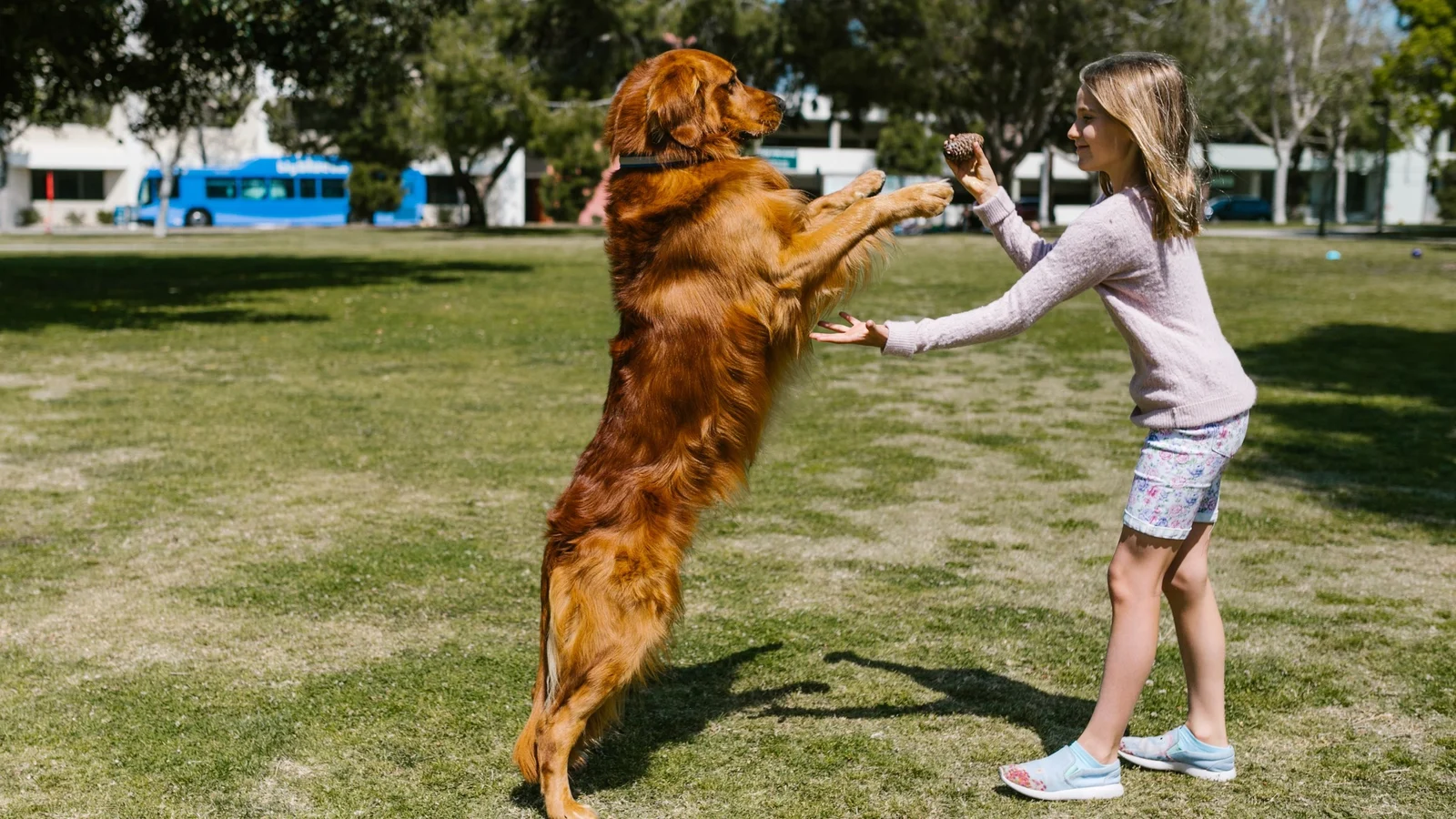
To stop a dog from jumping up, remove the reward: the moment they jump, turn away and give no attention, then reward them warmly the instant all four paws are back on the floor. Teach a sit as the way to say hello, keep everyone consistent, and your dog soon learns that calm greetings — not leaping — are what earn your attention.
Jumping up is almost always a friendly bid for attention, which is exactly why it’s so persistent: every pat, push or “off!” is still attention. The fix isn’t punishment — it’s making four-on-the-floor the thing that pays. Here’s how, step by step.
Why do dogs jump up?
Dogs greet face-to-face, so jumping toward ours is a natural, excited hello. It’s also learned: as puppies they jumped and we leaned down, petted and cooed — so the behavior got rewarded and stuck. Even being pushed off or told “no” counts as a reaction, and to an attention-seeking dog, any reaction can be a win. Change what jumping earns, and you change the behavior.
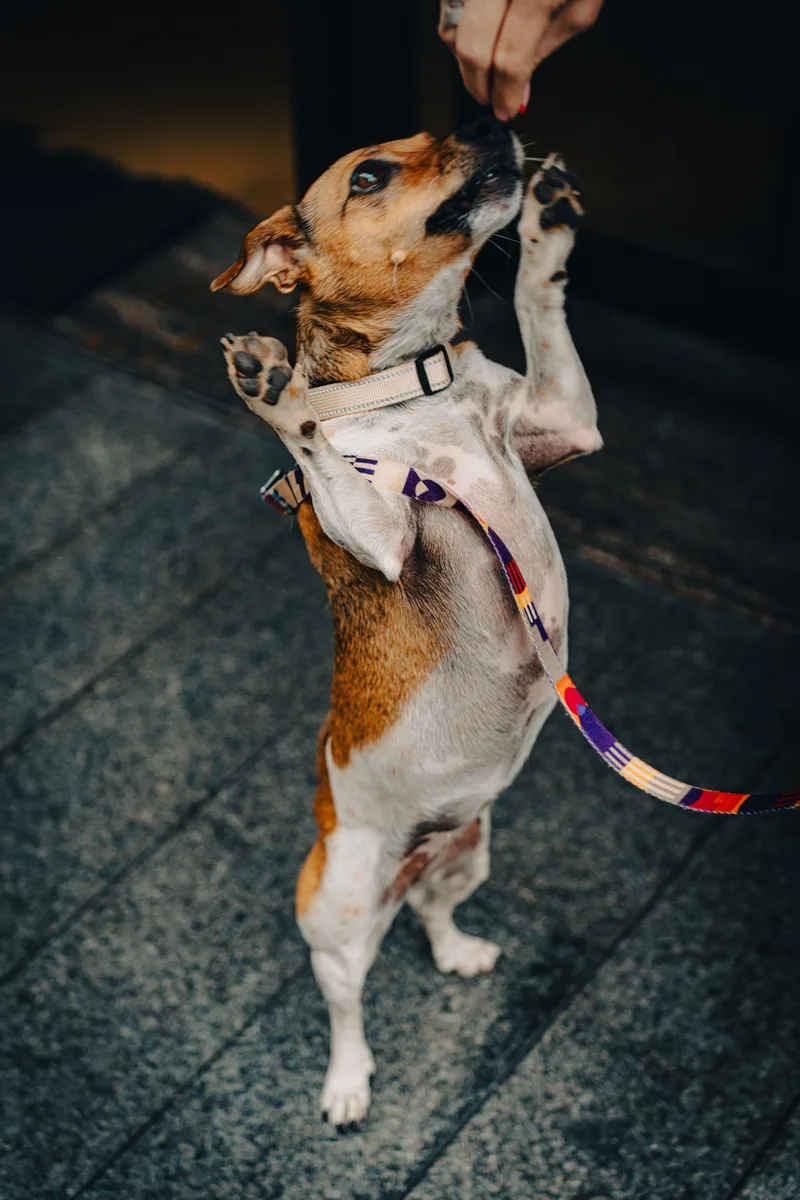
Step by step: teach calm greetings
1. Remove the reward
The instant your dog jumps, turn away, fold your arms, and look at the ceiling — no words, no eye contact, no touch. You’re showing them that jumping makes the fun person disappear. Stay boring until the paws come down. This feels like doing nothing, but it’s the heart of the whole method.
2. Reward four on the floor
The moment all four paws are on the ground, turn back and reward calmly — a treat, soft praise, a gentle fuss. Your timing is everything: you’re teaching “paws down earns the good stuff.” If they jump again, simply turn away again. Repeat, and the penny drops fast.
3. Teach an alternative behavior
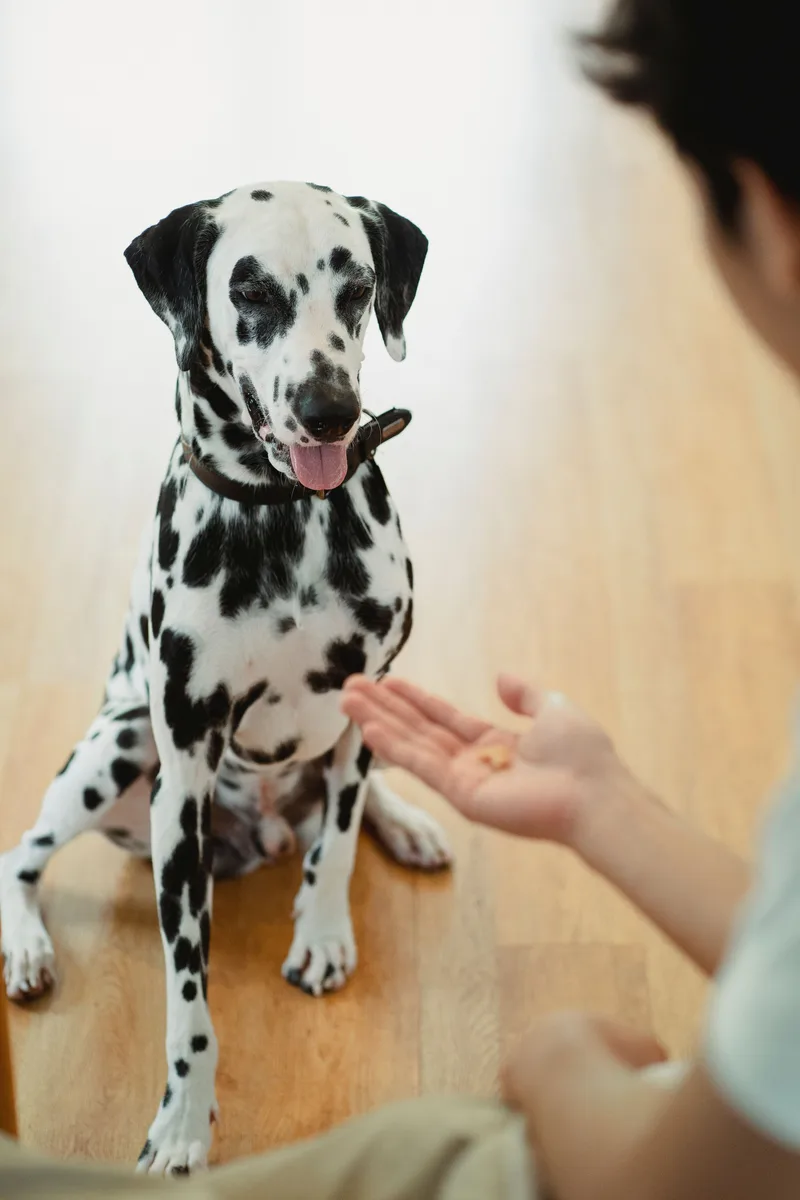
Give your dog a better way to greet. A sit is perfect — a dog can’t sit and jump at once. Practice asking for a sit as people approach, and reward it generously. Over time, “someone’s here” becomes your dog’s cue to plant their bottom rather than launch upward.
4. Manage greetings while they learn
Set your dog up to succeed. Use a leash or a baby gate for arrivals, keep greetings low-key, and ask visitors to ignore your dog until they’re calm. Stepping on a leash so your dog can’t quite reach full height, without any yank, keeps everyone safe while the new habit forms.
5. Get everyone on the same page
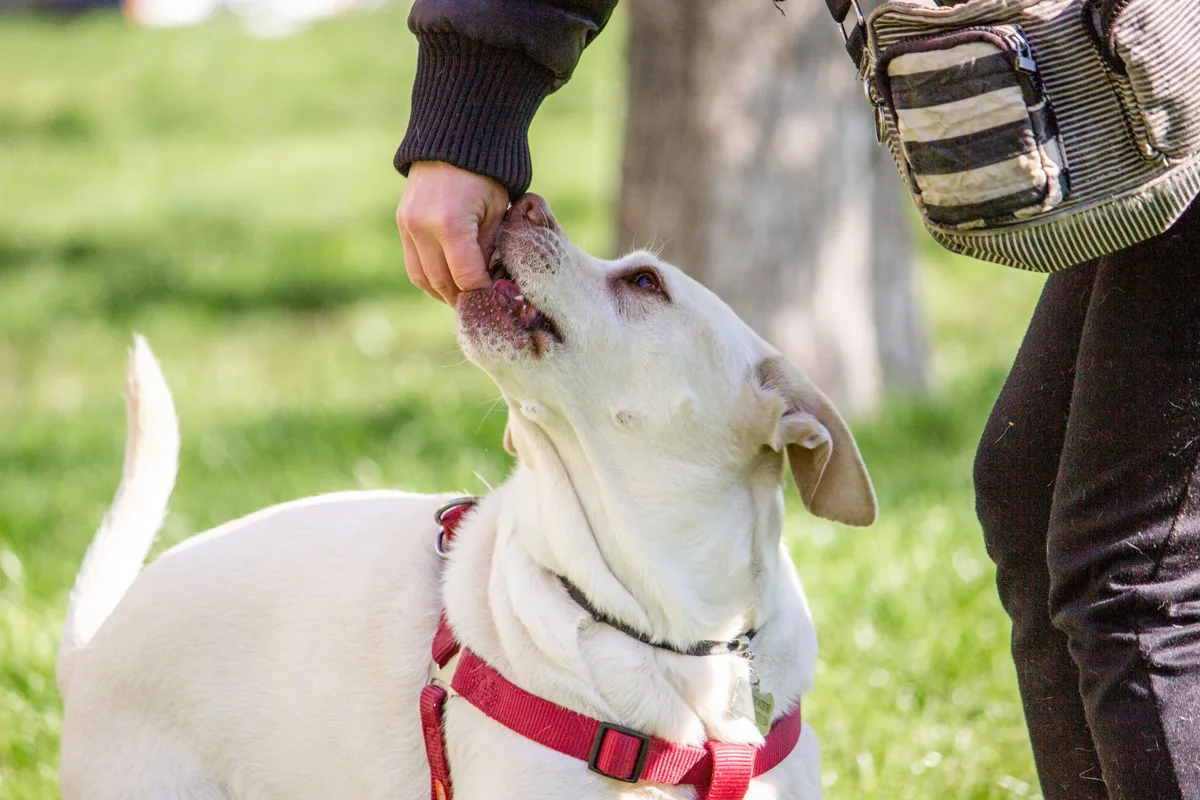
Consistency makes or breaks this. If you ignore jumping but a visitor giggles and pets your leaping dog, the behavior gets rewarded on a lottery — the hardest kind to shift. Brief every family member and guest: no attention for jumping, lots of attention for four paws down or a sit.
Common problems and fixes
- Jumps on guests, not you: rehearse with a helper doing repeated low-key “arrivals,” rewarding sits, until visitors are no longer a trigger.
- Gets more wound up when ignored: turn away fully and wait it out; add more management (leash, gate) so they can’t practice the jump.
- Jumps on the kids: coach children to “be a tree” — stand still, arms in, look away — and supervise so greetings stay calm and safe.
- Only calm with treats in hand: fade the food, rewarding with praise and attention so the good greeting isn’t tied to visible snacks.
- Jumps on the counter or furniture: that’s a separate management job — block access and reward settling on their own bed or mat.
Tips to make it stick
Keep practice sessions short, upbeat and frequent, and reward calm behavior generously — not just during training, but any time you catch your dog greeting nicely. Never knee, step on toes or shout; these can scare or hurt a dog and often backfire into more excitement or fear. Patience and consistency win here.
Reading your dog beyond the behavior
Jumping is your dog saying “I’m so happy you’re here!” — the task is to keep the joy and change the delivery. Traini’s AI dog translator helps you read your dog’s excitement and arousal level, so you can tell happy-and-trainable from over-threshold-and-can’t-listen, and pick the right moment to ask for that sit. For more foundations, see our guides on teaching sit, socializing a puppy, and stopping nuisance barking.
Frequently asked questions
Why does my dog jump on guests?
Because arrivals are exciting and, in the past, jumping got a reaction. Guests often unknowingly reward it with squeals and petting. Ask visitors to ignore your dog until calm, reward sits, and manage the greeting with a leash or gate while the habit changes.
Should I knee my dog or step on their toes to stop jumping?
No. These old tricks can hurt or frighten your dog, damage your bond, and often make greetings more frantic. Removing attention for jumping and rewarding four paws on the floor is both kinder and more effective.
How long does it take to stop a dog jumping?
With consistent practice from everyone, many dogs improve within a couple of weeks, though well-practiced jumpers take longer. The biggest speed-up is making sure jumping is never rewarded, by anyone, while calm greetings always are.
Is it too late to train an adult dog not to jump?
Not at all. Adult dogs learn this well; they’ve just had more practice being rewarded for jumping. The method is the same — remove the reward, teach a sit, stay consistent — it simply takes a little patience to override the old habit.
This article is for general information and isn’t a substitute for professional training advice. If your dog’s jumping is frantic, fearful, or hard to manage safely around children, consider working with a qualified, reward-based trainer.