
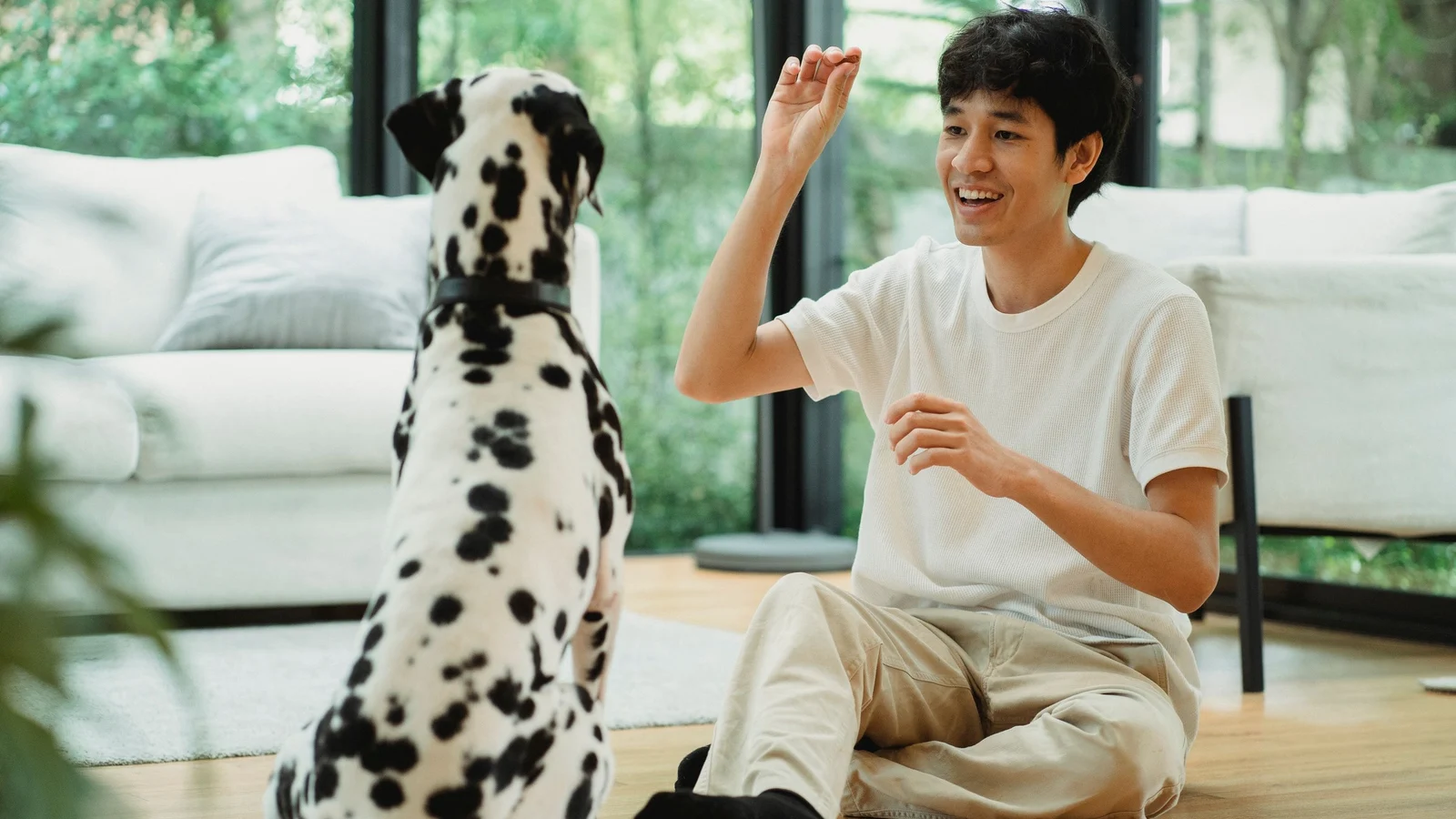
To teach a dog to sit, use a treat to lure their nose up and back until their bottom drops, then mark the moment and reward. Say “sit” just as they start to fold, pay up the instant they land, and repeat in short, upbeat sessions. Within a few days most dogs sit on cue — the secret is good timing and great treats, never pushing them down.
Sit is the first command most dogs learn, and for good reason: it’s simple, it’s the foundation for almost everything else, and a dog who can sit has an easy, polite “off switch” for excited moments. Here’s how to teach it cleanly, step by step.
Why teach sit first?
Sit gives your dog a default good manners position — something to do instead of jumping, bolting out the door or mugging a guest. It’s also the gateway to “stay,” “wait,” greetings and loose-leash walking. Because it’s easy to get right, it builds your dog’s confidence and teaches you both how the reward-and-mark rhythm of training works.
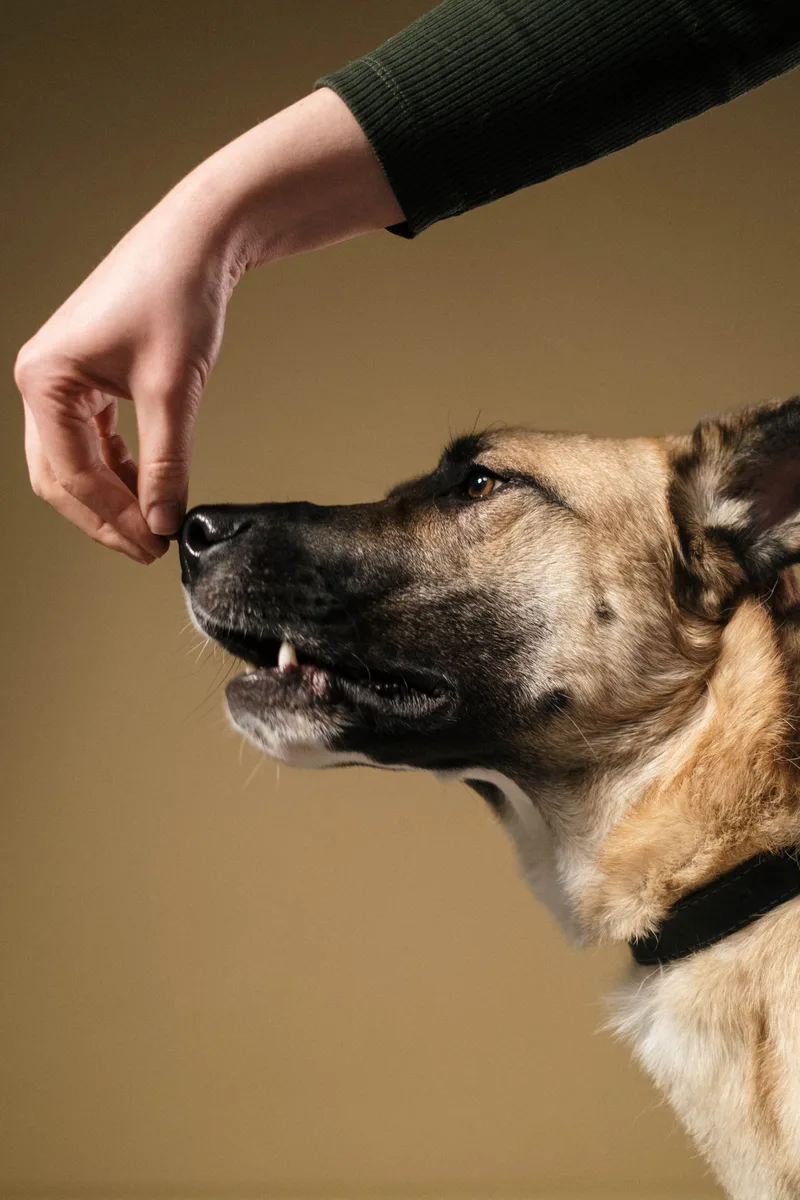
Step by step: the lure method
1. Start with a treat at their nose
With your dog standing in front of you, hold a small, smelly treat right at their nose so they’re interested but can’t snatch it.
2. Lure the nose up and back
Slowly move the treat up and back over their head, toward their tail. As their nose follows it up, their bottom naturally lowers to the floor. Go slowly — too fast and they’ll jump or back up instead.
3. Mark and reward the moment they sit
The instant their bottom touches the ground, say “yes” (or click) and give the treat. That precise timing is what tells your dog exactly which action earned the reward.
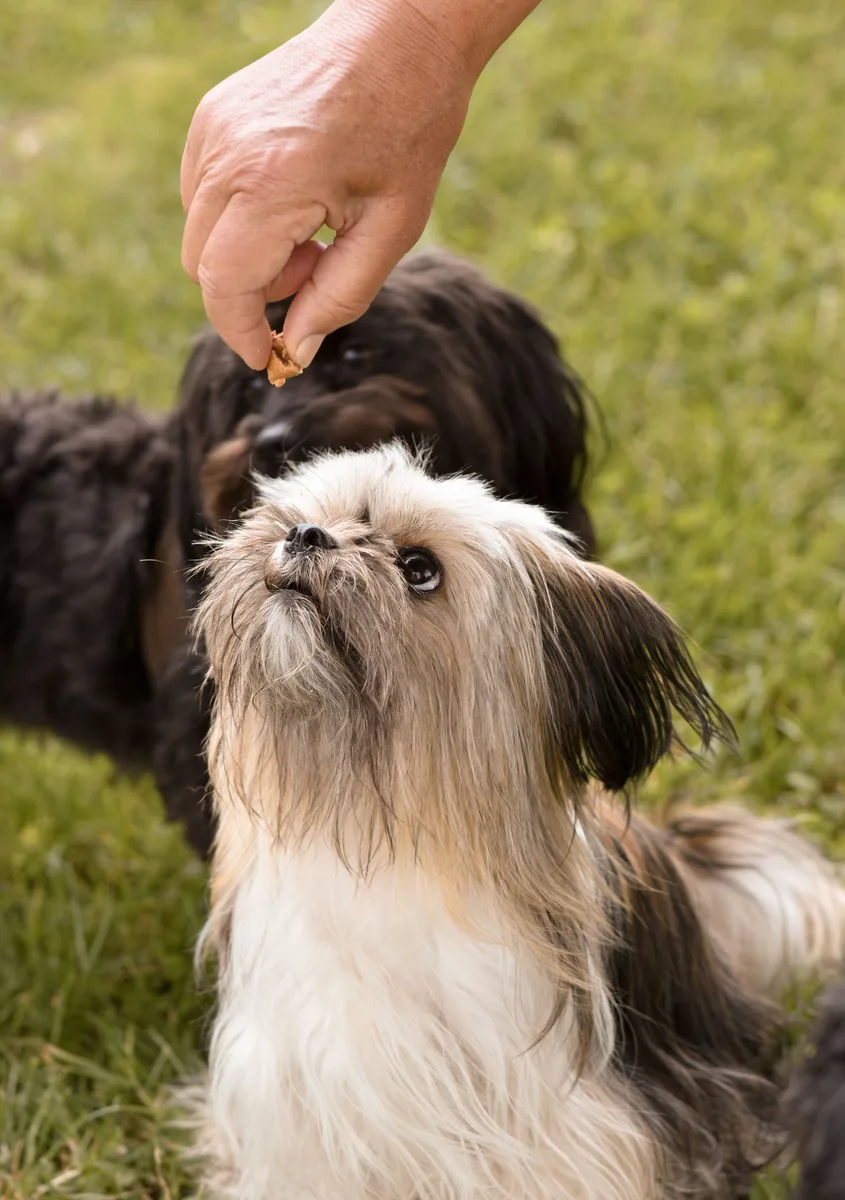
4. Add the word
Once they’re folding into a sit reliably with the lure, start saying “sit” just as they begin to lower. Say it once, calmly. After a handful of repetitions the word starts to predict the action.
5. Fade the treat lure
Now make the same motion with an empty hand, then reward from your other hand or a pouch. Gradually shrink the hand signal until a small gesture or just the word “sit” does the job. This step is what turns a treat-following trick into a real cue.
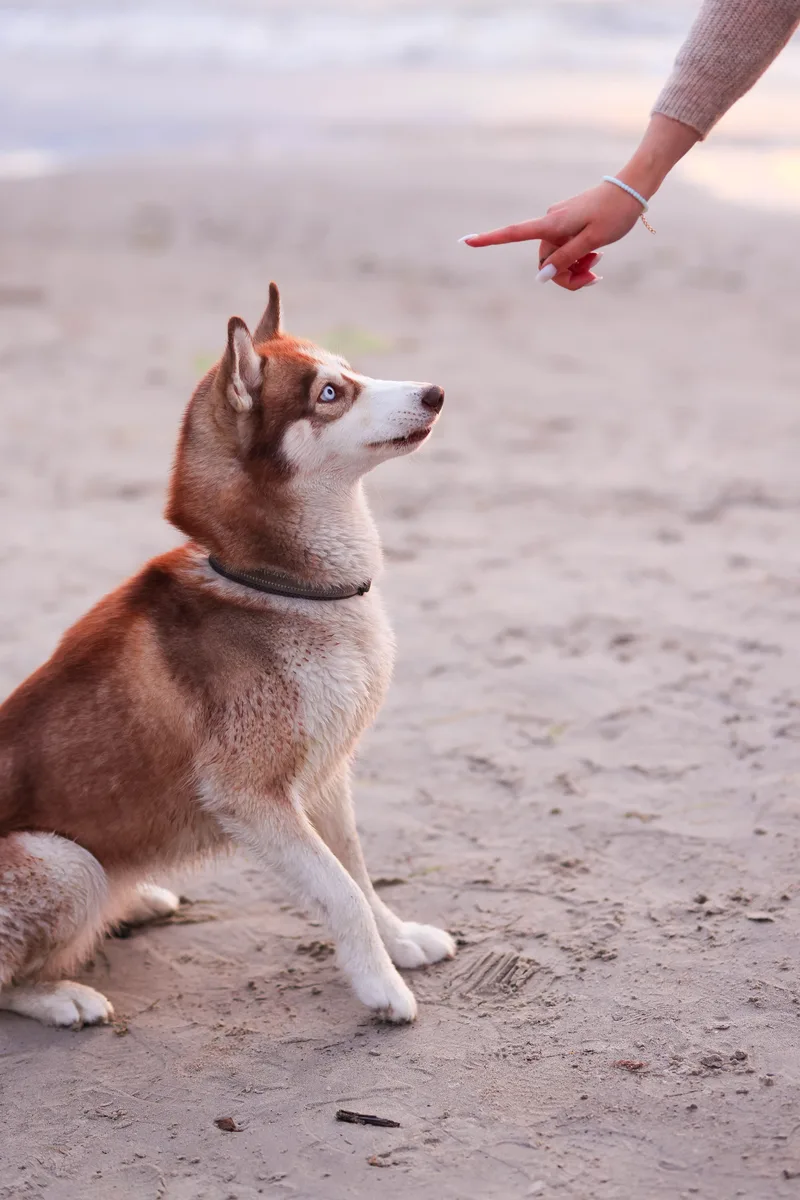
Common problems and fixes
- Jumping up for the treat: you’re holding it too high. Keep it low and close to the nose, and move slowly.
- Backing up instead of sitting: practice with their back a step from a wall so backing up isn’t an option.
- Only sits when you have food: fade the lure sooner, reward from a pouch or pocket, and start rewarding some sits with praise or play instead of treats.
- Pops straight back up: reward a beat sooner, then slowly add a second or two before the treat to build duration.
- Never push their bottom down: it’s uncomfortable, can cause them to resist, and skips the thinking that makes the lesson stick.
Tips to make it stick
Keep sessions short and happy — two or three minutes, several times a day, beats one long drill. Practice in easy rooms first, then add distractions: the garden, the front door, the park. Use a high-value treat for hard environments. And always end on a win, while your dog still wants more.
Reading your dog beyond the cue
A dog who won’t sit isn’t being stubborn — they may be overexcited, distracted, unsure what you want, or simply not hungry enough to care about the treat. Traini’s AI dog translator helps you read those signals, so you can tell “I’m too wound up right now” from “I don’t understand yet” and adjust the session to match. For more foundations, see our guides on socializing a puppy, leash training, and potty training.
Frequently asked questions
How long does it take to teach a dog to sit?
Many dogs start sitting on cue within a few days of short, daily practice, though reliable sits in distracting places take a few weeks longer. Consistency and timing matter far more than marathon sessions.
At what age can a puppy learn to sit?
As early as eight weeks. Puppies have short attention spans, so keep sessions to a minute or two and make them playful. Early wins with sit build a great foundation for everything that follows.
Should I push my dog’s bottom down to make them sit?
No. Pushing on the hips is uncomfortable, can make a dog resist or worry, and robs them of the chance to work out the behavior themselves. Lure with a treat and let the sit happen naturally.
My dog only sits when I have a treat — what do I do?
Fade the food lure: make the luring motion with an empty hand and reward from a pouch or pocket instead, then begin rewarding some sits with praise, a toy or a walk. The treat becomes a bonus, not a bribe.
This article is for general information and isn’t a substitute for professional training advice. If your dog seems unable or reluctant to sit, rule out joint or hip pain with your veterinarian, and consider a qualified, reward-based trainer for ongoing help.