
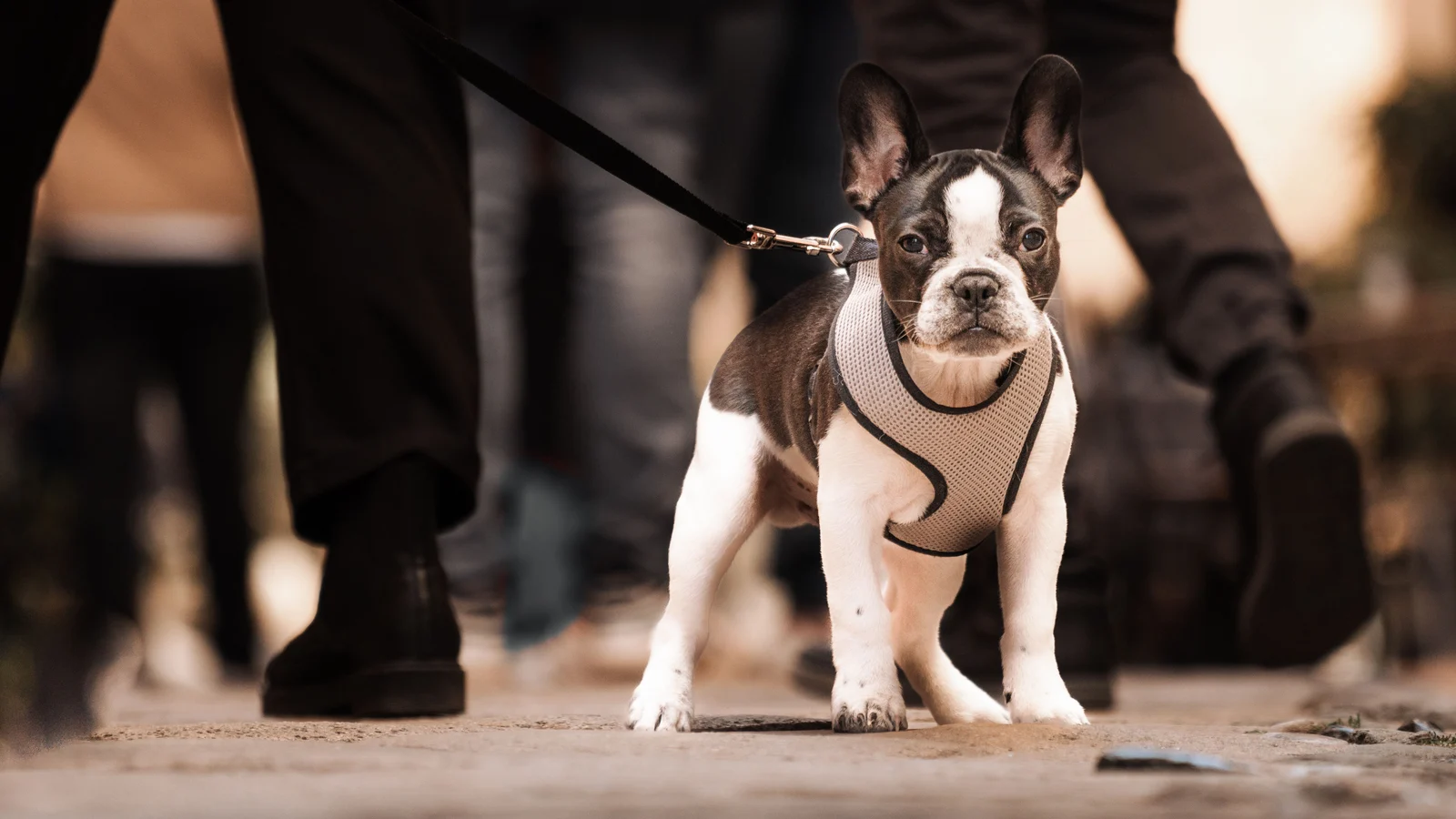
To leash train a puppy, start indoors and go slow. Let your puppy wear the collar or harness and leash around the house first, reward them for staying near you, teach them that a loose leash means forward progress, and build up to short, upbeat walks. Keep sessions brief and positive so the leash always predicts good things — never a fight.
Those first walks can be comical: a puppy who freezes, bites the leash, or bolts in every direction at once. That’s all normal. Leash training isn’t about control, it’s about teaching your puppy that walking with you is the best part of their day — and below is how to get there step by step.
When should you start leash training a puppy?
You can start the moment your puppy comes home, usually around eight weeks, with gentle indoor practice. There’s no need to wait for walks outside — in fact, the groundwork you lay inside, before the big wide world adds distractions, is what makes outdoor walks go smoothly later. Early, positive sessions set the tone for a lifetime of easy walks.

Step by step: leash training your puppy
1. Introduce the gear indoors
Let your puppy wear a well-fitted collar or harness for short spells around the house until it feels normal. Then clip on the leash and let them drag it (under supervision) so they get used to the weight before you ever hold the other end.
2. Build a positive association
Pair the leash and harness with treats, praise and play. You want your puppy to feel excited, not worried, when the gear comes out. A few minutes at a time is plenty.
3. Reward them for coming to you
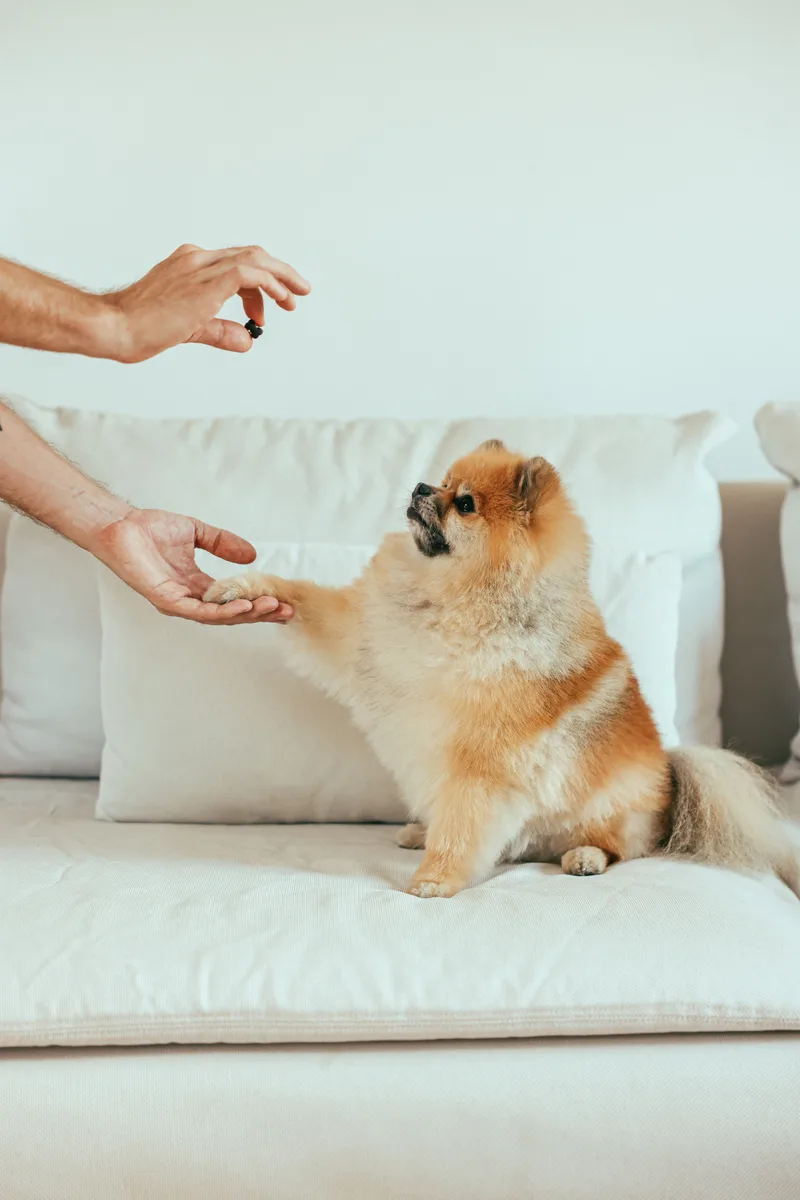
With the leash on indoors, reward your puppy every time they choose to be near you. A clicker or a marker word like “yes” followed by a treat teaches them that staying close pays off.
4. Teach that a loose leash moves forward
Walk a few steps; if the leash stays loose, reward and continue. The instant it goes tight, simply stop and wait — don’t yank or drag. When your puppy eases the tension and the leash loosens, move on again. This quietly teaches that pulling stops the walk and a loose leash keeps it going.
5. Take it outside in small doses
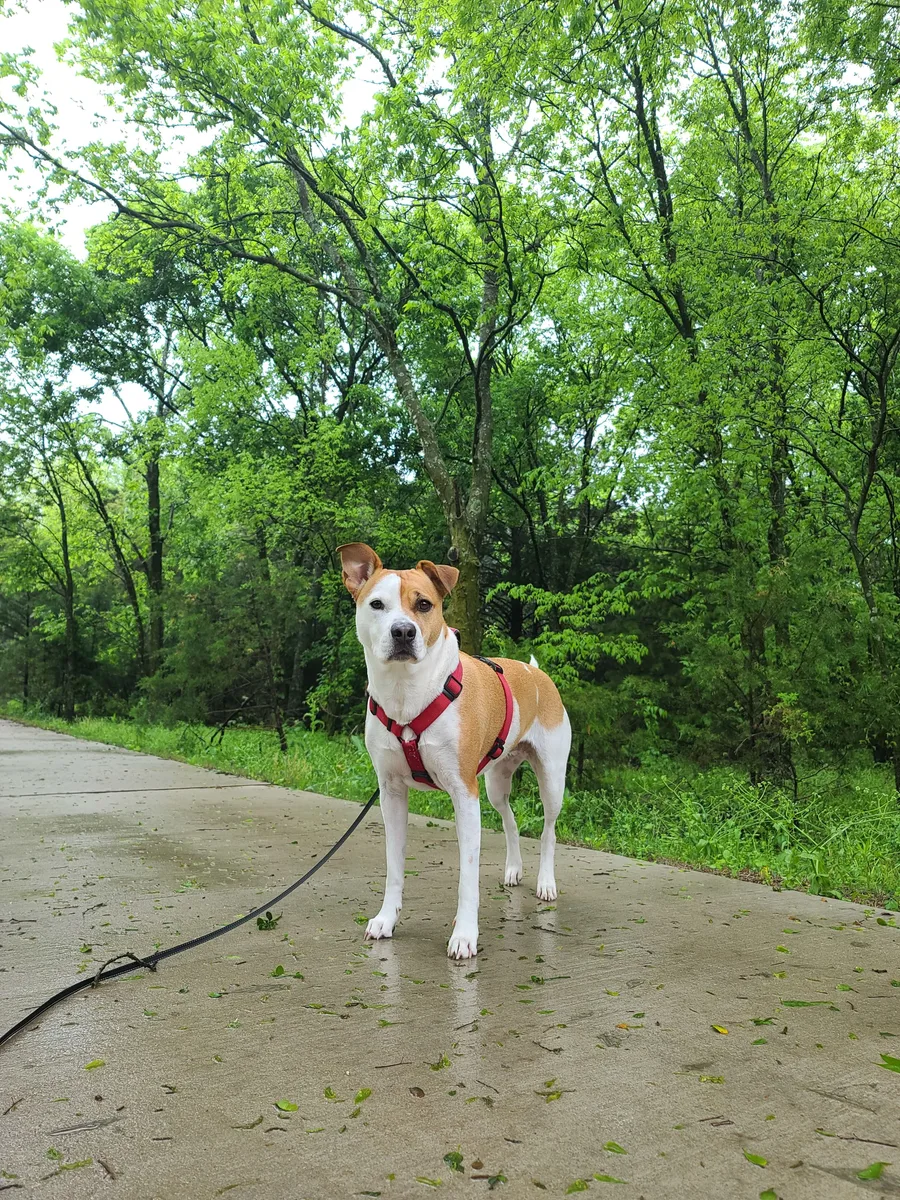
Start in a quiet spot like your garden or a calm street, keep first outings short, and bring high-value treats. Expect your puppy to be distracted by every smell and sound — that’s the work, not a failure. Reward attention and gradually build up distance and distractions.
Common leash-training problems
- Biting the leash: redirect to a toy, keep the leash boring, and reward your puppy for holding it loosely in their mouth-free “walking” mode. Most puppies grow out of it.
- Freezing or refusing to move: don’t drag. Crouch down, encourage with a treat, and reward any step toward you. Build confidence slowly.
- Pulling ahead: use the stop-and-wait method above consistently. A front-clip harness can help in the meantime, but the training is what lasts.
- Too excited outside: burn a little energy with play first, and start in low-distraction places before working up to busy ones.
Tips to keep it working
Keep sessions short and happy — a few minutes several times a day beats one long, frustrating slog. Always end on a win. Use a harness rather than a collar for pullers to protect your puppy’s neck, and stay patient: consistency and good treats, repeated daily, are what turn a wobbly puppy into a calm walking partner.
Reading your puppy beyond the leash
A puppy who freezes, pulls or chews the leash is telling you something — often “I’m overwhelmed,” “I’m too excited,” or “I’m not sure about this yet.” Traini’s AI dog translator helps you read those signals, so you can tell nervous from overstimulated and adjust the session to match. For more on raising a confident puppy, see our guides on crate training, potty training, and stopping puppy biting.
Frequently asked questions
At what age can I start leash training my puppy?
You can begin gentle indoor leash training as soon as your puppy comes home, usually around eight weeks. Early practice with the collar, harness and leash at home builds the foundation for smooth outdoor walks once vaccinations allow them.
Should I use a collar or a harness for a puppy?
A well-fitted harness is usually the safer choice for a puppy, especially one that pulls, because it takes pressure off the delicate neck and throat. A flat collar is fine for ID tags, but many owners walk puppies on a harness.
How do I stop my puppy pulling on the leash?
Use the stop-and-go method: when the leash goes tight, stop and wait; when it loosens, move forward and reward. This teaches your puppy that pulling gets them nowhere and a loose leash keeps the walk going. Consistency is everything.
Why does my puppy bite the leash?
Leash biting is normal puppy play and often a sign of excitement or energy. Redirect to a toy, keep the leash movement calm and boring, and reward loose, mouth-free walking. Most puppies outgrow it with patience.
This article is for general information and isn’t a substitute for professional training advice. If your puppy shows ongoing fear or distress on the leash, consider working with a qualified, reward-based trainer.