
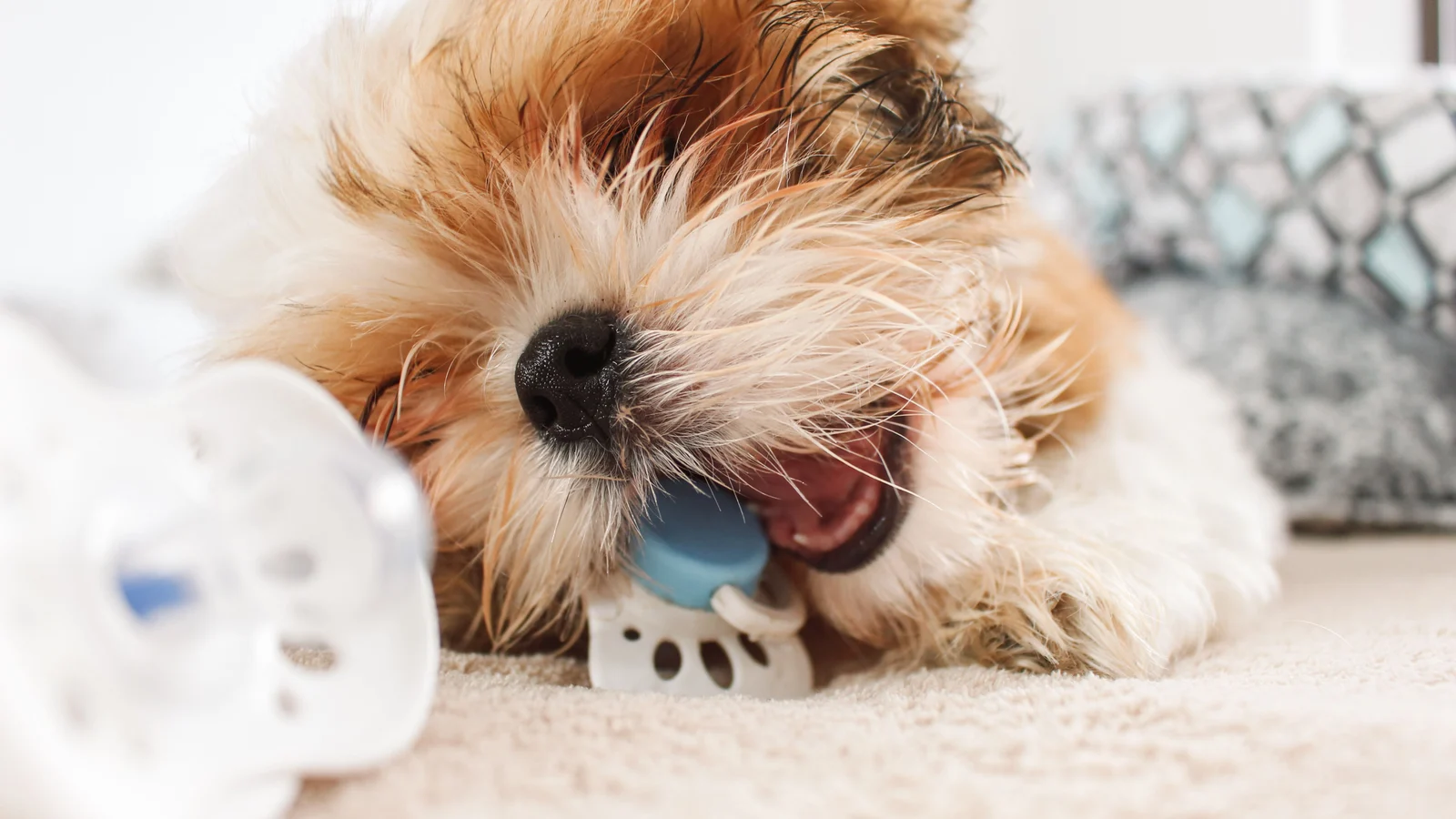
To stop a puppy from biting, redirect every nip onto a chew toy, and when teeth touch skin, yelp or say “ouch,” then pause play for a few seconds. This teaches bite inhibition — that teeth on people end the fun. Pair it with plenty of exercise, chew outlets, and rest, and never use your hands as toys. Most puppies outgrow mouthing by five to six months.
Those needle-sharp puppy teeth can turn a cuddle into an ambush. If your puppy chomps hands, ankles, and sleeves the moment play starts, you’re not doing anything wrong — mouthing is completely normal puppy behavior. But normal doesn’t mean you have to live with it, and how you respond now shapes how gentle your dog is for life.
Here’s how to stop a puppy from biting the right way — why they do it, the step-by-step method, what to avoid, and when nipping is more than ordinary play.
Why puppies bite and nip
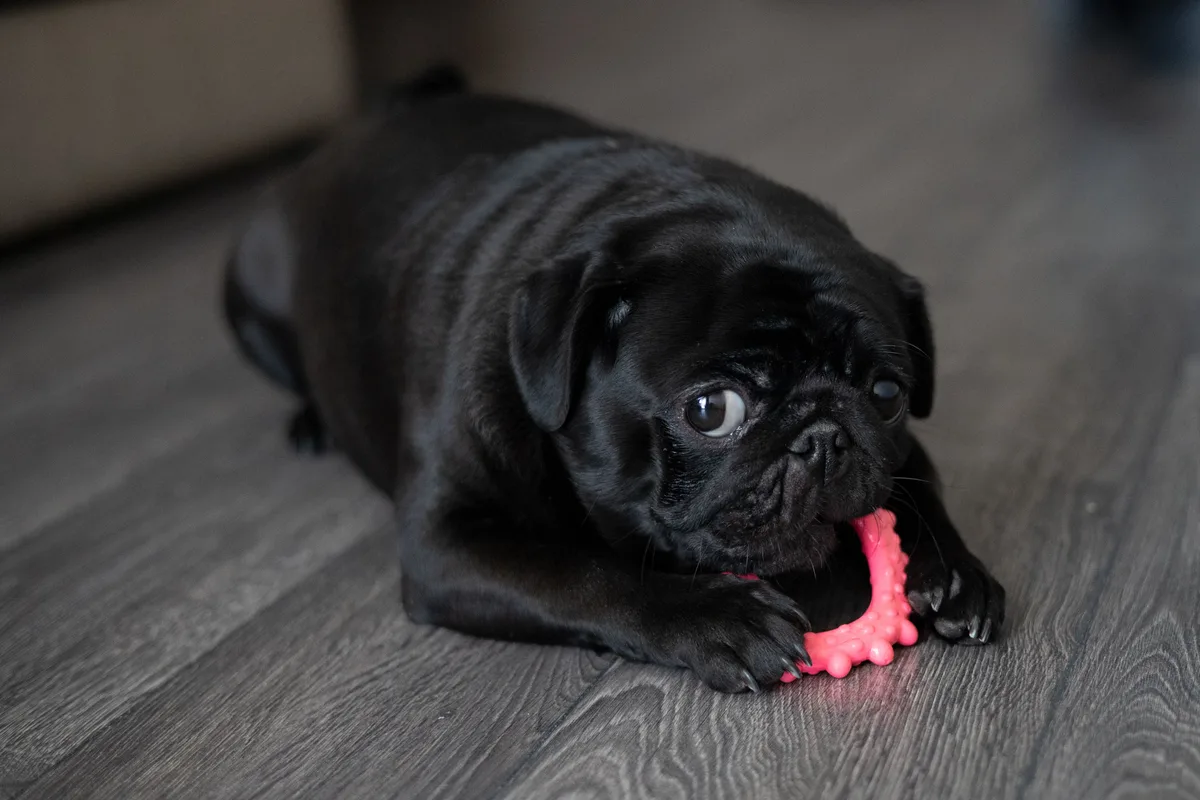
Puppies explore the world with their mouths, the way babies reach for everything. Biting is how they play, test boundaries, and soothe sore gums. The main reasons behind it:
- Play: littermates wrestle and mouth constantly; your puppy is simply playing the only way they know.
- Teething: between about three and six months, incoming adult teeth make gums ache, and chewing brings relief.
- Overexcitement or overtiredness: like an overtired toddler, a puppy past their limit gets nippier, not calmer.
- Attention and energy: a bored or under-exercised puppy uses teeth to start a game.
The goal isn’t to punish a natural behavior — it’s to teach bite inhibition, so your puppy learns to control the force of their mouth and to keep teeth off human skin entirely.
How to stop a puppy from biting, step by step
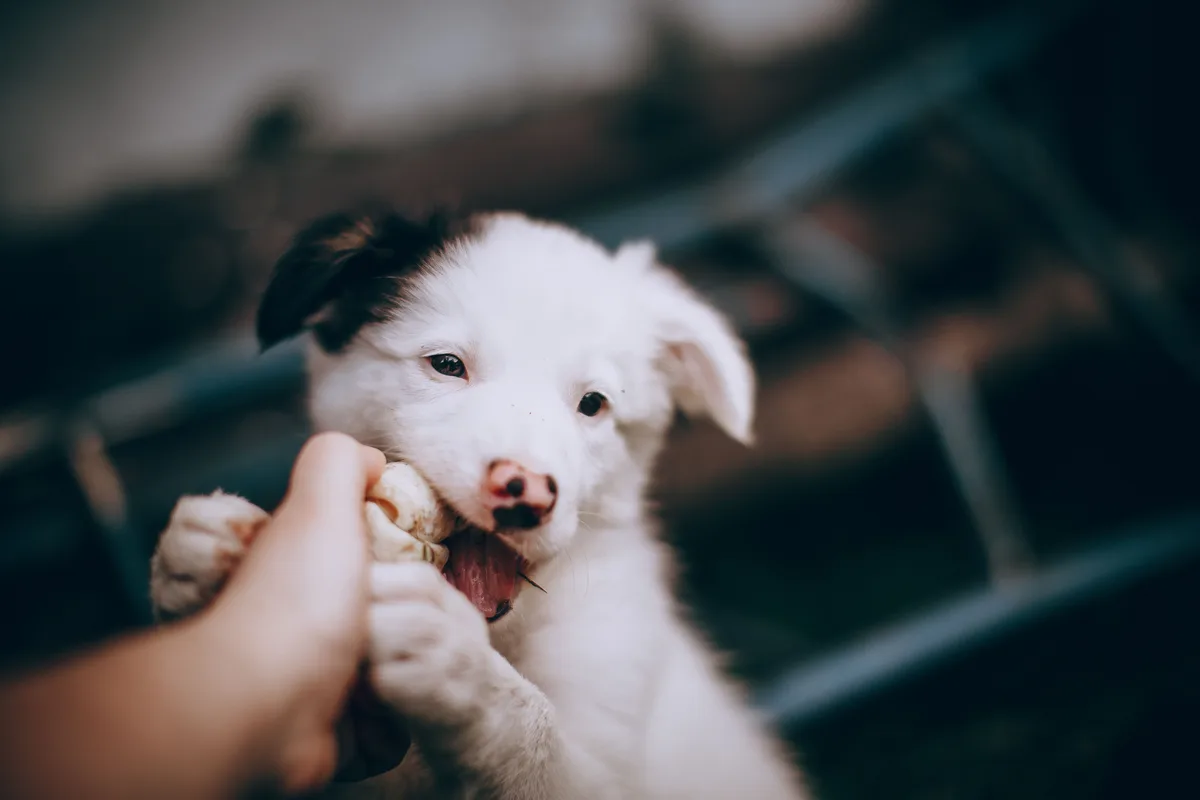
1. Redirect onto a toy
Keep chew toys within reach during play. The moment those teeth aim for your hand, swap in a toy. Your puppy learns that hands are not for biting, but toys are fair game.
2. Yelp and pause when teeth touch skin
If your puppy bites down, give a sharp “ouch!” or a high-pitched yelp and immediately stop playing — go still, pull your hands away, and look away for a few seconds. In a litter, a bitten puppy yelps and play stops; you’re speaking a language your puppy already understands: teeth on skin ends the fun.
3. Reward gentle play
When your puppy plays without biting, or licks instead of nips, praise warmly and keep the game going. Rewarding the calm, mouth-free moments is just as important as marking the bites.
4. Give a time-out for repeat biting
If your puppy keeps coming back harder, calmly end the session — stand up and step away, or pop them in their playpen for a minute or two to settle. The lesson: biting makes the fun person leave, every time.
5. Meet their needs for exercise and chewing
A puppy with enough physical and mental outlet bites far less. Offer daily play, short training games, and a rotation of chew toys — including a frozen one during teething to numb sore gums.
What not to do
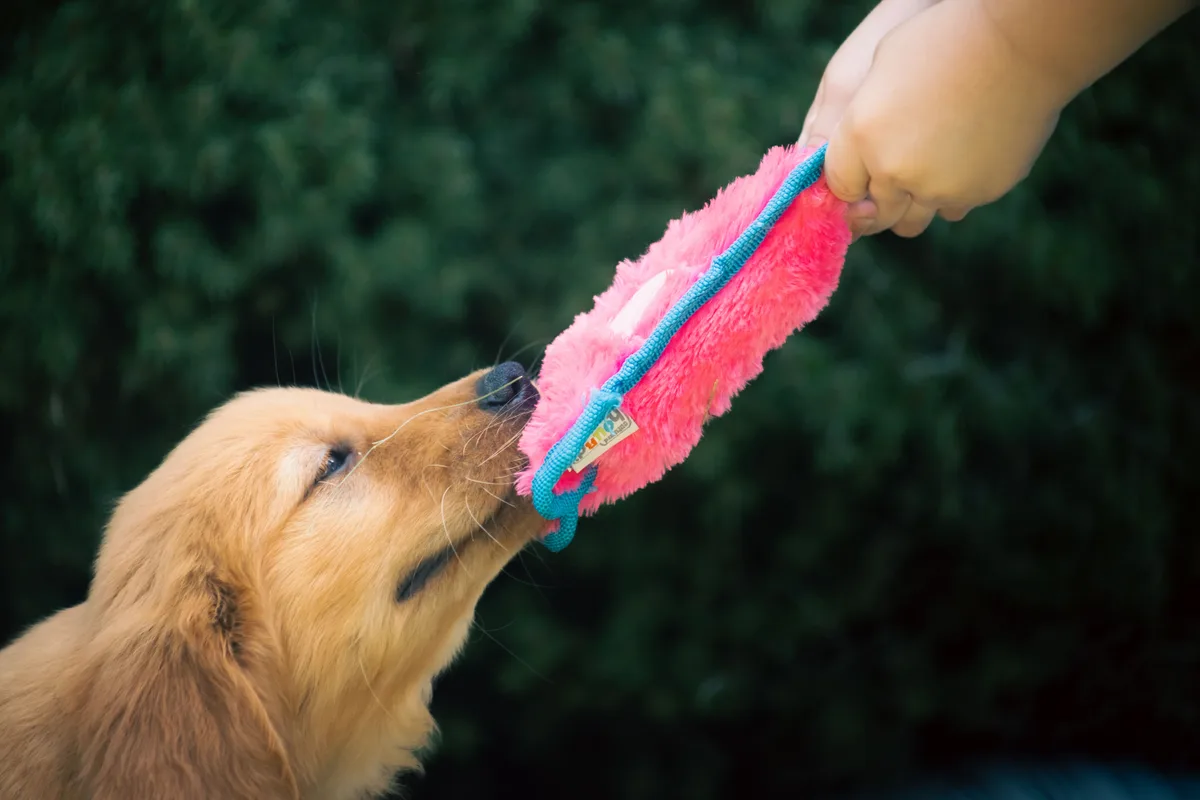
- Don’t use your hands as toys: wrestling and finger-wiggling games teach your puppy that hands are for biting.
- Don’t pull away fast: yanking your hand back mimics fleeing prey and triggers a harder chase-and-grab. Go still instead.
- Don’t hit, flick, or hold the muzzle: physical punishment creates fear and can make biting worse or turn it into real aggression.
- Don’t react with big, excited energy: loud reactions and flailing look like play and rev your puppy up further.
When does puppy biting stop?
Most puppies grow out of the worst mouthing by five to six months, once their adult teeth are in and consistent training has taught bite inhibition. Teething-related chewing eases around the same time. If you’re putting in the steps above every day and staying consistent across everyone in the household, you’ll usually see steady improvement well before then — the sharp, constant nipping gives way to a soft, polite mouth.
When biting is more than normal play
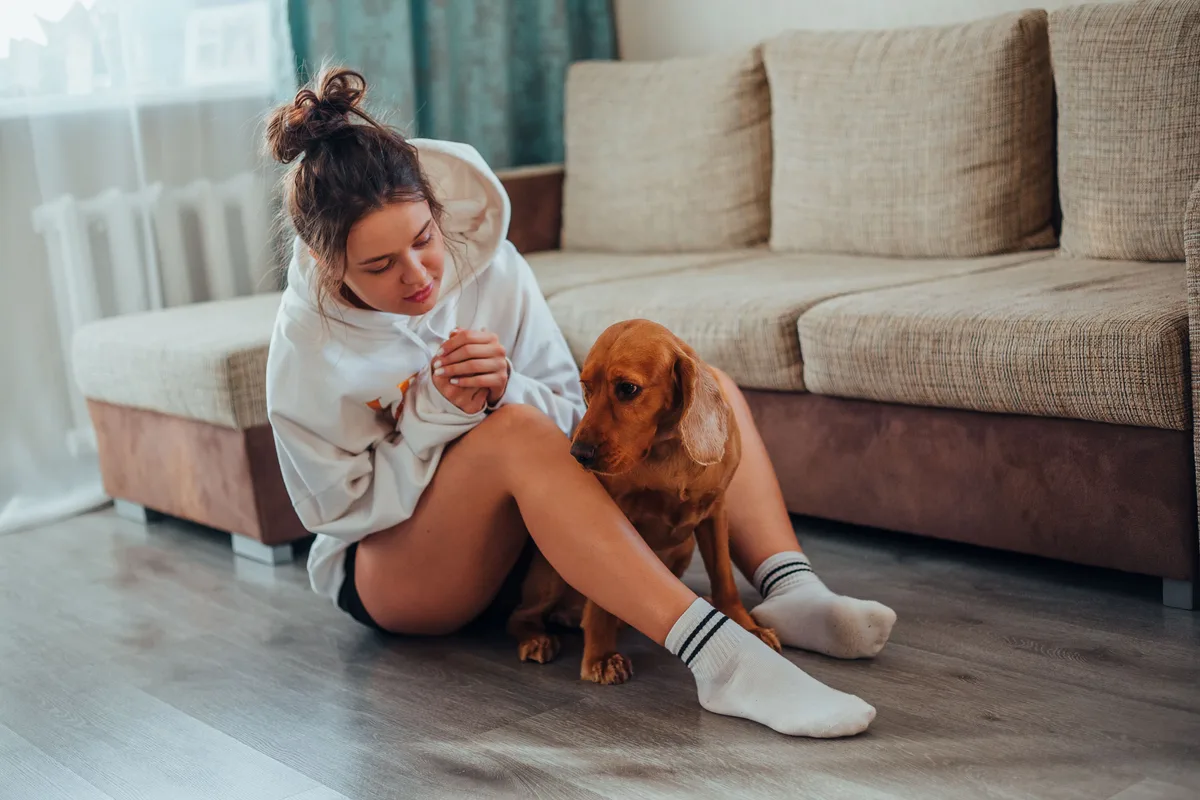
Occasionally, biting signals something beyond ordinary puppy play. Watch for teeth paired with a stiff body, a hard stare, growling, or snapping when you approach food, toys, or a resting spot — that can point to fear or resource guarding rather than play, and it’s worth help from a certified trainer or behaviorist early. Biting that gets harder and more frequent despite consistent training, or that’s aimed at specific triggers rather than general play, also deserves a professional eye before it becomes a bigger problem.
Reading your puppy beyond the biting
Stopping nipping starts with reading it — telling playful mouthing from overtired meltdown, from “I’m bored,” from the rare warning bite. Reading those signals is exactly what Traini is built for: translating your dog’s behavior and body language into plain language so you can respond to what’s really going on. When you’re not sure whether your puppy is overstimulated, teething, or genuinely upset, you can ask PetGPT about your specific situation. For more on raising a calm puppy, see our guides on crate training a puppy, stopping nuisance barking, and why dogs nibble and “cob”.
Frequently asked questions
Is it normal for my puppy to bite so much?
Yes — frequent mouthing and nipping is completely normal for puppies, especially during teething. It’s how they play and explore. What matters is teaching bite inhibition early so the behavior fades into gentle, controlled mouthing and then stops as they mature.
Should I let my puppy bite during play?
It’s best not to encourage teeth on skin at all. Let your puppy mouth toys freely, but redirect any biting of hands or clothing. Allowing some skin-biting makes the rule confusing — consistent “teeth on toys only” is easier for a puppy to learn.
Why does my puppy bite more in the evening?
Evening “zoomies” and nippy spells often mean your puppy is overtired, not under-stimulated. Just like a cranky toddler, an overtired puppy struggles to settle. A calm wind-down, a chew, or quiet crate time often helps more than another round of play.
When should I worry about puppy biting?
Be cautious if biting is paired with growling, a stiff body, or snapping around food, toys, or resting places, or if it grows harder and more frequent despite consistent training. Those signs point beyond normal play and are worth discussing with a certified trainer or behaviorist.
This article is for general training guidance. If your puppy’s biting is intense, escalating, or paired with signs of fear or aggression such as growling, stiffness, or guarding, consider consulting a certified dog trainer or your veterinarian.