
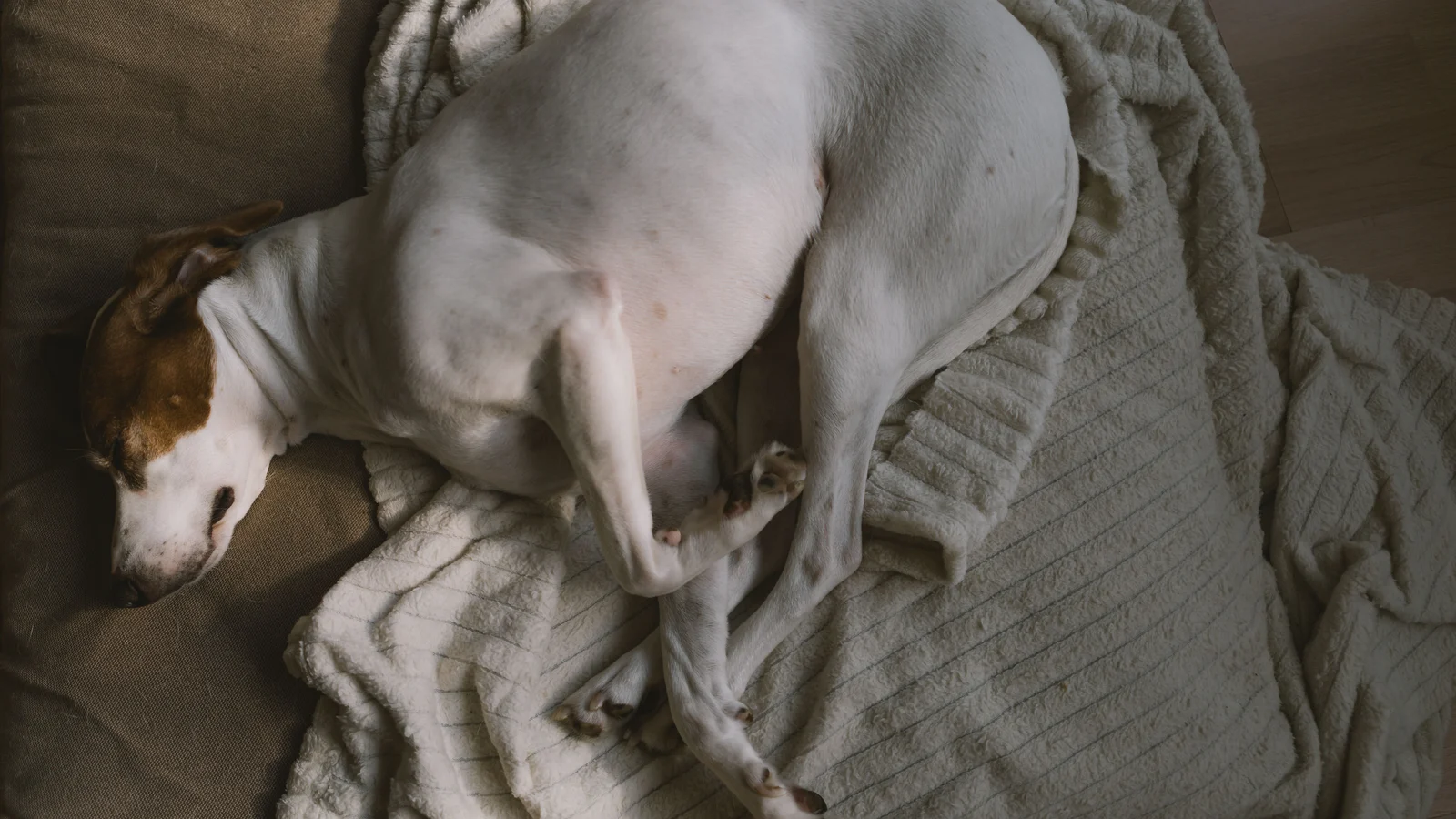
You’re about to climb into bed when you notice your dog already there, pawing and burrowing at the blankets — bunching the covers, scratching at the mattress, turning in circles — before finally collapsing into the exact nest they just built. It can be endearing, a little destructive, and slightly baffling all at once. But digging on the bed is one of a dog’s oldest instincts, and most of the time it’s simply your dog getting comfortable.
Here’s what it means when your dog digs on your bed, the ancient nesting instincts behind it, and when the burrowing is less about comfort and more about stress.
Is it normal for my dog to dig on my bed?
Yes — digging, pawing, and scratching at the bed before lying down is a completely normal, instinctive behavior. It comes from the natural drive to build a safe, comfortable nest, and it shows up in content, healthy dogs of all kinds. It’s only worth a closer look when the digging becomes frantic or compulsive, when it’s clearly driven by anxiety, or when it starts damaging your bedding — in which case your dog may be coping with stress rather than simply settling in for a nap.
The science: nesting, scent, and security

In the wild, canines dug and arranged a sleeping spot before rest — scraping out a hollow to control temperature, create a soft surface, and make a safe, enclosed place to sleep. Your dog carries that nesting instinct with them, so they “prepare” the bed even though it’s already soft and warm. There’s a scent element too: dogs have scent glands in their paws, and digging deposits their smell, marking the bed as a familiar, reassuring place that’s theirs. And because your bed is soaked in your scent, it’s an especially comforting spot — digging into it lets your dog surround themselves with the smell of their favorite person.
Why does my dog dig on my bed?
Building a comfortable nest
The most common reason is simple comfort. Pawing and bunching the blankets is your dog’s way of shaping the perfect bed before lying down — an instinct to make the surface just right, exactly as their ancestors did.
Marking it with their scent
With scent glands in their paws, digging lets your dog leave their personal smell on the bed. They’re quietly claiming the spot as their own and making it feel familiar and safe.
Seeking your scent and security
Your bed smells overwhelmingly of you, which is deeply reassuring to your dog. Burrowing into your blankets lets them nest in your scent — one of the most comforting places in the house.
Temperature control
Digging once helped expose cooler or warmer ground. Your dog may paw and rearrange the covers to find the coziest temperature, burrowing under blankets to warm up or pushing them aside to cool down.
Excitement, energy, or play
Sometimes a good dig is just an outburst of happy energy. A dog in a playful mood may paw and burrow at the bed as part of the fun before settling — or not settling at all.
Anxiety or stress
Repetitive digging can also be a way to self-soothe. A dog that feels anxious — during storms, when left alone, or after a change at home — may burrow into the bed to create a secure, den-like space and calm themselves.
Digging on the bed in specific situations

Digging right before lying down
A round of pawing and circling followed by a satisfied flop is textbook nesting — brief, relaxed, and nothing to worry about. Your dog is just fluffing their bed.
Burrowing under the covers
Digging that ends with your dog tunneling under the blankets is usually about warmth and security. Many dogs, especially smaller or short-coated ones, love the cozy, enclosed feeling of being covered.
Digging at night or when you leave
Burrowing into your scent-rich bed when you’re gone or at bedtime is often about comfort and reassurance. If it comes with clear distress when you leave, though, it may be part of separation anxiety.
A sudden, frantic increase
Digging that becomes intense, frantic, or hard to interrupt — especially if it’s new — leans away from simple nesting and toward stress, excess energy, or anxiety that’s worth understanding.
When it could signal a problem
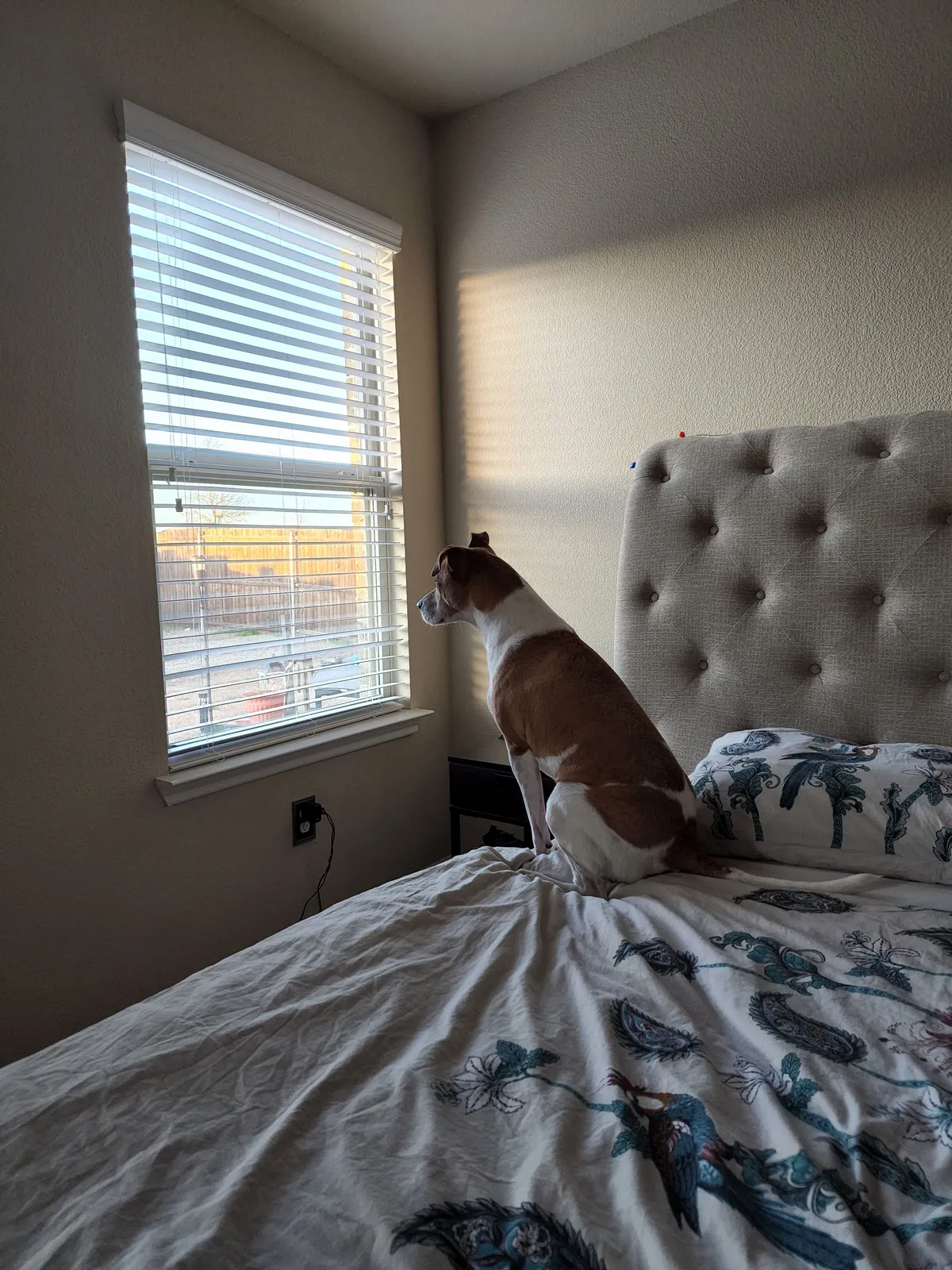
Digging on the bed is rarely a concern on its own, but a few patterns deserve attention. Watch for digging that’s frantic rather than relaxed, burrowing you can’t easily interrupt, or a habit paired with other signs of stress — pacing, panting, whining, or destructive behavior when you leave. A sudden, intense increase, especially alongside changes in appetite, energy, or overall behavior, is worth a closer look. If the digging is rooted in anxiety or it’s shredding your bedding, it helps to address the underlying cause rather than just the behavior.
How to respond to a dog who digs on your bed

- Allow the harmless kind: a little nesting before a nap is natural and healthy — there’s no need to stop it if your bedding can take it.
- Give them their own diggable bed: provide a soft dog bed with a blanket they’re allowed to paw and arrange, so the instinct has a welcome outlet of its own.
- Add exercise and enrichment: if excess energy is behind it, more walks, play, and puzzle toys help your dog settle more calmly at rest time.
- Address anxiety at the source: if the digging looks more worried than cozy, work on the trigger — alone-time training, a predictable routine — rather than only interrupting it.
- Keep nails trimmed: shorter nails protect your sheets, mattress, and your dog’s paws from an enthusiastic digging session.
Reading your dog beyond the digging
Digging on the bed can mean “I’m making this just right,” “this spot is mine,” or “I’m anxious and need to feel safe” — and telling a cozy nesting ritual from a stress signal is the whole challenge. That’s what Traini is built for: translating your dog’s behavior and emotional signals into plain language so you can understand why they’re doing what they do. When you’re not sure whether your dog’s bed-digging is happy instinct or a sign of anxiety worth acting on, you can ask PetGPT about your specific situation and get an answer grounded in your dog’s context. For more on how your dog rests and settles, see our guides on why your dog sleeps on you and why dogs get the zoomies.
Frequently asked questions
Why does my dog dig on my bed before lying down?
This is a nesting instinct. Your dog is “building” a comfortable spot the way their ancestors scraped out a hollow before rest — shaping the surface, adjusting the temperature, and leaving their scent so the bed feels safe and familiar.
Why does my dog dig on the bed and not their own?
Your bed is saturated with your scent, which is especially reassuring, and it’s often softer and warmer. Many dogs prefer to nest in your spot because it feels safest. Giving them a cozy, scent-familiar bed of their own can help redirect the habit.
Is digging on the bed a sign of anxiety?
It can be. Relaxed digging before a nap is normal, but frantic, repetitive burrowing that’s hard to interrupt — especially with pacing, whining, or distress when you leave — can be a self-soothing response to stress worth looking into.
How do I stop my dog from digging on my bed?
Offer a soft, diggable dog bed of their own, increase daytime exercise and enrichment, and address any anxiety triggers. Keep nails trimmed and gently redirect intense digging to their own bed or a toy rather than punishing it.
This article is for general information and isn’t a substitute for professional veterinary or behavioral advice. If your dog’s bed-digging is sudden, frantic, impossible to interrupt, or paired with other signs of stress or anxiety, please consult your veterinarian or a qualified behaviorist.