
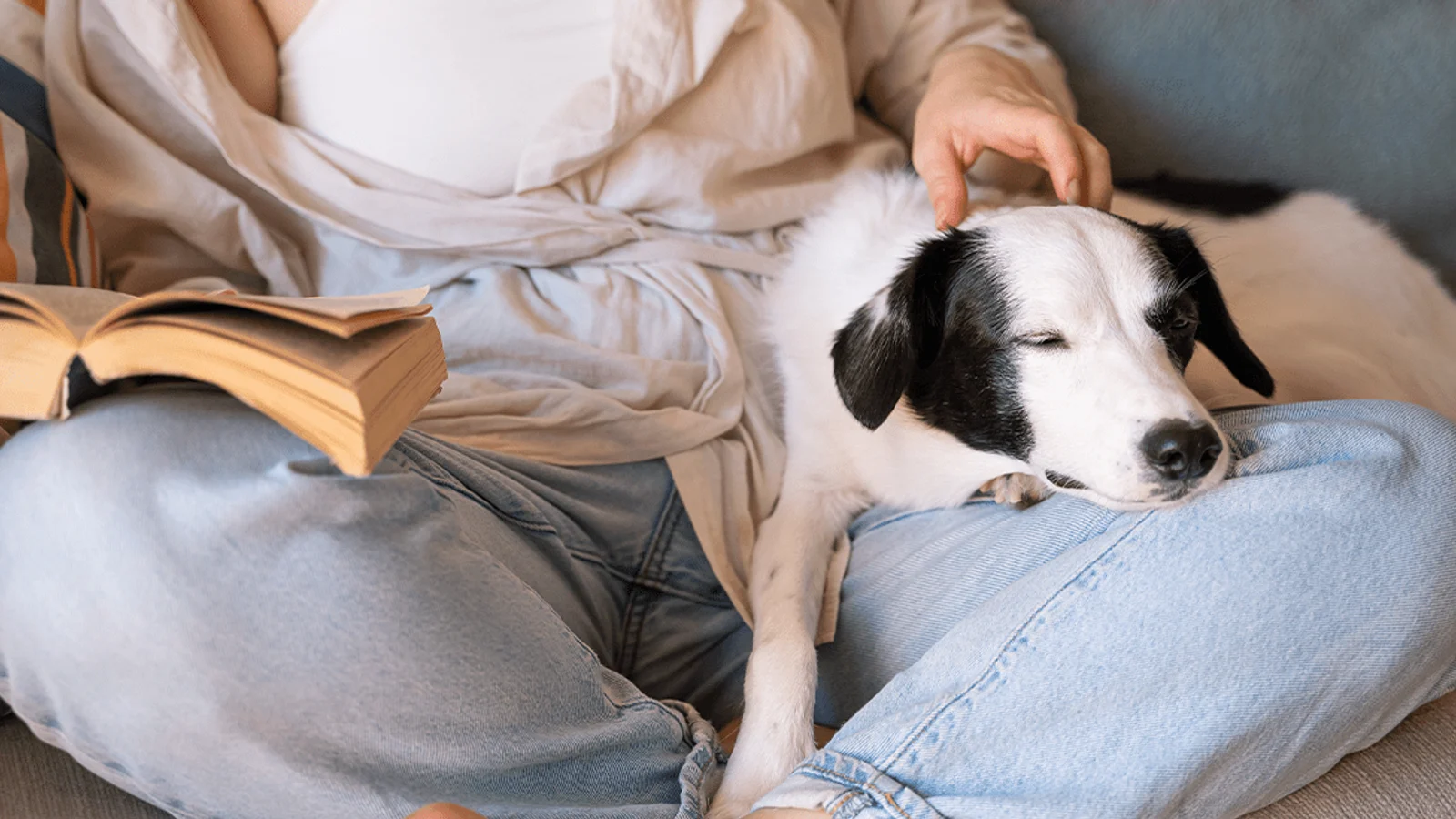
You settle onto the couch and, within a minute, your dog climbs up, circles once, and flops down right on top of you — a warm, heavy weight against your chest or across your legs. For a lot of dogs, sleeping on their person is the most contented thing they do all day, and it’s one of the clearest signs that they feel safe with you.
Here’s what it means when your dog sleeps on you, why some dogs insist on it every single night, and when the habit is worth gently reshaping.
Is it normal for my dog to sleep on me?
Yes — sleeping on or against you is completely normal and usually a sign of trust and affection. Dogs are social sleepers who, left to their own instincts, rest in a pile with the ones they’re bonded to. Choosing to sleep on you means you’re part of that inner circle. It only becomes something to manage when it’s driven by anxiety, when it disrupts everyone’s sleep, or when a dog can’t settle anywhere else at all.
The science: sleep, safety, and bonding
Dogs descend from animals that slept together for warmth and protection, and that instinct is still strong. Resting in contact with a trusted companion lowers stress and signals safety — a dog that sleeps pressed against you is telling you it feels secure enough to be completely off guard in your presence. Physical closeness during rest also reinforces the bond between you, much the way it does between dogs that have grown up together.
Why does my dog sleep on me?
Affection and bonding
The simplest reason is love. Sleeping on you is a way of staying close to the person your dog is most attached to, and the contact itself strengthens that connection — a quiet, full-body version of a cuddle.
Warmth and comfort
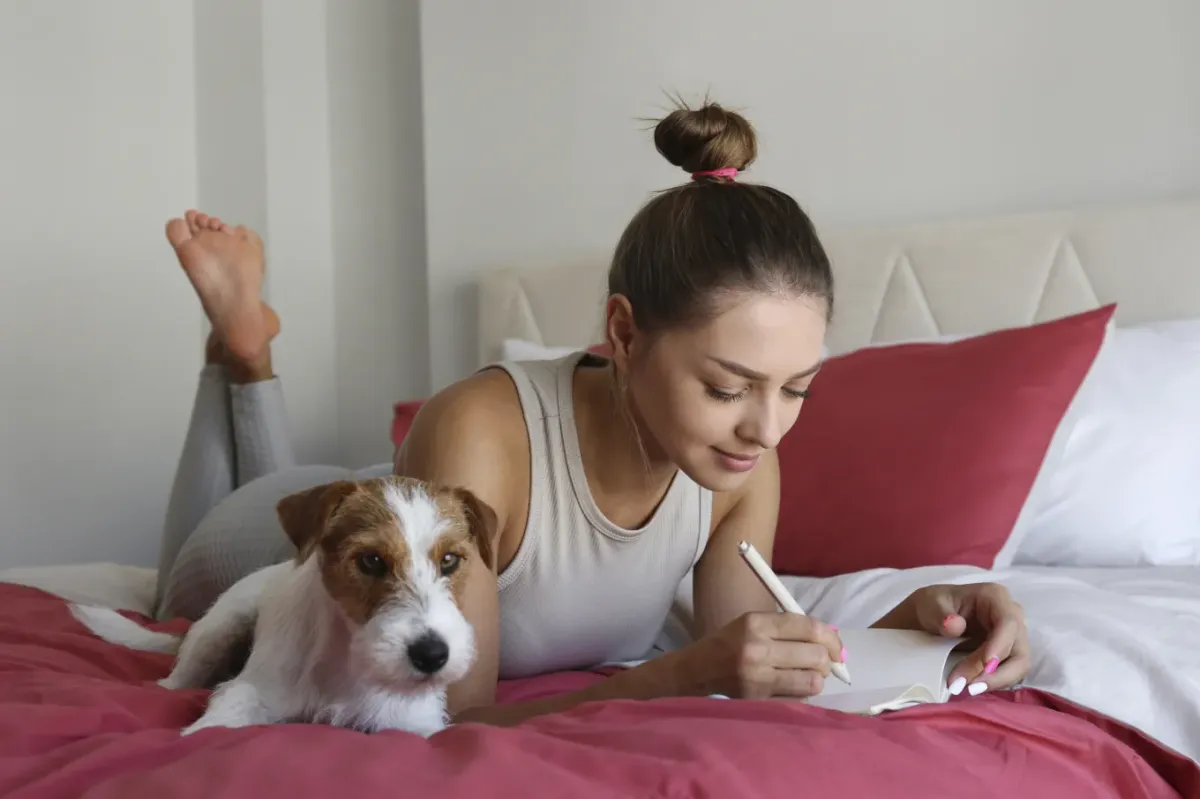
You’re warm, and you’re soft. Many dogs seek out the heat and comfort of a human body, especially smaller breeds, short-coated dogs, and puppies who lose warmth quickly. Sleeping on you is simply the coziest spot in the house.
Safety and security
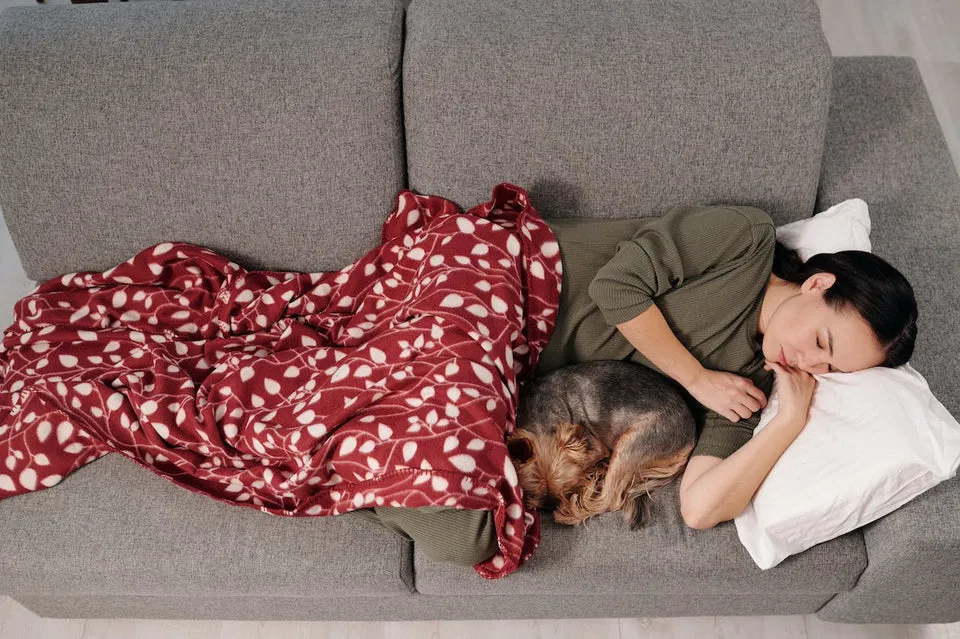
Sleep is a vulnerable state, and dogs instinctively want to rest somewhere they feel protected. Lying on you — ideally where they can feel you breathe — lets an anxious or cautious dog relax completely, knowing their trusted person is right there.
Scent and reassurance
Your scent is deeply reassuring to your dog. Sleeping on you surrounds them with that familiar smell, which has a genuinely calming effect, especially at night or in an unfamiliar environment.
Separation anxiety or insecurity
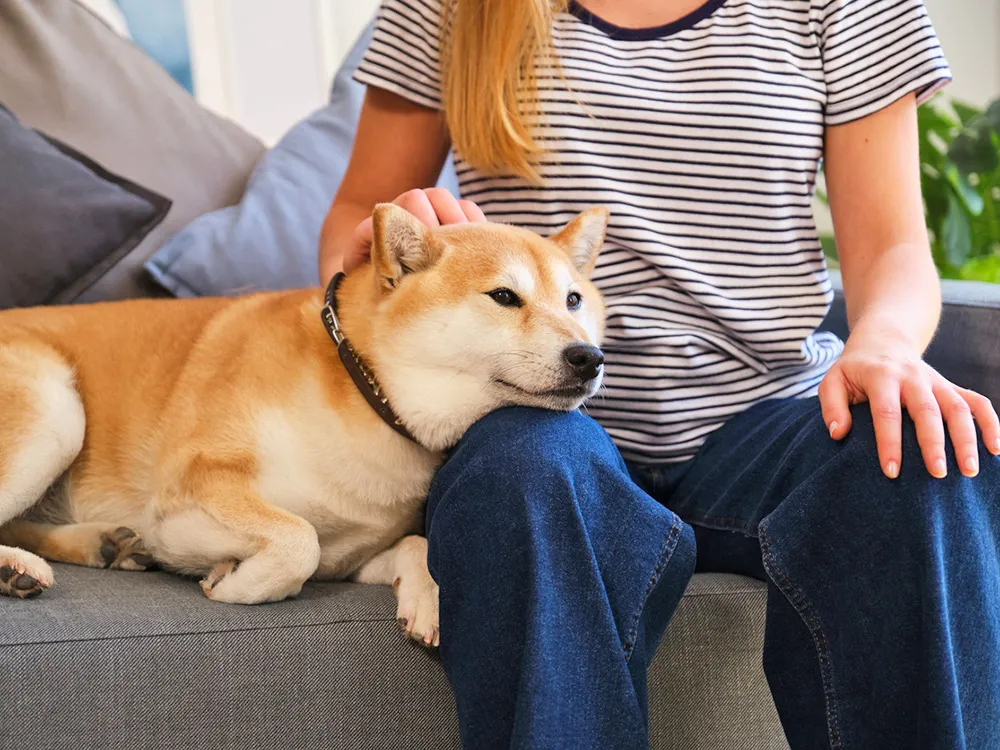
Sometimes sleeping on you is more need than preference. A dog that struggles to be apart from you may sleep on top of you to stay as close as possible. If it comes with distress when you leave, pacing, or trouble settling alone, the sleeping may be one piece of a larger anxiety.
It’s become a habit
If sleeping on you has always been welcomed, your dog has learned it’s allowed and comfortable — so they keep doing it. Much nightly pile-on is simply a well-rehearsed routine you’ve both grown used to.
Sleeping on you in specific situations
On your chest or lap
A dog that beelines for your chest or lap is usually after maximum contact and the comfort of your heartbeat and breathing. It’s about as affectionate as sleeping positions get.
At your feet or against your legs
Resting against your legs or feet keeps your dog connected to you while staying a little more independent — close enough to feel you move, ready to follow when you do.
At night, in your bed
Many dogs sleep best alongside their person at night, when the house is dark and quiet. For a confident dog this is pure comfort; for an anxious one, nighttime closeness can be especially reassuring.
A sudden change
A dog that suddenly starts sleeping on you when it never used to may be responding to stress, a change at home, feeling unwell, or simply getting older and seeking more comfort. A sudden shift is worth a closer look.
When it could signal a problem
Sleeping on you is rarely a concern on its own, but a few patterns are worth attention. Watch for sleeping on you paired with clear separation anxiety (distress when you leave, destructive behavior, an inability to settle without you), a sudden increase in clinginess alongside other changes — restlessness, appetite changes, or signs of pain — or a dog that seems unable to rest anywhere unless it’s touching you. Clinginess that’s grown out of character, especially with other new symptoms, is worth mentioning to your vet to rule out discomfort or illness.
How to respond to a dog who sleeps on you
- Enjoy it if you don’t mind it: a dog that sleeps on you is paying you a real compliment — if the arrangement works for both of you, there’s no need to change it.
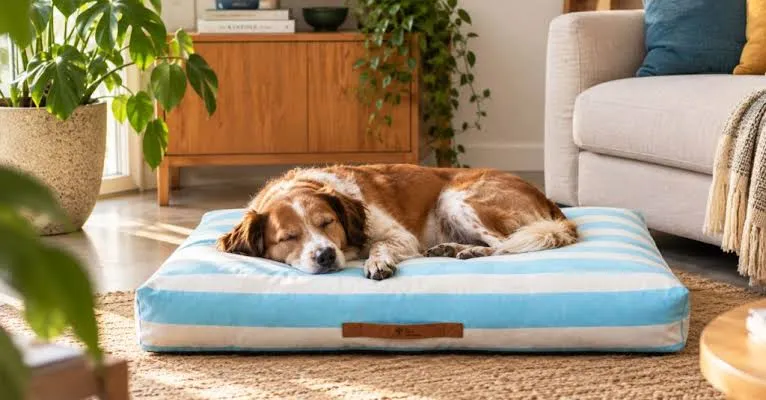
- Give them a great alternative: if you’d rather reclaim your space, set up a warm, comfortable dog bed right next to you and reward your dog warmly for settling there.
- Be consistent: if sleeping on you is sometimes allowed and sometimes not, the mixed message makes it harder — pick a rule and keep to it.
- Check for anxiety: if the need to be on you looks more worried than cozy, work on gradual alone-time and settling skills rather than simply blocking the behavior.
- Read the whole dog: loose, heavy, and relaxed means contentment; tense, restless, or unable to settle means look closer at what’s driving it.
Reading your dog beyond the cuddles
A dog sleeping on you can mean “I love you,” “I feel safe,” “I’m cold,” or “I’m worried” — and knowing which is the whole point. That’s what Traini is built for: translating your dog’s behavior and emotional signals into plain language so you can understand why they’re doing what they do. When you’re not sure whether your dog’s need to sleep on you is happy attachment or a sign of anxiety, you can ask PetGPT about your specific situation and get an answer grounded in your dog’s context. For more on how your dog shows affection, see our guides on why your dog sits on you and why your dog licks you so much.
Frequently asked questions
Why does my dog sleep on me and not my partner?
Dogs often choose the person they feel most bonded to, or simply the one who is warmest, stillest, or most reliably welcoming at bedtime. It’s usually a sign you’re their comfort person — not a reflection of how they feel about anyone else.
Is it bad to let my dog sleep on me?
For most people and dogs, no — it’s a normal, affectionate habit. Reconsider only if it disrupts your sleep, if your dog resource-guards the spot, or if the behavior is rooted in anxiety that would be healthier to address directly.
Why does my dog sleep on me only at night?
Nighttime is dark, quiet, and vulnerable, so the instinct to rest close to a trusted companion is strongest then. Your scent and presence are especially reassuring overnight, which is why many dogs save their closest contact for bedtime.
Why has my dog suddenly started sleeping on me?
A sudden change can follow stress, a disruption at home, aging, or feeling unwell. If it appears out of nowhere alongside other changes in behavior, appetite, or energy, it’s worth a check with your vet to rule out discomfort.
This article is for general information and isn’t a substitute for professional veterinary or behavioral advice. If your dog’s need to sleep on you is sudden, driven by clear anxiety, or paired with other changes in behavior or health, please contact your veterinarian.