
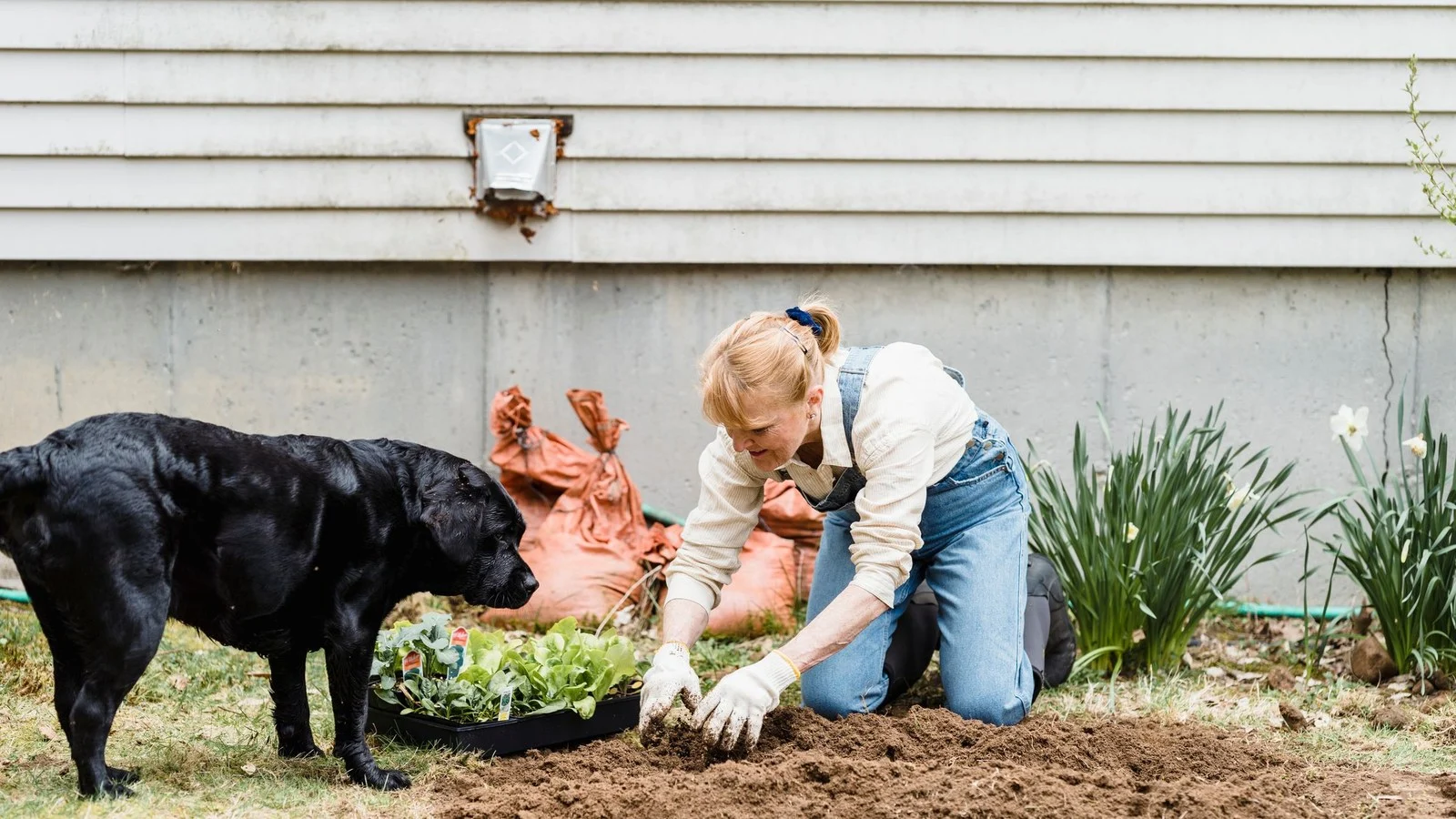
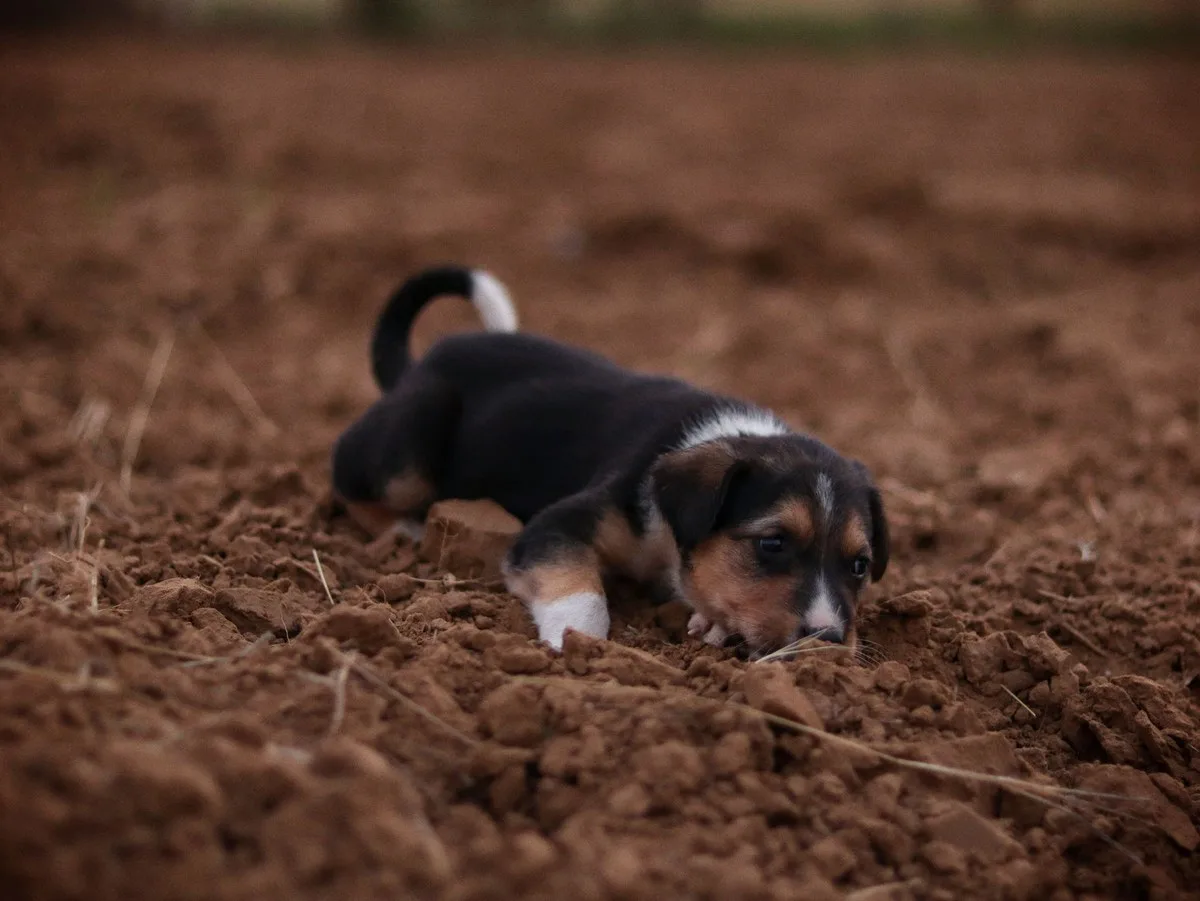
Why does my dog eat dirt? Eating dirt is a form of pica — eating non-food items. It’s often behavioral (boredom, stress, or simply liking the taste and smell), sometimes driven by hunger, and occasionally a sign of a nutritional gap or a medical issue like anemia or an upset stomach. The odd mouthful of soil is usually harmless, but regular or compulsive dirt-eating is worth looking into, because it can lead to blockages, poisoning, or parasites.
A dog nosing into the garden for a snack of soil can be puzzling. Most of the time it’s a habit rather than an illness — but it’s one worth understanding so you can tell the difference. Here’s what’s usually going on.
Behavioral reasons dogs eat dirt
Boredom and stress. An under-stimulated or anxious dog may dig and eat dirt simply for something to do. More exercise, enrichment, and attention often reduce it.
Taste and smell. Soil can hold traces of food, compost, or interesting organic matter, and some dogs just like the texture. This is the same curiosity behind eating grass.
Habit and attention. If eating dirt reliably gets a big reaction from you, a dog may repeat it to get attention.
Medical causes to rule out
Sometimes pica points to something physical. Nutritional deficiencies, anemia (low red blood cells), or gastrointestinal discomfort can drive a dog to eat dirt, as can some conditions that affect appetite and digestion. If the dirt-eating is new, sudden, intense, or paired with other symptoms — tiredness, pale gums, weight loss, vomiting, or the kind of gut upset we cover in eating poop — a vet check is the right call to look for an underlying cause.
Risks and how to curb it
Beyond the cause, the dirt itself carries hazards: intestinal blockage from large amounts, pesticides, fertilizers, or toxins in the soil, parasites, and cracked teeth from stones. To curb it, pick up during walks and redirect, increase exercise and enrichment, make sure meals are satisfying, and block access to tempting garden spots. Reading your dog’s mood around the behavior helps too — an AI dog translator like Traini’s PetGPT can help you gauge whether it’s boredom, anxiety, or excitement driving it, so you can respond to the real need. It often overlaps with other mouthing habits, like licking the couch.

Frequently Asked Questions
Is it bad if my dog eats dirt?
An occasional nibble is usually harmless, but regular dirt-eating isn’t ideal. The soil can contain pesticides, toxins, parasites, or stones, and large amounts can cause a blockage — so it’s a habit worth discouraging and monitoring.
Does eating dirt mean my dog is missing nutrients?
It can, but it’s not the most common reason. Boredom and taste are usually bigger factors. If your dog is on a complete, balanced diet and still eats dirt compulsively, ask your vet to check for deficiencies or anemia.
How do I stop my dog from eating dirt?
Limit access to tempting spots, increase exercise and enrichment, keep walks engaging, and redirect to a toy or treat when they start. If it’s compulsive or sudden, see your vet to rule out a medical cause first.
When should I worry about dirt-eating?
Worry if it comes on suddenly or intensely, or alongside tiredness, pale gums, vomiting, diarrhea, or weight loss. Those combinations suggest a medical issue and warrant a prompt vet visit.
This article is for general educational purposes and isn’t a substitute for professional veterinary or behavioral advice. If your dog eats dirt compulsively or shows other symptoms, please consult your veterinarian to rule out an underlying cause.