
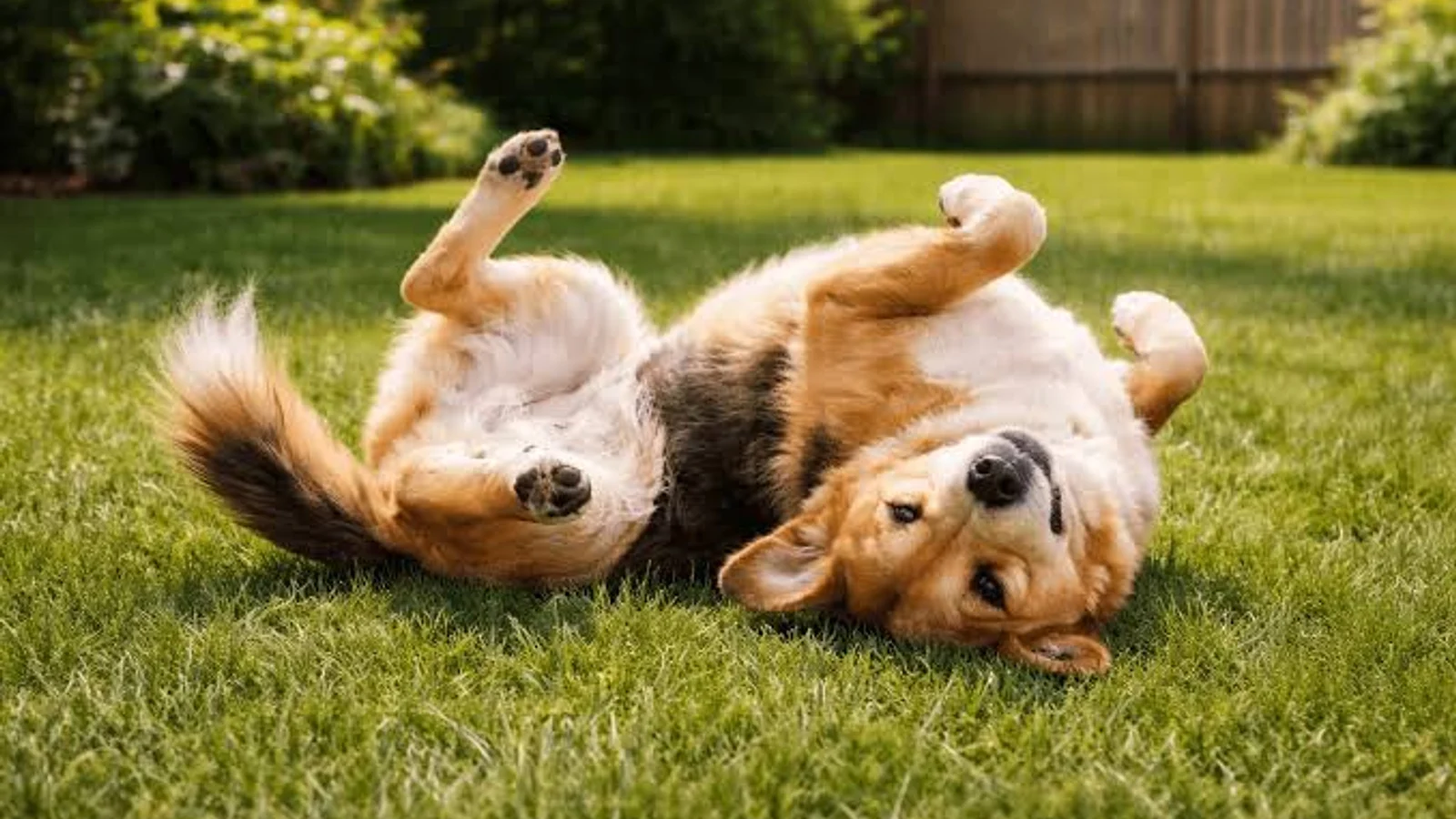
You let your dog off the leash, and before you can take two steps they drop a shoulder, flip onto their back, and squirm joyfully across the grass — legs in the air, a blissful look on their face. Rolling in the grass is one of the most comical, satisfied-looking things dogs do, and most of the time it’s exactly what it looks like: pure enjoyment. But there are a few surprising instincts behind it, too.
Here’s what it means when your dog rolls in the grass, the ancient reasons behind the habit, and when a good roll is actually a sign of an itch worth checking.
Is it normal for my dog to roll in the grass?
Yes — rolling in the grass is a completely normal, instinctive dog behavior. It shows up in happy, healthy dogs of every breed and age, and usually just means your dog is feeling good. It’s only worth a closer look when the rolling is paired with constant scratching, biting at the skin, or signs of irritation — in which case the roll may be your dog trying to relieve an itch rather than simply having fun.
The science: scent, instinct, and inheritance
Much of this behavior traces back to your dog’s wild ancestors. Wolves and wild dogs roll in interesting or strong-smelling things for a mix of reasons that still drive your dog today — gathering scents, masking their own smell, and communicating with the group. Dogs also experience the world through their nose far more than we do, so a patch of grass that looks plain to you can be a rich, layered landscape of smells worth wearing home. Rolling is where that deep scent instinct meets the simple physical pleasure of a good scratch.
Why does my dog roll in the grass?
It simply feels good
Sometimes a roll is just a roll. Grass makes a satisfying full-body scratching post, and wriggling around on it feels wonderful — especially along the back and shoulders, spots a dog can’t easily reach on their own.
Picking up an interesting scent
Dogs love to wear smells. Rolling in grass — particularly a spot where another animal has been — lets your dog coat themselves in an intriguing scent and carry it around, a bit like putting on a favorite perfume.
Masking their own scent
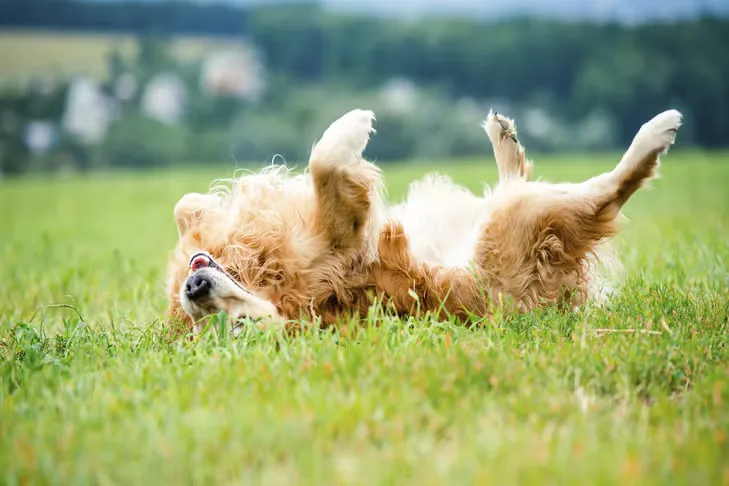
This is the ancestral one. Wild dogs rolled in strong smells to disguise their own scent while hunting, so prey wouldn’t detect them. Your dog has no need to hunt, but the instinct to cover their natural smell with something stronger is still wired in.
Relief from itchy or irritated skin
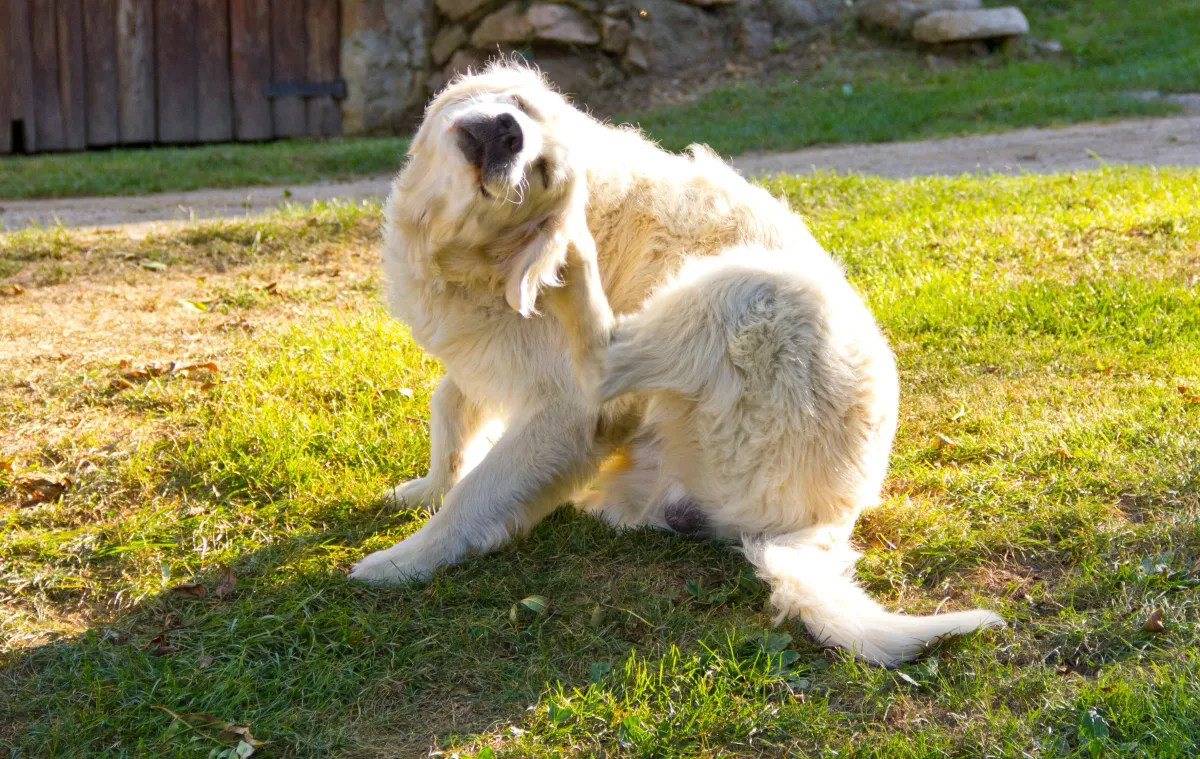
Rolling can be a way to scratch an itch your dog can’t reach. If the grass-rolling is frequent and intense and comes with scratching, licking, or biting at the skin, allergies, dry skin, or parasites may be the real driver.
Excitement and play
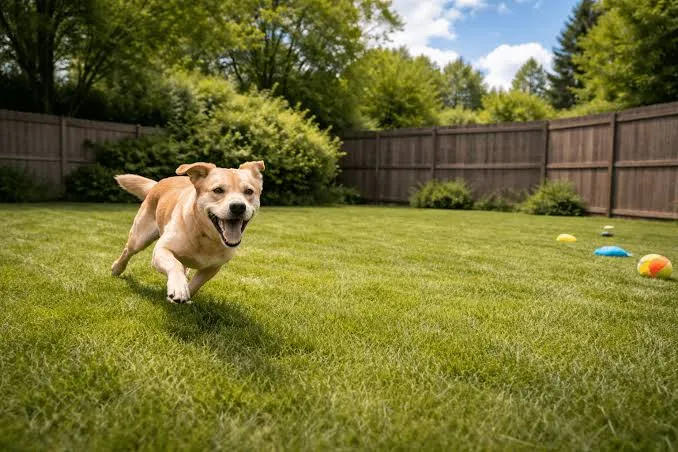
A good roll is often just an expression of pure joy. Dogs frequently flip onto their backs and wriggle during play or a burst of excitement — the grass version of a happy dance.
Getting rid of a new smell
Freshly bathed dogs are famous for racing outside to roll. To your dog, shampoo smells wrong, so they’ll often roll in the grass straight afterward to replace that clean scent with something that smells more like themselves.
Rolling in specific situations
Rolling right after a bath
This is the classic “undo the shampoo” roll. Your dog is trading the unfamiliar clean smell for the comforting, doggy scent of the outdoors — frustrating for you, deeply satisfying for them.
Rolling in something smelly
If your dog makes a beeline for a particular patch and rolls with real purpose, they’ve almost certainly found a scent worth wearing. Unpleasant to us, irresistible to them.
Rolling paired with lots of scratching
Rolling that comes with frequent scratching, licking, nibbling, or red, irritated skin leans away from fun and toward an itch. This is the pattern to watch, as it often points to allergies or parasites.
Rolling during play or the zoomies
A roll in the middle of a play session or a burst of energy is simply joy in motion — loose, bouncy, and happy, with no sign of discomfort.
When it could signal a problem
Rolling in the grass is rarely a concern on its own, but a few patterns are worth attention. Watch for rolling paired with persistent scratching, licking, or biting at the skin, visible redness, scabs, hair loss, or a bad smell, or a dog that seems genuinely uncomfortable rather than gleeful. These can point to allergies, dry skin, fleas, mites, or other skin problems rather than simple enjoyment. A sudden increase in rolling and scratching, especially alongside other changes, is worth a conversation with your vet.
How to respond when your dog rolls in the grass
- Let them enjoy the happy kind: a relaxed, joyful roll on clean grass is healthy, normal fun — there’s no need to stop it.
- Check the skin if rolling comes with scratching: part the fur and look for redness, flakes, scabs, or signs of fleas, and treat frequent itching as a reason to see your vet.
- Keep parasite prevention current: regular flea, tick, and mite protection removes one of the most common causes of itchy rolling.
- Rinse off strong smells: if your dog rolls in something foul, a gentle wash keeps their skin and coat healthy and your home bearable.
- Read the whole dog: loose, wiggly, and gleeful means fun; tense, frantic, or paired with raw skin means check for an underlying itch.
Reading your dog beyond the rolling
A roll in the grass can mean “this feels great,” “I found a smell,” or “I’m itchy and uncomfortable” — and telling joyful play from a skin problem is the whole challenge. That’s what Traini is built for: translating your dog’s behavior and physical signals into plain language so you can understand why they’re doing what they do. When you’re not sure whether your dog’s rolling is happy fun or a sign of an itch worth treating, you can ask PetGPT about your specific situation and get an answer grounded in your dog’s context. For more on your dog’s outdoor instincts, see our guides on why your dog eats grass and why your dog licks his paws.
Frequently asked questions
Why does my dog roll in the grass after a bath?
To your dog, shampoo smells unnatural, so they roll to replace it with a more familiar, comforting scent. It’s a normal reaction to a new smell, not a sign that anything is wrong.
Why does my dog roll in smelly things?
Dogs are drawn to strong smells and like to wear them. Rolling in something pungent is an ancestral instinct — part scent-gathering, part scent-masking — that made sense for wild dogs and still feels rewarding to yours.
Is rolling in the grass a sign of fleas or allergies?
It can be, if the rolling comes with frequent scratching, licking, biting, or irritated skin. Occasional, joyful rolling on its own is normal; rolling driven by constant itching is worth a vet check for parasites or allergies.
Should I stop my dog from rolling in the grass?
Not usually. Happy rolling on clean grass is harmless, healthy fun. Step in only if your dog rolls in something harmful or foul, or if the behavior is clearly about relieving an itch that needs treatment.
This article is for general information and isn’t a substitute for professional veterinary or behavioral advice. If your dog’s grass-rolling comes with persistent scratching, skin irritation, hair loss, or other signs of discomfort, please contact your veterinarian.