

Your dog flops down on their bed, you settle onto the couch, and a moment later you hear it — a long, drawn-out sigh, as if they’ve just finished a hard day’s work. It’s one of the most relatable sounds a dog makes, and most of the time it means exactly what it seems to: your dog is relaxed, settling in, and letting go of the day.
Here’s what a sigh really communicates, why some dogs do it the instant they lie down, and the rare times a sigh is less about contentment and more about how your dog is feeling.
Is it normal for my dog to sigh?
Yes — sighing is a completely normal part of how dogs settle and communicate. A sigh is simply a long, deep breath out, and in a calm, relaxed dog it usually signals contentment as they wind down to rest. It’s only worth a second look when the sighing seems to go with low mood, restlessness, or signs your dog can’t get comfortable — in which case the sigh may be part of a bigger picture rather than a sign of a satisfied, sleepy dog.

The science: a sigh as a reset
A sigh is a longer, deeper breath than normal, and in both dogs and people it tends to come at moments of transition — the shift from active to resting, from alert to relaxed. Physically, that deep exhale helps the body settle. In dogs, a sigh paired with half-closed eyes and a loose, soft body is a readable signal of a nervous system shifting down a gear. It’s one of the quieter ways your dog tells you how they feel.
Why does my dog sigh?
Contentment and settling down
The most common reason is simple relaxation. A dog that circles, lies down, and lets out a sigh is doing the canine equivalent of sinking into a comfy chair — the sigh marks the switch from “doing” to “resting,” and it usually comes with a soft, loose body.
Mild disappointment or resignation
Sometimes a sigh means “oh, well.” If your dog has been hoping for a walk or a bit of your dinner and realizes it isn’t coming, they may lie down and sigh as they give up on the idea. Read it alongside the moment — a let-down sigh tends to follow a hopeful one.
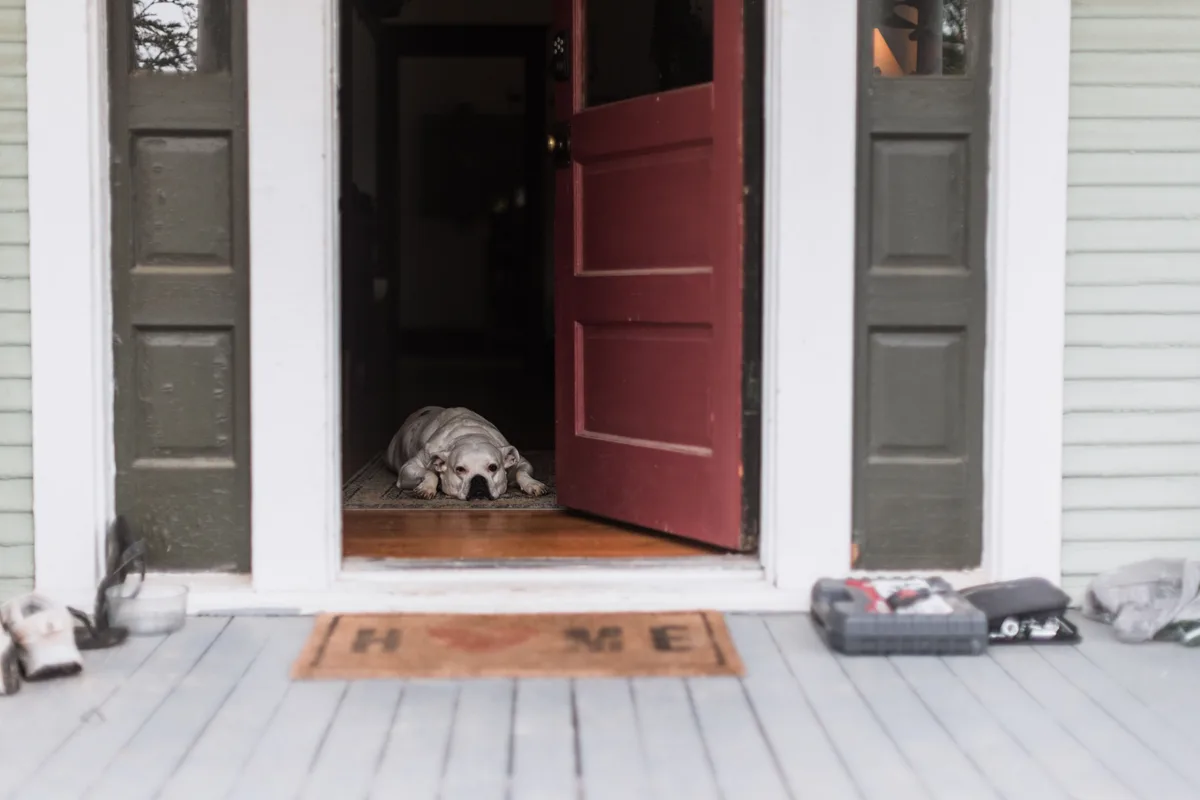
Seeking your attention
Dogs are quick to learn what gets a response. If a dramatic sigh has ever earned a glance, a pat, or a “what’s wrong, buddy?”, your dog may repeat it to draw you in. This kind of sigh is usually aimed right at you, often with a look to match.
Winding down for sleep
A sigh is a classic pre-sleep signal. As your dog’s body relaxes toward a nap, that long exhale helps them settle, much like a person letting out a breath before drifting off. Paired with heavy eyes and a still body, it’s simply a dog getting comfortable.

Discomfort or not feeling well
Less often, repeated sighing or groaning can go with discomfort — an achy joint, a sore belly, or simply struggling to get comfortable. The tell is context: a content sigh comes from a relaxed, settled dog, while a discomfort sigh tends to come with shifting around, reluctance to settle, or other changes in how your dog is acting.
When a sigh could signal a problem
A sigh on its own is almost never a concern, but a few patterns deserve attention. Watch for frequent sighing or groaning paired with trouble getting comfortable, reluctance to move, a drop in appetite or energy, or a generally withdrawn, low mood that lasts. Sighs that seem to accompany pain when your dog lies down or gets up, or that show up alongside other changes in behavior, are worth mentioning to your vet to rule out discomfort rather than assuming it’s pure contentment. For most dogs, though, a sigh at the end of the day is simply a happy one.
How to respond to a dog who sighs
- Enjoy the content kind: a sigh from a relaxed, loose-bodied dog is a good sign — your dog feels safe enough to fully let go.
- Read the moment: a sigh right after a hope was dashed is mild disappointment, not distress — no need to fix it.
- Don’t over-reward the dramatic sigh: if attention-seeking sighs have become a routine, answer genuine needs but avoid making a fuss over every exhale.
- Notice the off days: if sighing pairs with restlessness, low energy, or trouble settling, pay closer attention to how your dog is feeling overall.
- Read the whole dog: soft eyes and a loose body mean contentment; tension, pacing, or reluctance to settle mean take a closer look.
Reading your dog beyond the sighing
A sigh can mean “I’m so comfortable,” “oh well, no walk then,” or, now and again, “I just can’t get comfortable” — and knowing which is the whole point. That’s what Traini’s AI dog translator is built for: translating your dog’s sounds, body language and emotional signals into plain language so you can understand why they’re doing what they’re doing. When you’re not sure whether a sigh is pure contentment or part of a bigger picture, you can ask PetGPT about your specific situation and get an answer grounded in your dog’s context. For more on how your dog communicates and unwinds, see our guides on why your dog leans on you and why your dog snores.
Frequently asked questions
Does a dog sighing mean they’re happy?
Most of the time, yes. A sigh from a relaxed dog with soft eyes and a loose body is a sign of contentment as they settle down to rest. Context is everything — the same sound from a restless, uncomfortable dog can mean something different.
Why does my dog sigh when they lie down?
That’s classic settling behavior. The long exhale helps your dog’s body shift from active to resting, much like a person letting out a breath before relaxing into a chair. Paired with lying down and heavy eyes, it simply means your dog is getting comfortable.
Why does my dog sigh so loudly and dramatically?
Some dogs are naturally expressive, and a few have learned that a big, dramatic sigh gets your attention. If your dog sighs loudly while looking right at you, especially after not getting a walk or a treat, it may be a mix of mild disappointment and a bid for your notice.
When should I worry about my dog sighing?
Worry less about the sigh itself and more about the company it keeps. Frequent sighing or groaning alongside trouble getting comfortable, reluctance to move, low energy or a lasting change in mood is worth a vet check to rule out pain or illness.
This article is for general information and isn’t a substitute for professional veterinary or behavioral advice. If your dog’s sighing is frequent and paired with signs of discomfort, low energy, or a lasting change in behavior, please contact your veterinarian.