
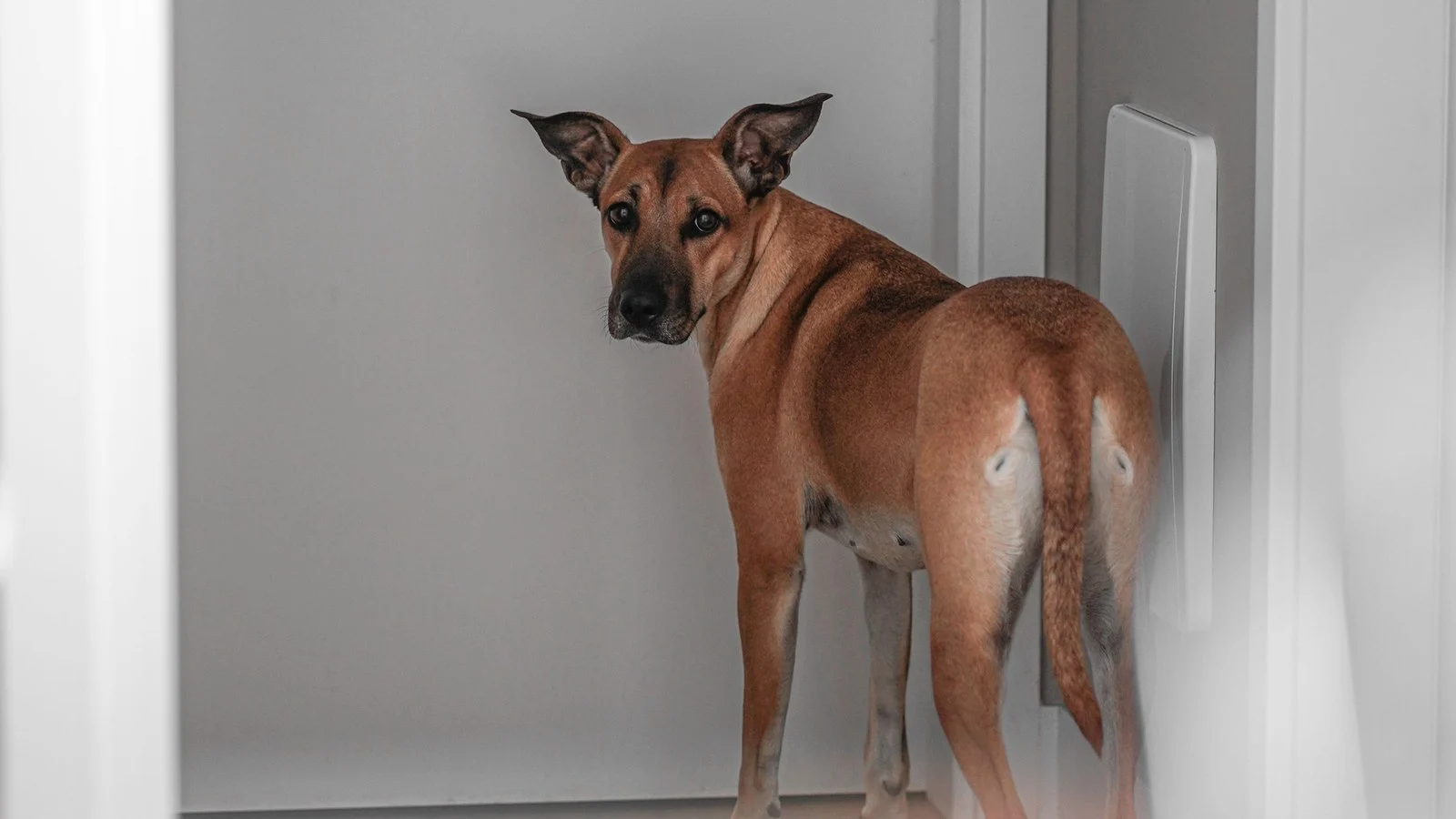
Why does my dog stare at the wall? Sometimes it’s nothing — your dog is hearing or smelling something inside the wall, or simply zoning out. But persistent, repeated wall-staring can be a medical sign: canine cognitive dysfunction, a focal seizure, eye or pain issues, or compulsive “fly-biting.” If it happens often, it’s worth a vet check.
An occasional glance at a blank wall is harmless. What matters is how often it happens, how your dog acts during it, and whether anything else has changed. Here’s how to tell benign staring from the kind that warrants a vet visit.
Harmless reasons dogs stare at walls
Sounds and smells. Dogs hear and smell far more than we do. Pipes, insects, rodents, or settling noises inside a wall can hold a dog’s attention long after you’ve heard nothing.
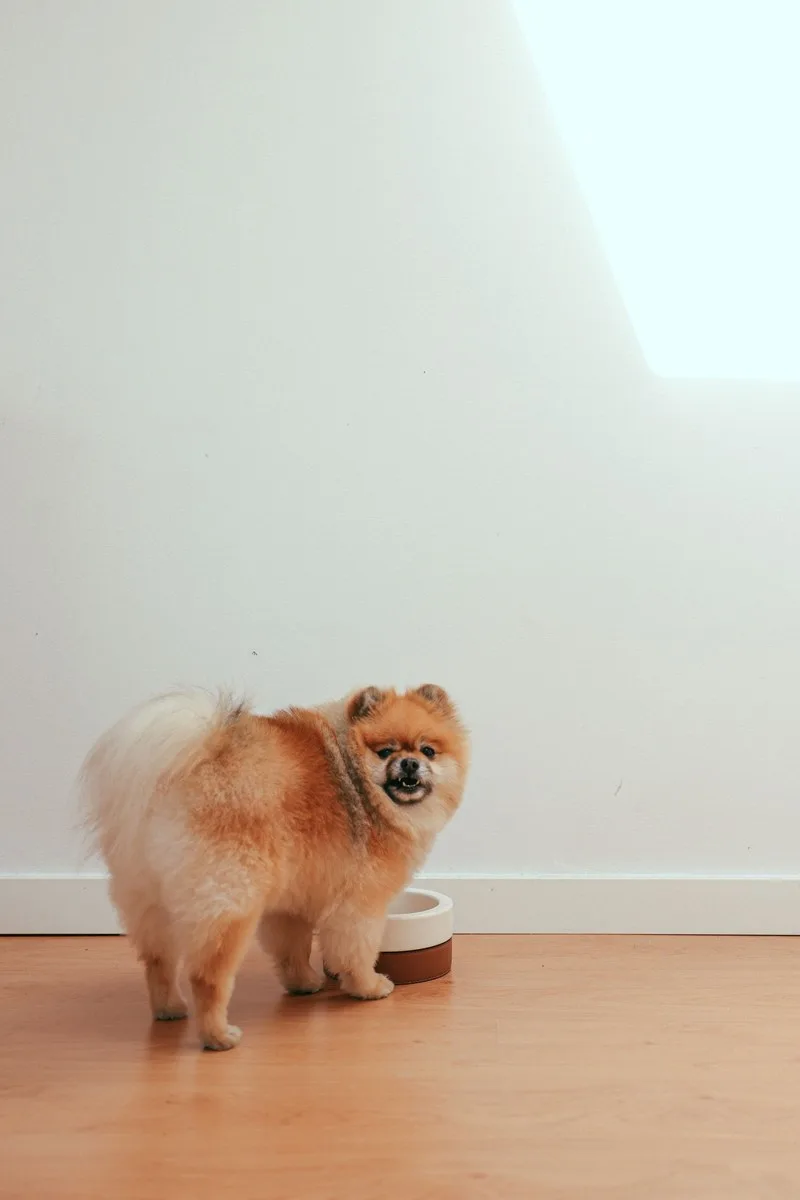
Shadows and light. A flicker, a reflection, or a moving shadow on the wall can catch a curious dog’s eye.
Zoning out. Like people, dogs sometimes just rest their gaze on nothing in particular while relaxing or drowsy.
When wall-staring is a concern
Call your vet if the staring is frequent, prolonged, or comes with other changes. Possible medical causes include:

Canine cognitive dysfunction (CCD). In senior dogs, staring into space or at walls, disorientation, and changed sleep patterns can be signs of this age-related condition.
Seizure activity. A focal seizure can look like a “trance” — fixed staring, unresponsiveness, or repetitive snapping at the air (“fly-biting”).
Pain, nausea, or vision changes. A dog that feels unwell or whose sight is changing may hold still and stare. Compulsive staring can also be a behavioral disorder.
If your dog seems unresponsive during the staring, or it pairs with shaking, circling, or disorientation, treat it as a reason to see your vet promptly.
What to watch and note
Before your vet visit, note how often it happens, how long it lasts, whether your dog responds to their name during it, and any other new behaviors. A short phone video of an episode is genuinely useful to your vet. This differs from ordinary eye contact with you — which we cover in why your dog stares at you.

Reading your dog’s signals in context helps you describe the behavior accurately. An AI dog translator like Traini’s PetGPT can help you make sense of the body language around the staring.
Frequently Asked Questions
Should I worry if my dog stares at the wall?
A rare, brief stare is fine. Worry — and book a vet visit — if it’s frequent, prolonged, your dog seems unresponsive, or it comes with other symptoms like disorientation or air-snapping.
Is wall-staring a sign of a seizure?
It can be. Focal seizures sometimes look like a fixed, trance-like stare or repetitive “fly-biting.” If you suspect this, record a video and see your vet.
Why does my senior dog stare at walls?
In older dogs, it can be a sign of canine cognitive dysfunction, often alongside confusion, pacing, or disrupted sleep. Your vet can assess and help manage it.
My dog stares at the wall and barks — why?
That often points to a sound or presence your dog detects and you can’t. If it becomes obsessive or distressing, mention it to your vet.
This article is for general educational purposes and isn’t a substitute for professional veterinary advice. Persistent wall-staring can have medical causes — if it happens often or with other symptoms, please consult your veterinarian.