
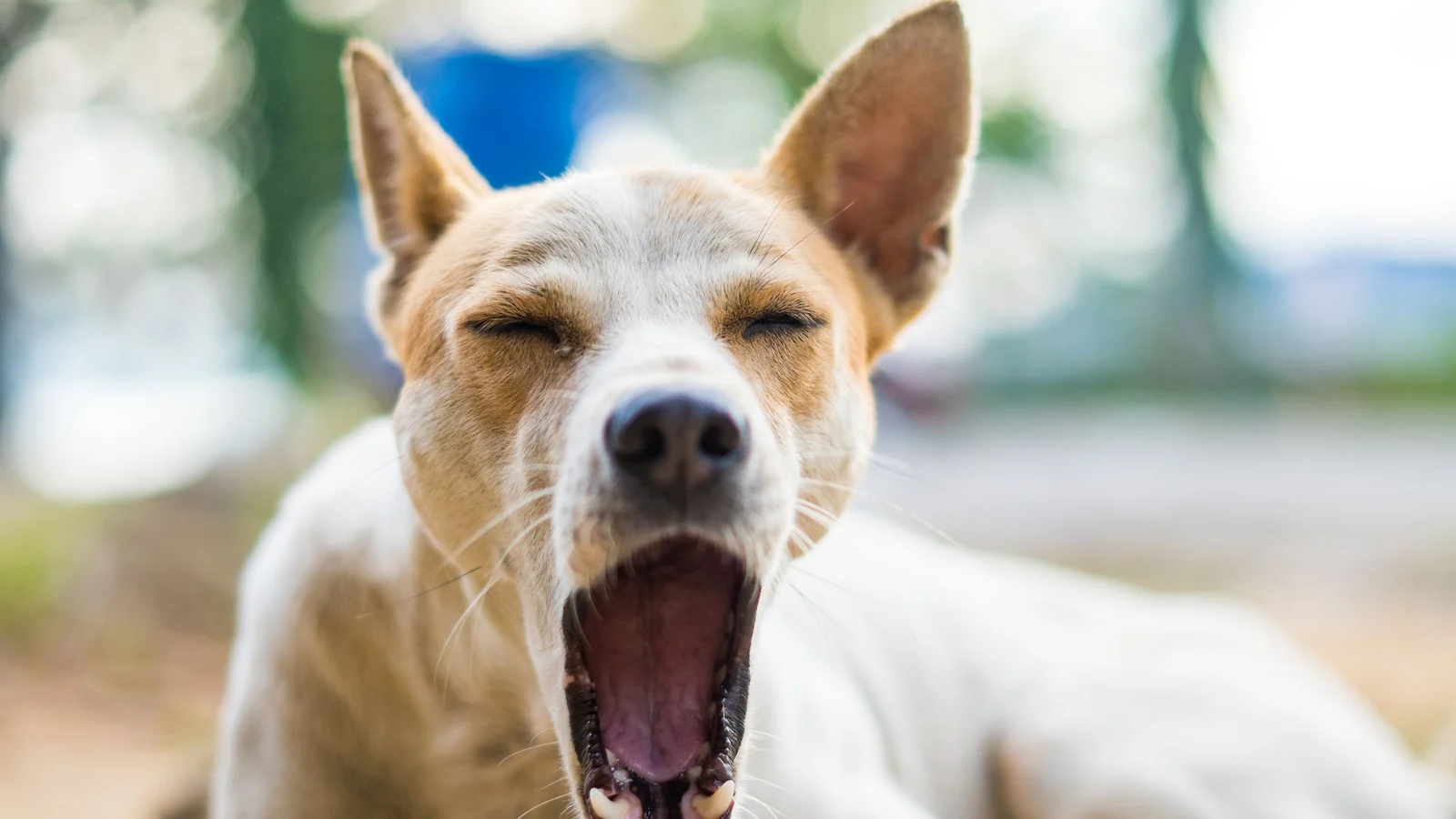
Why does my dog yawn so much? Yawning in dogs isn’t only about being sleepy. Dogs yawn to calm themselves and those around them when they feel stressed or over-excited, to release built-up tension, and sometimes out of empathy — they “catch” yawns from their favorite humans. Frequent yawning in a tense moment is usually a calming signal, not boredom or tiredness.
So if your dog yawns at the vet, during training, or when a stranger leans in for a cuddle, it’s rarely because it needs a nap. Reading yawns in context tells you a lot about how your dog is feeling.
It’s not (just) about being tired
Dogs do yawn when drowsy, like we do. But behaviorists have long noted that yawning is also one of a dog’s “calming signals” — small gestures dogs use to lower tension in themselves and to tell others they mean no harm. That’s why a perfectly well-rested dog might yawn repeatedly in a situation that has nothing to do with sleep.
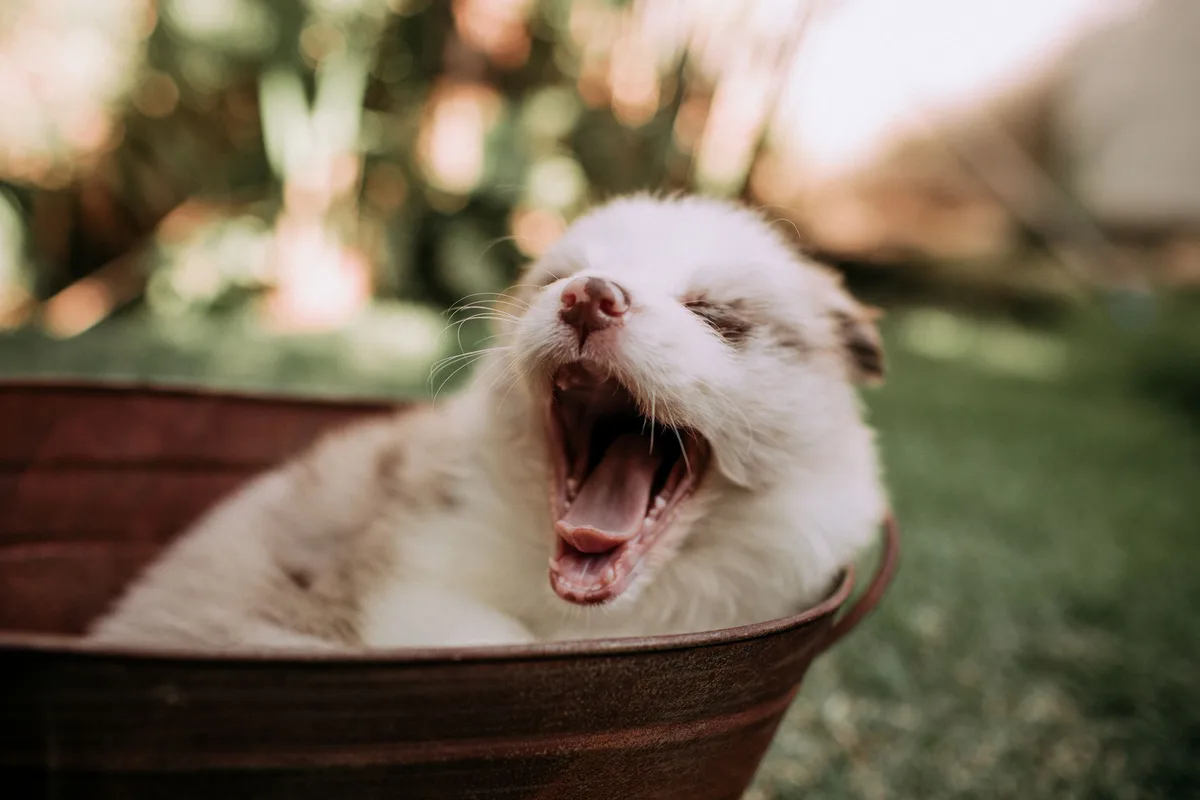
Yawning as a stress or calming signal
Context is everything. A yawn that appears at the vet’s office, when you raise your voice, during a tricky training session, or when your dog is being hugged or crowded is usually a sign of mild stress or uncertainty. It’s a way of self-soothing and defusing the moment — much like a sigh or a bit of air-licking. Look at the whole picture: a stress yawn often comes with lip-licking, a turned head, “whale eye” (whites showing) or a stiff posture.
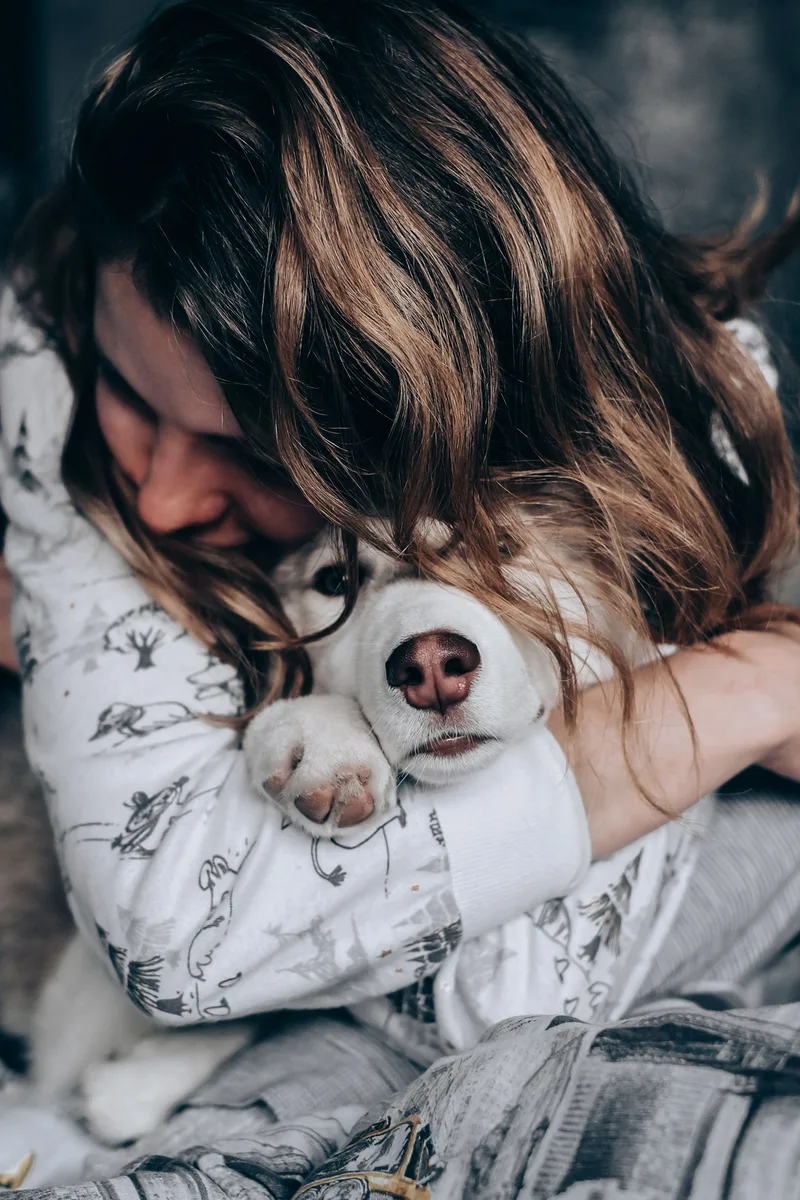
Contagious yawning and bonding
Here’s the sweet part: dogs can catch yawns from people, and they do it more with someone they’re bonded to than with a stranger. Researchers see this as a sign of the empathy and social connection dogs share with their humans. So if your dog yawns right after you do, it may simply be tuned in to you.
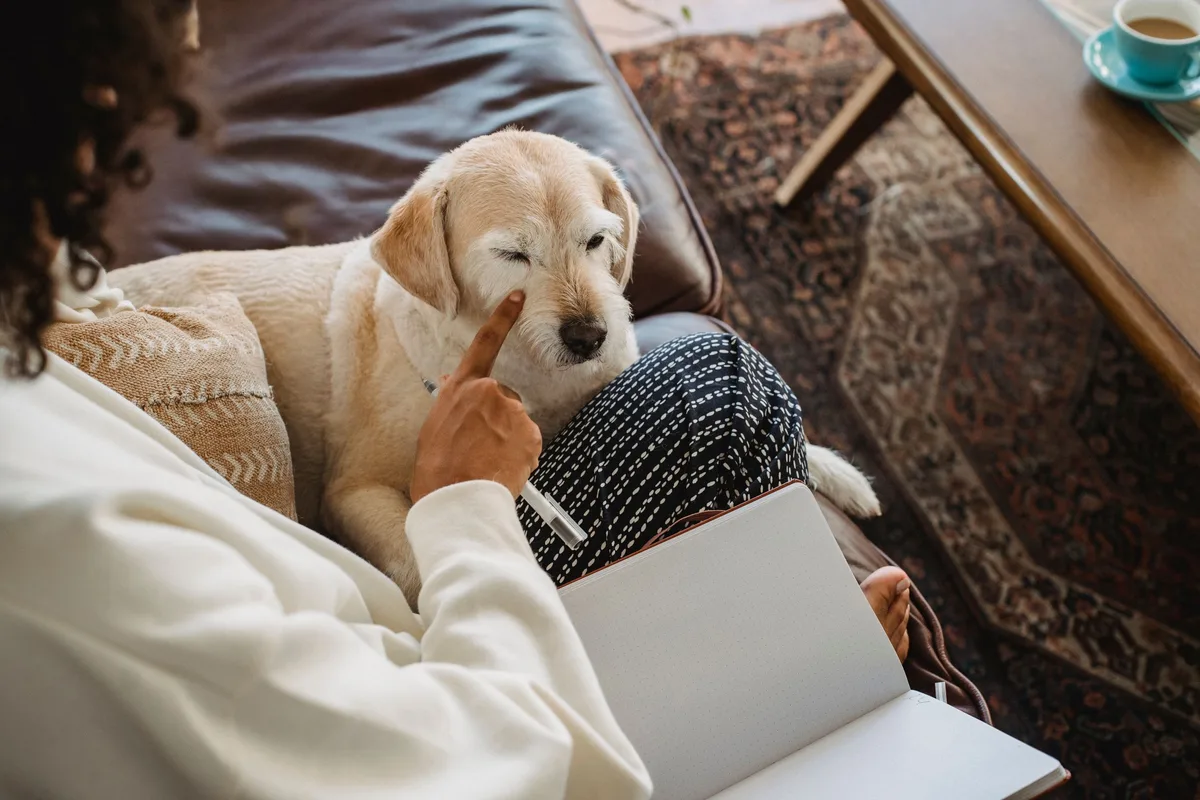
When yawning might mean something more
Occasional and context-appropriate yawning is completely normal. Pay closer attention if it’s excessive and paired with other stress signs — pacing, panting, drooling or lip-licking — which can point to ongoing anxiety worth addressing. Very rarely, a sudden change in yawning can accompany nausea, pain or a dental problem, so if something seems off alongside the yawning, check in with your vet.
How to help a stressed yawner
If the yawns are telling you your dog is uneasy, the kindest response is to ease the pressure: give your dog space, avoid looming over or hugging it if that’s the trigger, keep training sessions short and upbeat, and let it move away from whatever’s bothering it. Over time, a calm, predictable routine helps an anxious dog yawn less.
A yawn is one of the clearest lines in your dog’s body language — once you can read it, you’ll catch stress before it builds. Traini’s AI dog translator helps you put signals like yawning, lip-licking and posture together, so you understand whether your dog is relaxed, tired or asking for a break.
Frequently asked questions
Is my dog yawning because it’s stressed or just tired?
Look at the context. Yawning in a calm, winding-down moment is likely tiredness; yawning at the vet, during training or when crowded — especially with lip-licking or a turned head — is usually a calming signal for stress.
Do dogs yawn when they’re happy?
They can yawn in a relaxed, content state too, often as part of settling down. A loose, wiggly body and soft eyes alongside the yawn point to a happy, unwound dog rather than a stressed one.
Why does my dog yawn when I hug it?
Many dogs find hugs a bit confining, and a yawn is their polite way of saying they’re not entirely comfortable. If your dog yawns, licks its lips or leans away during hugs, give it the choice to opt out.
Can dogs really catch yawns from humans?
Yes — studies show dogs are more likely to yawn after their owner yawns than after a stranger does, which researchers link to empathy and the bond between dog and person.
This article is for general information and isn’t a substitute for professional veterinary advice. If frequent yawning comes with signs of ongoing anxiety, or with pain, nausea or other changes, talk to your veterinarian or a qualified behaviorist.