
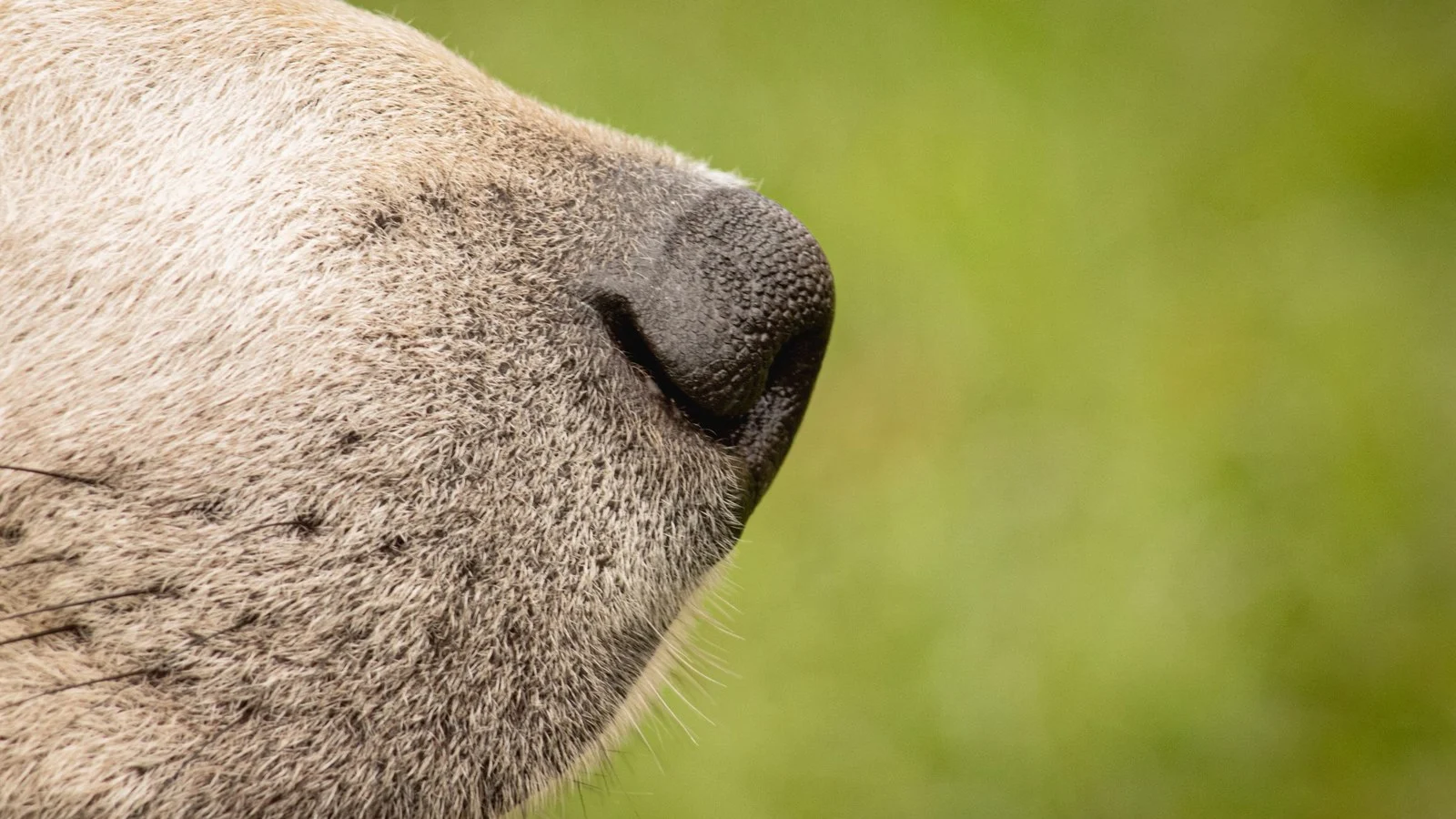
Why is my dog’s nose dry? Usually it’s nothing to worry about. A dog’s nose naturally changes through the day — it’s often warm and dry after a nap, in the sun, or near a heater, and that’s normal. The old “a healthy dog has a wet nose” rule is a myth. A dry nose only needs a vet if it comes with cracking, sores, bleeding, thick discharge, or other signs of illness.
Many owners panic at a dry nose, but on its own it’s a poor indicator of health. Here’s what a dry nose really means — and the handful of times it’s worth a closer look.
Is a dry nose bad? The myth
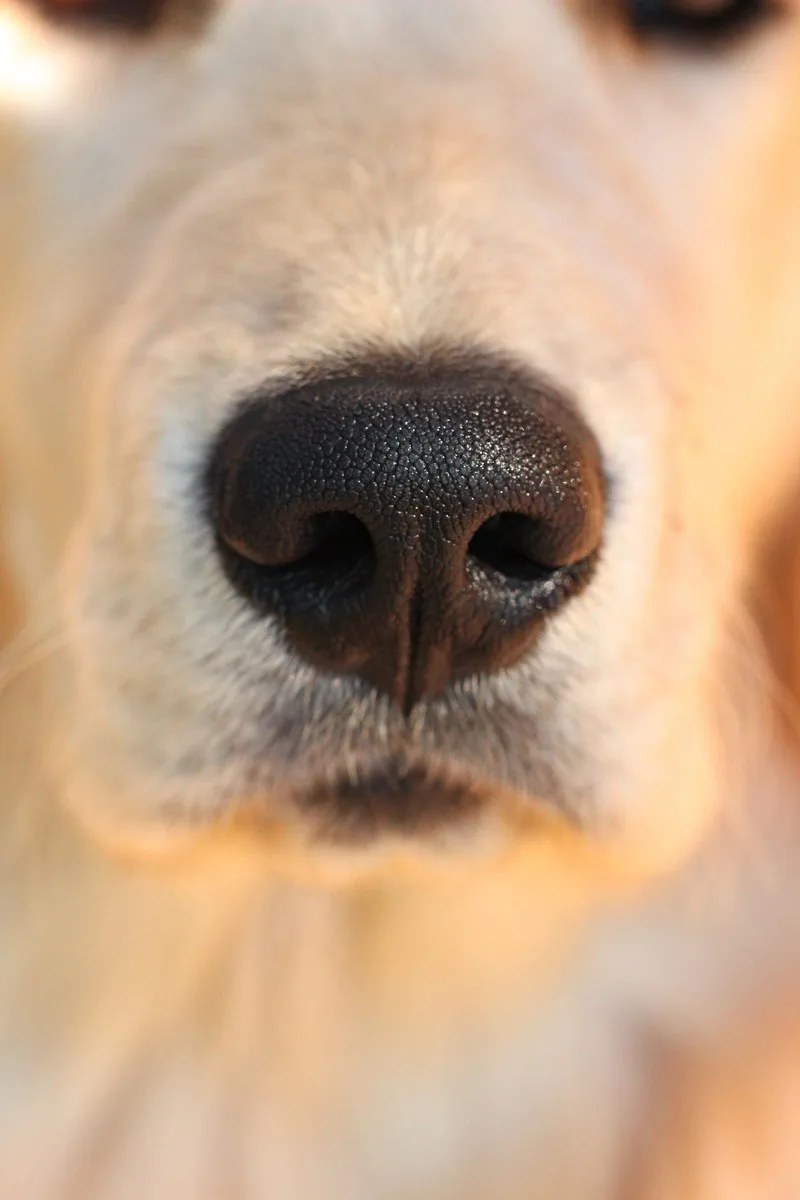
No. A warm, dry nose does not mean your dog is sick, and a cool, wet nose doesn’t guarantee good health. Nose moisture varies constantly with activity, temperature, hydration, and even the time of day. Judge your dog’s health by their overall behavior, appetite, and energy — not by their nose.
Normal reasons for a dry nose
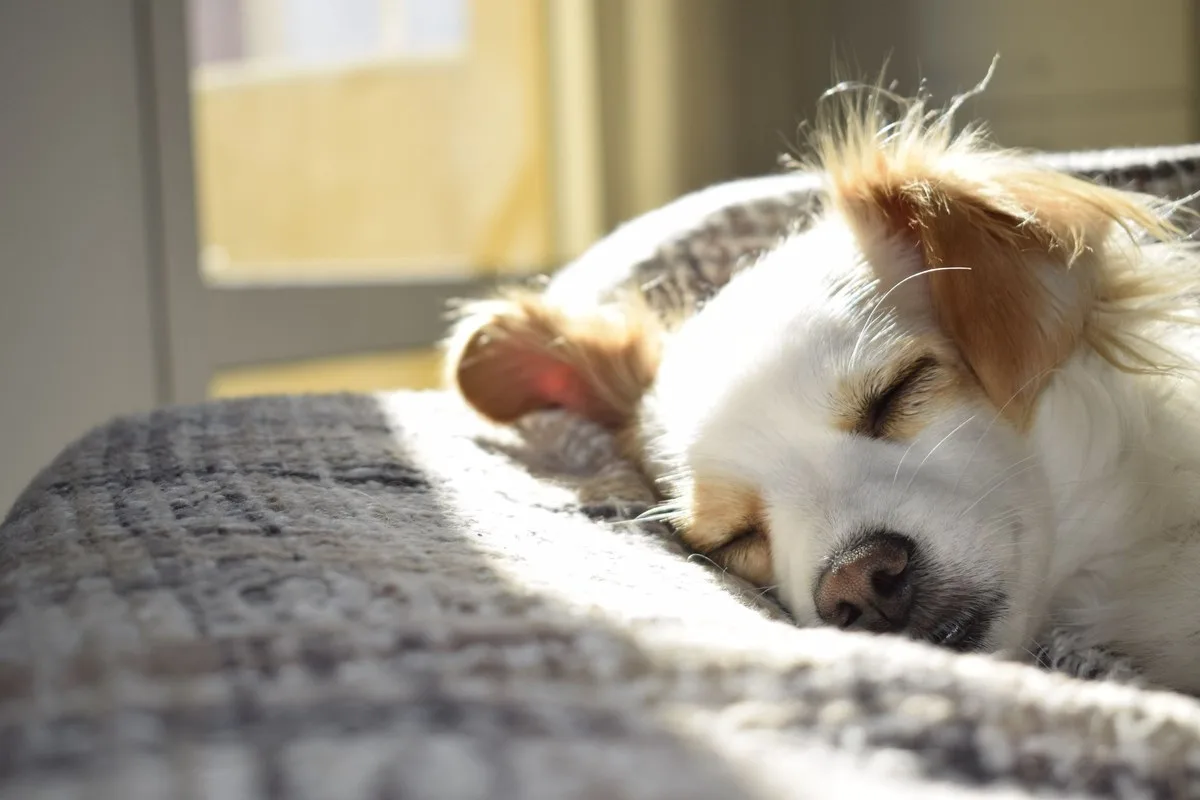
Just woke up. Dogs don’t lick their noses while sleeping, so it’s commonly dry right after a nap.
Heat and sun. Lying in the sun, near a fire, or by a heater dries the nose temporarily.
Age and weather. Older dogs and dry or cold weather can both lead to a drier nose. Mild dehydration after exercise can too — make sure fresh water is always available.
When a dry nose is a concern
Pay attention when the dry nose comes with other symptoms, or when the nose itself looks unhealthy:
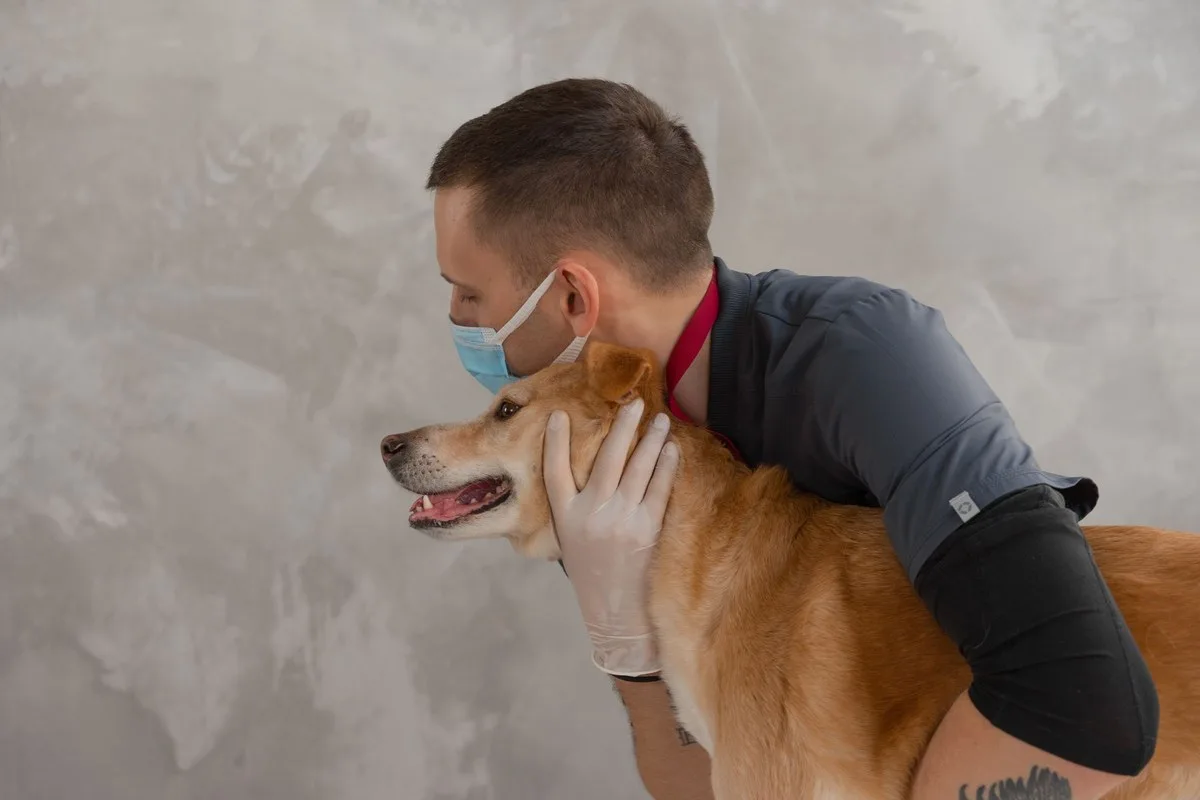
Call your vet if you see cracking, crusting, sores, bleeding, thick or colored discharge, swelling, or a sudden change in color, or if the dry nose is paired with sneezing, lethargy, loss of appetite, or red, irritated eyes. Persistent crusting can sometimes point to allergies, sunburn, or an immune condition that a vet should assess. Never put human lotions or medications on your dog’s nose without veterinary advice.
Frequently Asked Questions
Does a dry nose mean my dog is sick?
Not by itself. A dry nose is usually normal. Look at your dog’s overall behavior, appetite, and energy — those tell you far more than nose moisture.
Does a dry nose mean my dog has a fever?
No — you can’t judge a dog’s temperature by their nose. The only reliable way to check for a fever is a proper thermometer reading; ask your vet if you’re concerned.
Should I put anything on my dog’s dry nose?
Only if your vet recommends it. Human moisturizers and medications can be harmful if licked. For a cracked or sore nose, let your vet suggest a dog-safe balm.
When should I worry about a dry nose?
When it’s cracked, crusty, bleeding, discharging, or paired with other symptoms like sneezing, low energy, or poor appetite. Then it’s worth a vet visit.
This article is for general educational purposes and isn’t a substitute for professional veterinary advice. If your dog’s nose is cracked, sore, or bleeding, or the dryness comes with other symptoms, please consult your veterinarian.