
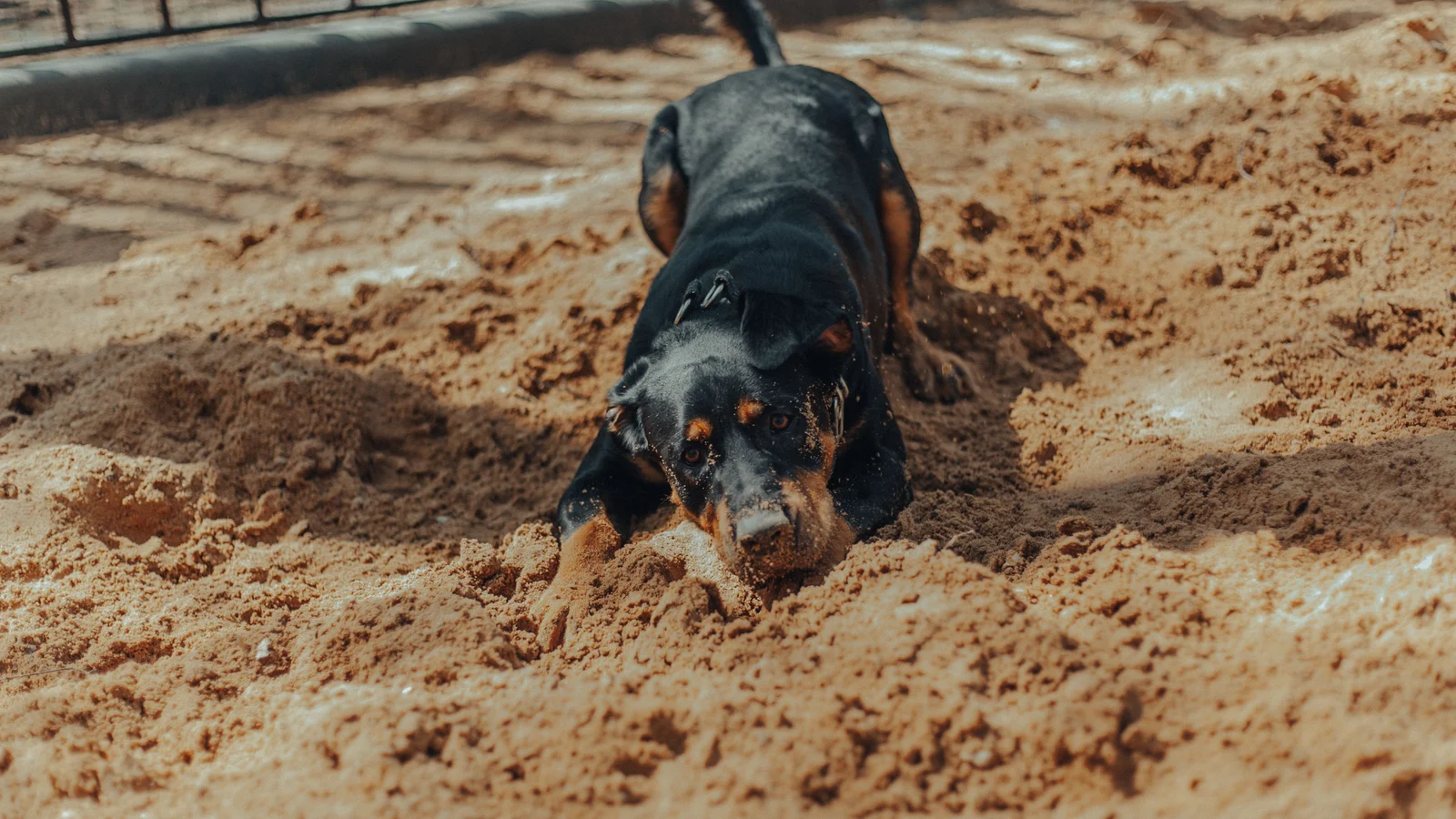
To stop a dog from digging, start with why they’re doing it — boredom, too much energy, instinct, temperature, or anxiety — and then solve that cause rather than just filling in holes. For most dogs the fix is a mix of more exercise and enrichment, removing the reward, and giving them one spot where digging is actually allowed. Punishing the hole after the fact rarely works.
If your garden looks like a minefield and your dog greets you with muddy paws and a proud grin, you’re not alone — digging is one of the most common and most frustrating dog behaviors. The good news is that it’s almost always solvable once you understand what’s driving it, which is exactly what we’ll walk through here.
Why do dogs dig?
Digging isn’t your dog being “bad” — it’s a deeply natural behavior with a handful of common causes. Working out which one applies to your dog is the whole key to stopping it.
Boredom and too much energy
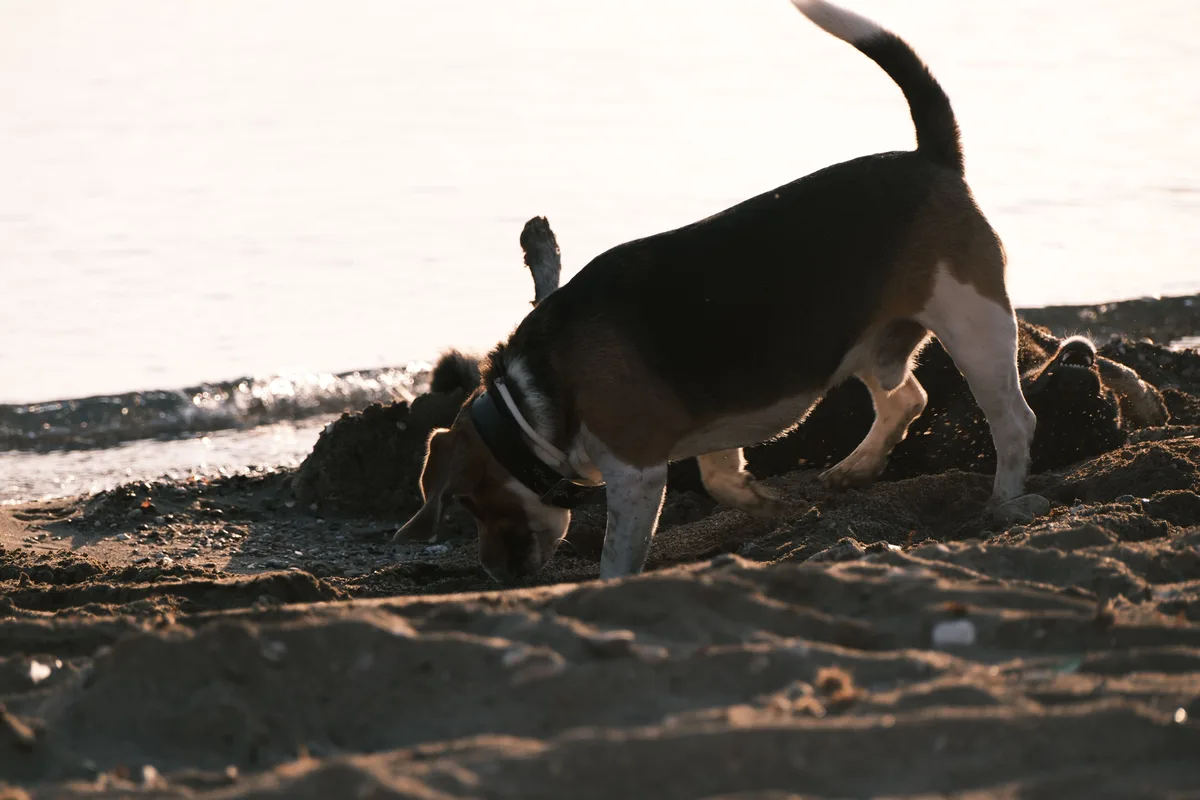
This is the number one reason. A dog who’s under-exercised or left alone with nothing to do will often dig simply because it’s interesting and burns energy. High-energy and working breeds are especially prone to it.
Instinct and breed
Terriers, dachshunds and other breeds were bred to dig prey out of the ground, and that drive is hard-wired. For these dogs, digging is genuinely fun and self-rewarding, so they’ll need a positive outlet rather than a flat “no.”
Comfort and temperature
Dogs dig cool pits to lie in when they’re hot, or shallow nests for warmth and security. If the holes appear in shady spots or against the house in summer, your dog may just be trying to regulate their temperature.
Escape or anxiety
Digging along a fence line usually means your dog is trying to get out — to chase something, find company, or because they’re anxious when left alone. This kind of digging often comes with other signs of stress.
Hiding things
Some dogs bury bones, toys or treats to “save them for later.” It’s an old instinct to cache food, and for these dogs the digging is a means to an end.
How to stop your dog from digging
Match the solution to the cause, and work with your dog’s instincts instead of against them:
- Add more exercise and enrichment: a well-walked, mentally tired dog digs far less. Add walks, play, training games, puzzle feeders and chews before you tackle the digging itself.
- Give a legal digging spot: for instinctive diggers, set up a sandpit or a marked patch, bury toys there, and praise them for using it. Redirect them to it when they dig elsewhere.
- Remove the reward: supervise garden time so you can calmly interrupt and redirect before the hole gets satisfying, rather than reacting after.
- Cool them down: if it’s temperature, offer shade, fresh water and a raised or cooling bed so they don’t need to dig a pit.
- Secure the fence: for escapers, block the fence line and — most importantly — address why they want to leave, especially if it’s anxiety about being alone.
What not to do
Skip punishment after the fact. Scolding your dog at a hole they dug an hour ago just teaches them that you’re unpredictable — they can’t connect the telling-off to the digging, and it can make an anxious digger worse. Filling holes with water or unpleasant surprises is unreliable and can damage trust. Prevention, redirection and meeting the underlying need work far better and keep your relationship intact.
When digging points to something more
A sudden spike in digging, or frantic digging paired with pacing, whining, destructiveness or distress when you leave, can be a sign of separation anxiety or another stress problem rather than simple boredom. If that sounds familiar, it’s worth reading up on easing separation anxiety and speaking to a trainer or your vet.
Reading your dog beyond the digging
Digging is your dog telling you something — “I’m bored,” “I’m too hot,” “I want out,” or “I’m anxious” — and knowing which changes everything about how you respond. Traini’s AI dog translator helps you read the behavior and emotional signals behind habits like this, so you can meet the real need instead of guessing. For more on channeling that energy, see our guides on crate training, stopping nuisance barking, and leash training your puppy.
Frequently asked questions
Why has my dog suddenly started digging?
A sudden start often points to a change — more pent-up energy, hot weather, a new stressor, or boredom from less attention. Look at what’s changed recently. If it comes with anxiety or other new behaviors, consider stress or a health issue and check with your vet.
Is it cruel to stop a dog from digging?
Not at all — as long as you give the instinct an outlet. The kindest approach isn’t to forbid digging outright but to provide a legal digging spot and enough exercise and enrichment, so your dog gets to dig without wrecking your garden.
What breeds dig the most?
Terriers (including Jack Russells), dachshunds, beagles, huskies and many working breeds are famous diggers. Some were bred specifically to dig out prey, while others dig from high energy. These dogs do best with a dedicated digging area.
Does giving a dog a sandpit really work?
For many dogs, yes. Bury toys and treats in a designated sandpit, reward your dog for digging there, and gently redirect them whenever they dig elsewhere. It satisfies the urge in a way everyone can live with.
This article is for general information and isn’t a substitute for professional veterinary or behavioral advice. If your dog’s digging is sudden, frantic, or paired with signs of anxiety or distress, please contact your veterinarian or a qualified trainer.