
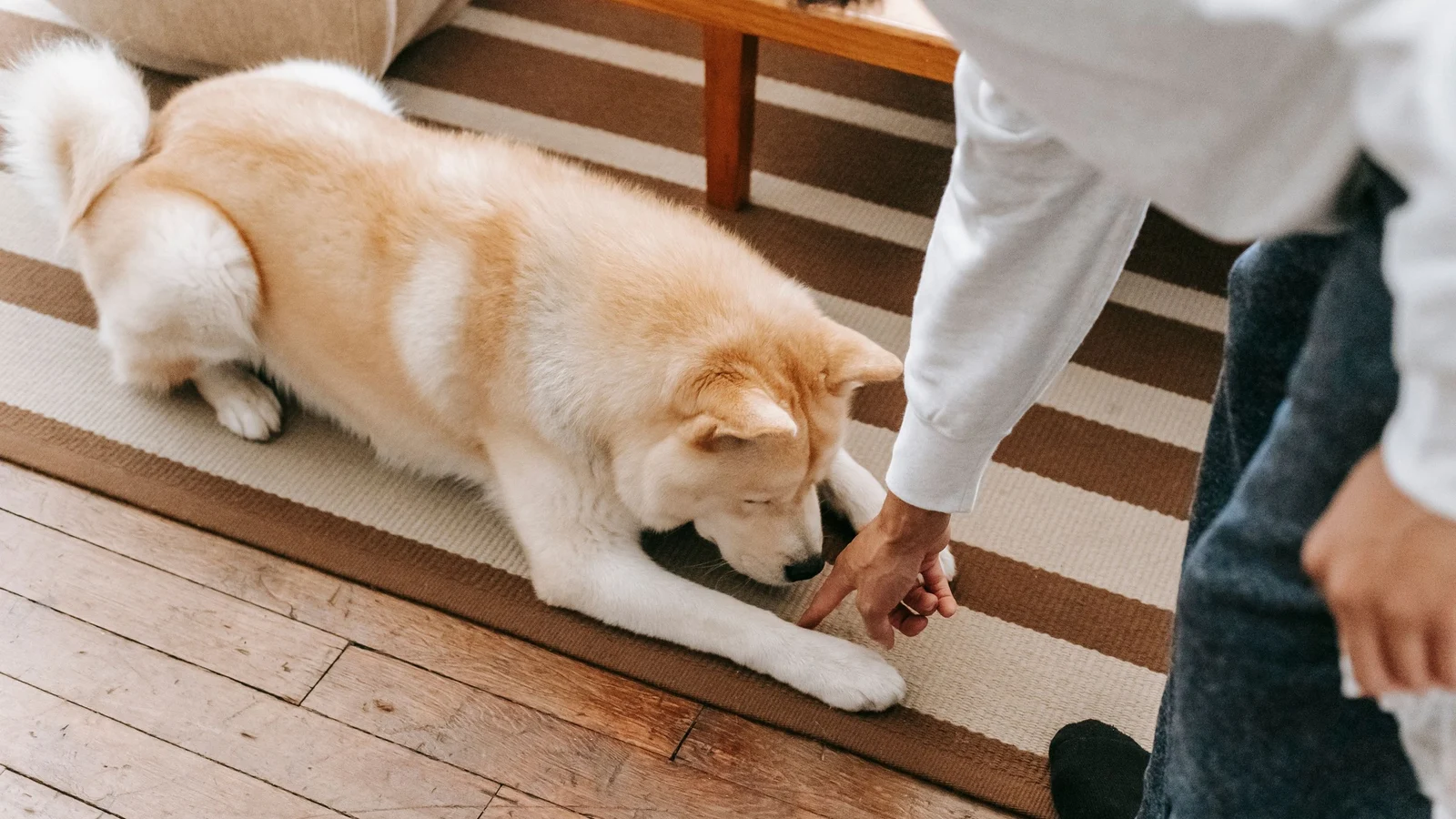
To teach a dog to lie down, start with them in a sit, hold a treat at their nose and lower it straight to the floor between their paws, then slide it slightly forward so they follow it into a down. The moment their elbows touch the ground, mark with “yes” and reward. Add the word “down” once the motion is reliable, then fade the lure. Most dogs have it within a week of short, happy sessions.
Down is one of the most useful cues you can teach: it’s a calm, settled position your dog can hold while you eat, work or chat at the door. It builds naturally on sit, and it’s the foundation for “stay” and a reliable settle. Here’s how to teach it cleanly, step by step.
Why teach down?
A solid down gives your dog an “off switch” — somewhere to be that isn’t jumping, pacing or pestering. It’s more relaxing for them to hold than a sit, so it’s perfect for cafés, vet waiting rooms and visitors. Teaching it also deepens the reward-and-mark rhythm you started with sit, and sets you up for duration work like stay and settle.
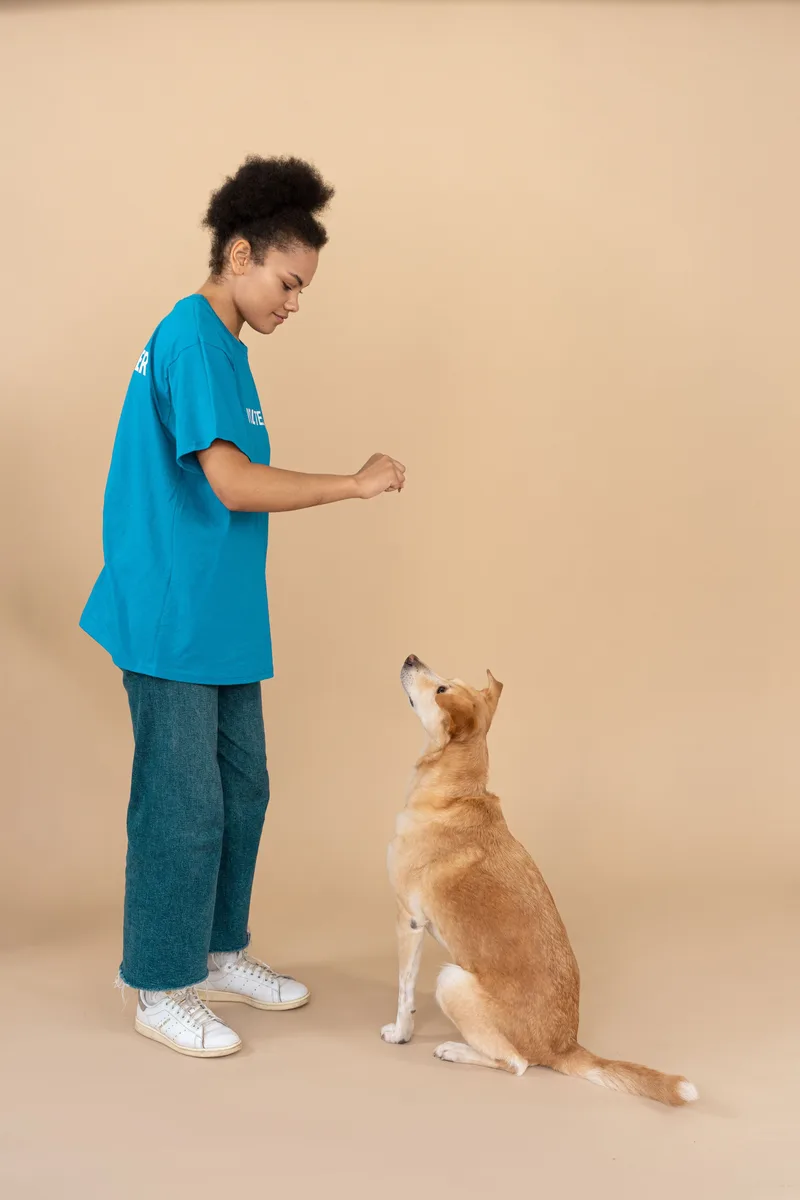
Step by step: the lure method
1. Start in a sit
Ask your dog to sit, then kneel or crouch beside or in front of them with a small, smelly treat held in your fingers. Starting from a sit makes the fold into a down much easier than starting from standing.
2. Lure the nose to the floor
Hold the treat at their nose, then move it slowly straight down to the floor between their front paws, like drawing a line to the ground. Their head and shoulders will follow it down.
3. Slide it forward
Once the treat is on the floor, slide it slowly forward, away from them. To keep following it, your dog stretches out and their elbows drop to the ground into a down. Go slowly — rushing makes them stand up or pop back into a sit.

4. Mark and reward the down
The instant their elbows and belly settle toward the floor, say “yes” (or click) and give the treat right there on the ground. That precise timing tells your dog exactly which action earned the reward. Let them get up, then repeat.
5. Add the word, then fade the lure
When they’re folding into a down reliably, start saying “down” calmly just as they begin to lower. After a handful of reps, make the same motion with an empty hand and reward from the other hand or a pouch. Gradually shrink the hand signal until a small gesture or just the word does the job.
Common problems and fixes
- Stands up instead of lying down: you slid the treat forward too fast or too high. Keep it on the floor and move it slowly.
- Only dips their head: slide the treat a touch further forward so they have to stretch down to follow it.
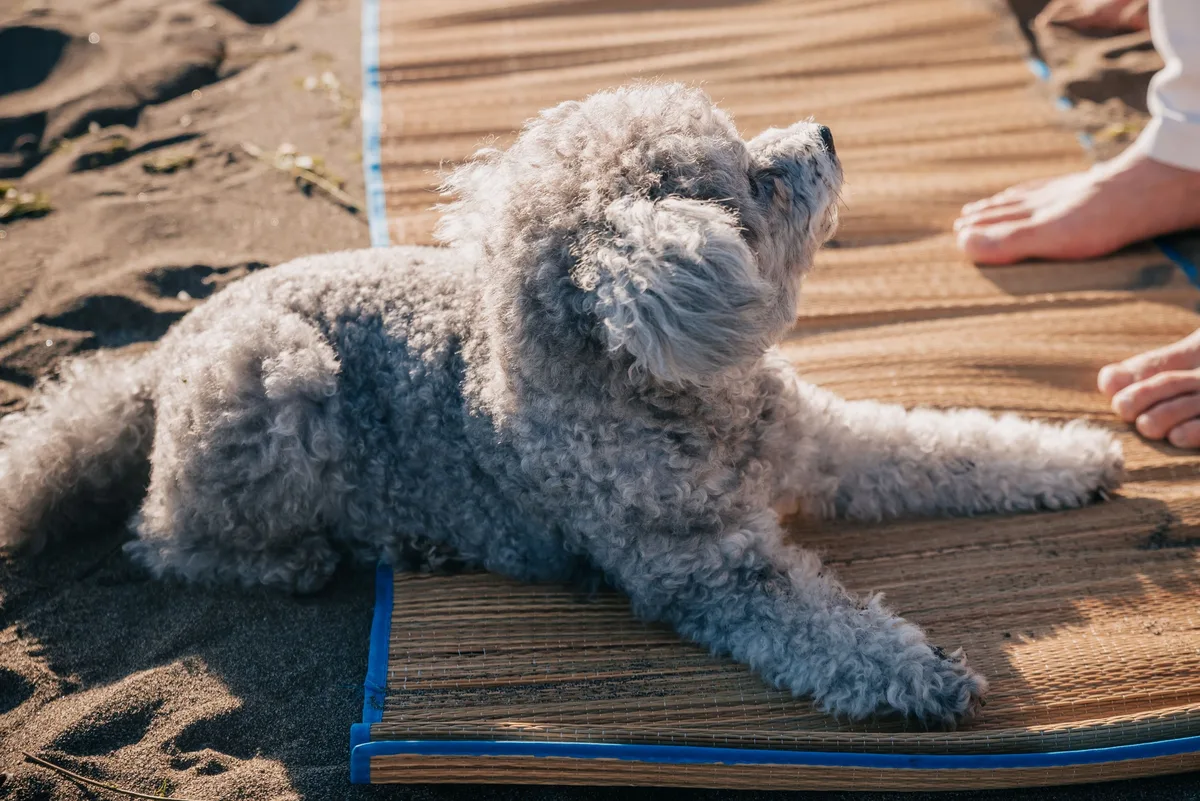
- Won’t lower on a hard floor: practice on a rug, carpet or mat — many dogs dislike dropping onto cold, slippery tiles.
- Only lies down with food visible: fade the lure sooner, reward from a pouch, and start paying some downs with praise or play instead of treats.
- Pops straight back up: reward a beat sooner, then slowly add a second or two before the treat to build duration.
Tips to make it stick
Keep sessions short and upbeat — two or three minutes, several times a day, beats one long drill. Practice in easy, quiet rooms first, then add distractions: the garden, the front door, the park. Use a higher-value treat for harder places, and always end on a win while your dog still wants more.
Reading your dog beyond the cue
A dog who won’t lie down isn’t being stubborn — they may be overexcited, unsure what you want, uneasy about the surface, or just not hungry enough to care about the treat. Traini’s AI dog translator helps you read those signals, so you can tell “I’m too wound up” from “I don’t understand yet” and adjust the session to match. For more foundations, see our guides on teaching sit, teaching shake, and socializing a puppy.
Frequently asked questions
How long does it take to teach a dog to lie down?
Many dogs start lying down on cue within a week of short, daily practice, though holding a down in distracting places takes a few weeks longer. Consistency and timing matter far more than long sessions.
Should I teach sit or down first?
Sit usually comes first, because it’s the easiest position to lure and it gives you a natural starting point for down. Once your dog sits reliably, down follows quickly since you’re simply luring them from the sit to the floor.
My dog won’t lie down on hard floors — is that normal?
Yes, it’s common. Cold, hard or slippery floors are uncomfortable to drop onto, especially for thin or bony dogs. Train on a rug, carpet or dog bed first, then gradually practice on other surfaces once the behavior is solid.
Should I ever push my dog into a down?
No. Pushing on the shoulders or pulling the legs is uncomfortable and can make a dog resist or worry. Lure with a treat and let the down happen on its own — that’s what makes the lesson stick.
This article is for general information and isn’t a substitute for professional training advice. If your dog seems unable or reluctant to lie down, rule out joint or hip pain with your veterinarian, and consider a qualified, reward-based trainer for ongoing help.