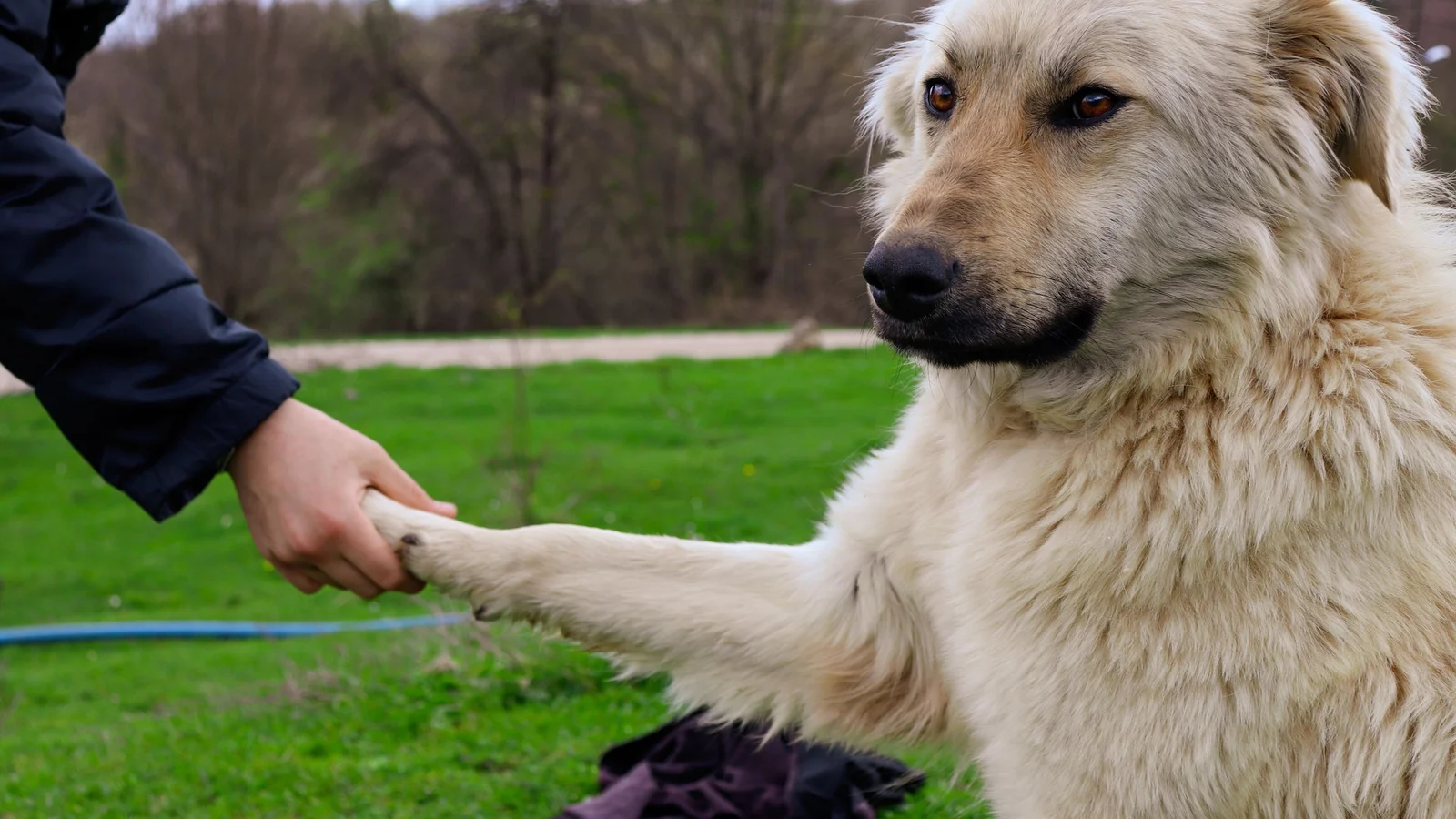
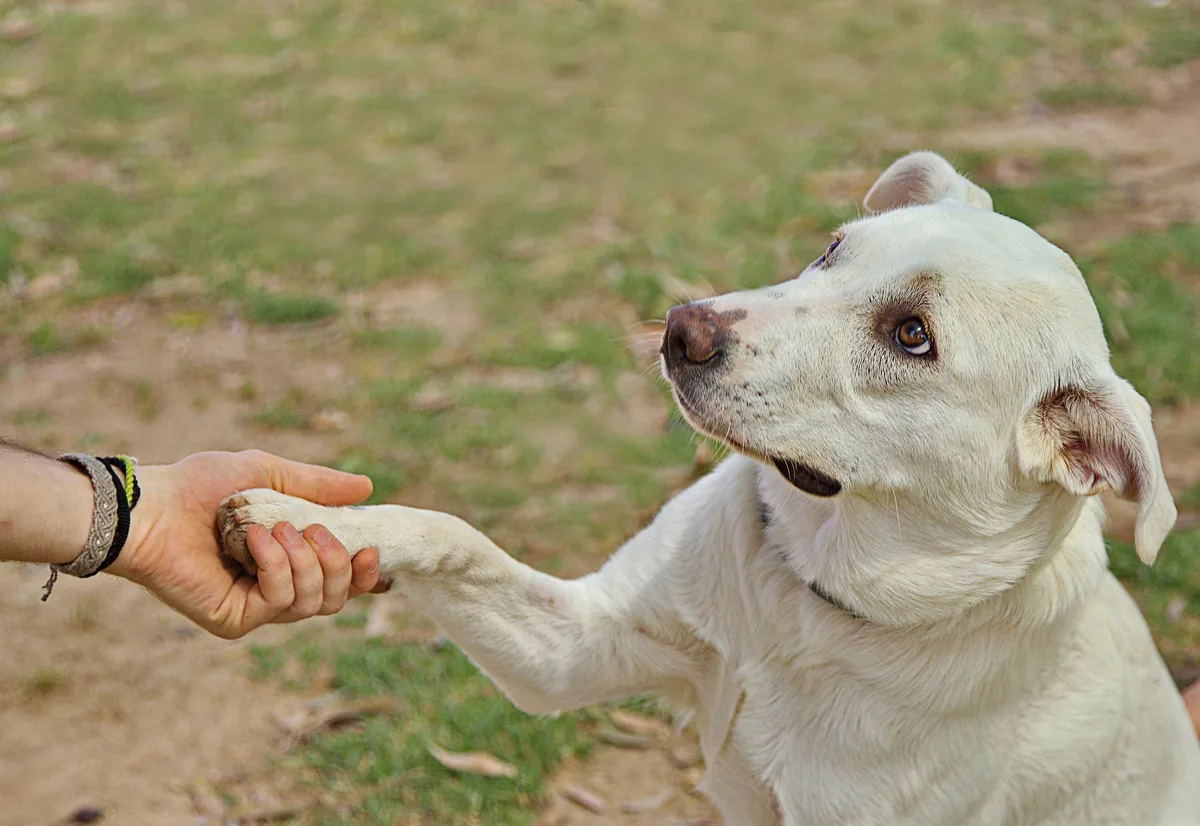
To teach a dog to shake, start with them in a sit, hold a treat in a closed fist near their paw, and wait — most dogs paw at your hand to get it. The moment their paw lifts, say “yes,” open your hand and reward. After a few reps, add the word “shake” and offer an open hand to take the paw. Most dogs learn this charming trick in just a few short sessions.
Shake is a classic first trick — quick to teach, fun for everyone, and a lovely way to build your dog’s confidence and your training teamwork. It also gets your dog comfortable having their paws handled, which makes nail trims and vet visits easier. Here’s how to teach it cleanly, step by step.
Why teach shake?
Beyond being adorable, shake is a gentle introduction to paw handling, so it pays off at grooming and nail-clipping time. It’s an easy win that teaches your dog the reward-and-mark rhythm of training, and it’s a great “party trick” to redirect an excited dog into something focused. Once your dog has sit down, shake is a natural next step.
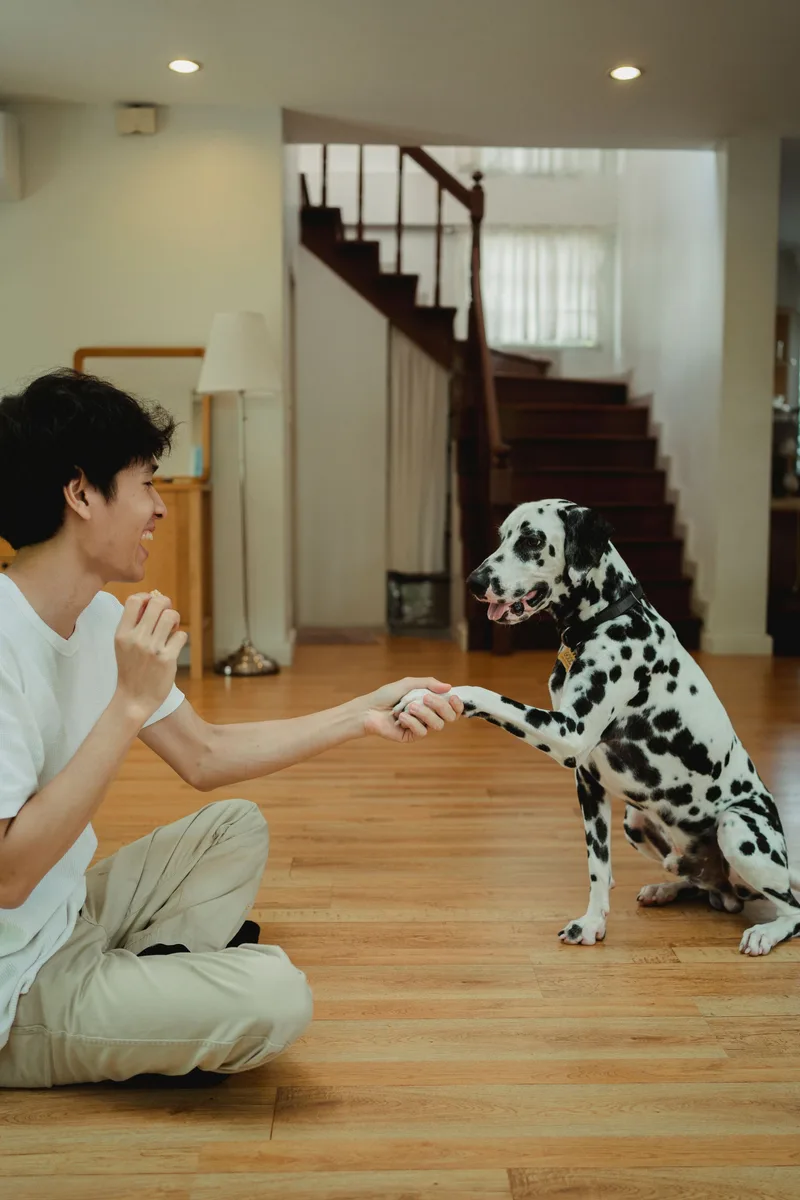
Step by step: the capture method
1. Start in a sit
Ask your dog to sit — it’s much easier to lift a paw from a sit than a stand. Kneel or sit in front of them with a few small, smelly treats ready.
2. Hide a treat in your fist near their paw
Hold a treat in a closed fist and present it low, near one of their front paws. Your dog will sniff and nudge it, and most will soon paw at your hand to try to get the treat out. Just wait — let them figure it out.
3. Mark and reward the paw lift
The instant their paw leaves the ground and touches your hand, say “yes” (or click), open your fist and give the treat. That precise timing tells your dog it was lifting the paw that earned the reward. Repeat several times until the paw comes up easily.
4. Add the word and an open hand
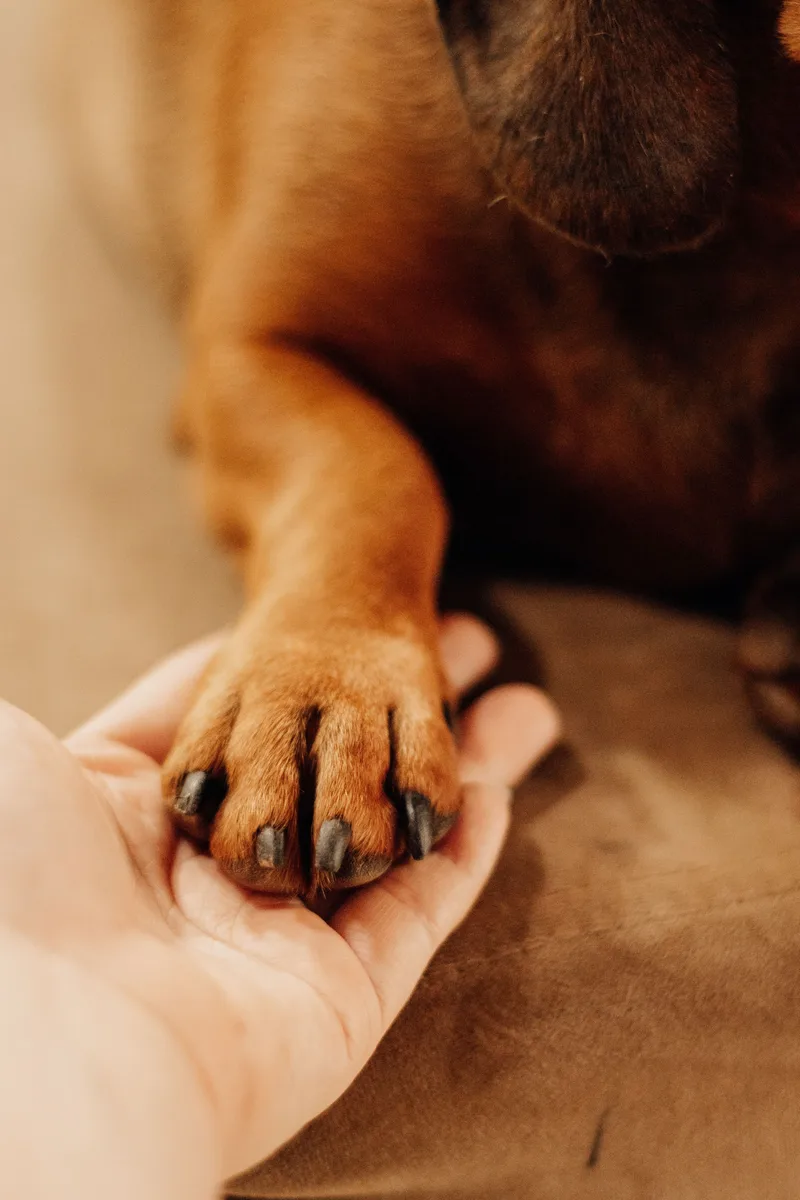
Once the paw lift is reliable, start saying “shake” (or “paw”) just as they lift, and begin offering a flat, open hand instead of a fist. Let their paw rest in your palm for a second, then mark and reward. Say the cue once, calmly.
5. Practice and polish
Gradually ask for a touch more — a slightly higher lift, or resting the paw a beat longer — before you reward. Practice with each front paw, and once it’s solid you can even teach a separate cue for the other paw.
Common problems and fixes
- Nibbles or licks your fist instead of pawing: wait them out. Many dogs try mouth first, then paw — mark the very first paw movement, even a small one.
- Won’t lift the paw at all: gently tickle the back of the lower leg to encourage a lift, then mark and reward; fade the touch quickly.
- Stands up or gets wriggly: reset into a calm sit and keep sessions short so they don’t get overexcited.
- Paws too hard: reward softer, gentler lifts and ignore the pushy ones, so your dog learns a polite paw.
- Only shakes with food in your hand: switch to an open, empty hand sooner and reward from your other hand or a pouch.
Tips to make it stick
Keep sessions short and happy — a minute or two, a few times a day. End while your dog is still keen, and use a high-value treat if they’re distracted. Once shake is reliable at home, practice it in new places so the cue holds up anywhere.
Reading your dog beyond the cue
If your dog won’t offer a paw, they may be unsure what you want, a little worried about having their feet touched, or simply too excited to think. Traini’s AI dog translator helps you read those signals, so you can tell “I don’t get it yet” from “I’m not comfortable with my paws” and adjust your approach — going slower and gentler where it’s needed. For more foundations, see our guides on teaching sit, teaching down, and socializing a puppy.
Frequently asked questions
How long does it take to teach a dog to shake?
Many dogs pick up shake within a few short sessions over a couple of days, because pawing comes naturally to them. Keeping sessions brief and upbeat, with good timing on your marker, speeds things up.
At what age can a puppy learn to shake?
As early as eight to ten weeks, once your puppy knows sit. Keep sessions to a minute or two and very playful, since puppies have short attention spans. Early paw-handling also helps them accept nail trims later.
My dog bites my hand instead of pawing — what do I do?
Be patient and wait: dogs often try their mouth first, then switch to a paw. Mark and reward the very first paw movement, however small, and ignore the mouthing. If needed, lightly tickle the back of the leg to prompt a lift.
Is teaching shake useful or just a trick?
It’s both. Shake is fun, but it also gets your dog used to having their paws held, which makes nail trims, paw checks and vet exams far less stressful. Tricks like this build focus, confidence and a stronger training bond.
This article is for general information and isn’t a substitute for professional training advice. If your dog is reluctant to have their paws touched or seems sore when lifting a leg, check with your veterinarian, and consider a qualified, reward-based trainer for ongoing help.