
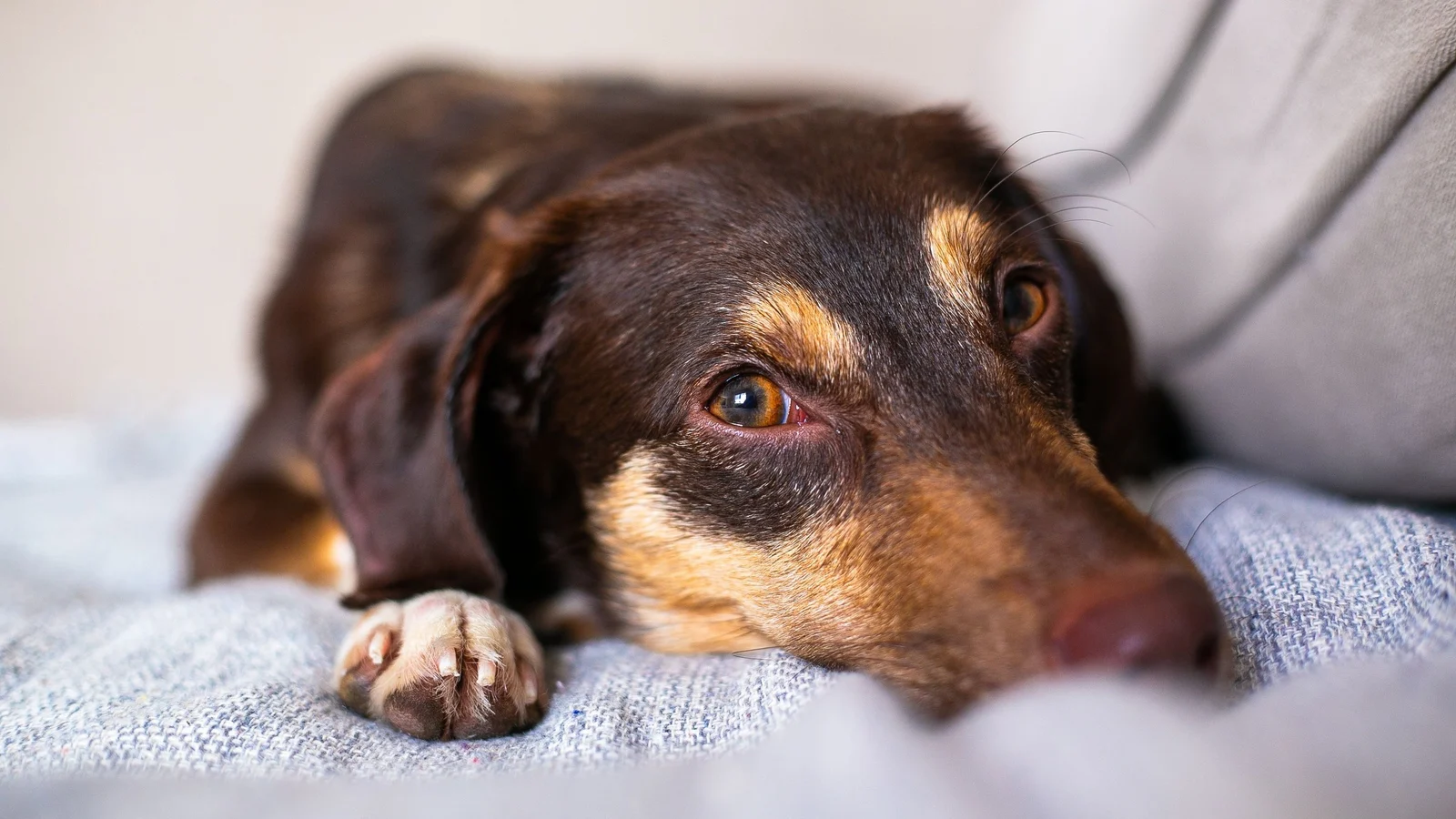
You come downstairs, flip on the light, and find the mess every dog owner dreads. Loose stool is one of the most common reasons dogs end up at the vet — and most of the time it’s a short-lived upset that clears on its own. But a few patterns are worth taking seriously, and knowing which is which saves you a lot of worry.
Here’s what causes diarrhea in dogs, how to help a mild case at home, and the signs that mean it’s time to call your vet rather than wait it out.
Why does my dog have diarrhea?
Most diarrhea comes down to something irritating the gut. The usual culprit is dietary indiscretion — your dog ate something they shouldn’t have, from table scraps to trash to a sudden switch in food. Stress, parasites, infections, medications and food sensitivities are the other common causes. A single bout with an otherwise bright, happy dog is usually nothing dramatic. Diarrhea becomes a real concern when it’s severe, keeps coming back, or arrives with other symptoms like vomiting, lethargy or blood — signs the gut needs more than time.
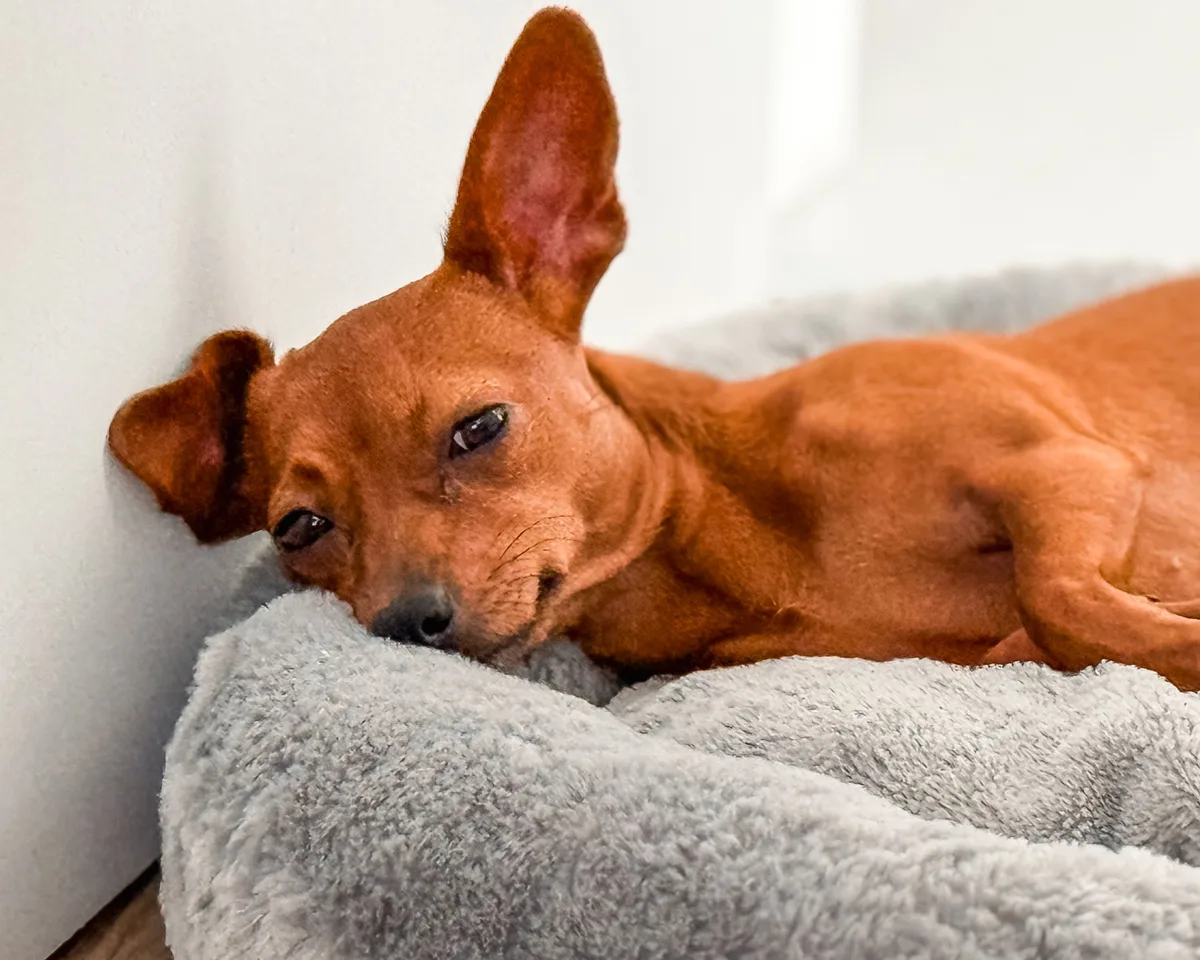
Common causes, from mild to serious
Diet changes and dietary indiscretion
Switching foods too quickly is a classic trigger — a dog’s gut needs a few days to adjust, so new food should be mixed in gradually over about a week. Raiding the trash, wolfing down table scraps, or eating something rich and fatty can all irritate the gut and loosen stool for a day or two.
Stress and excitement
Big changes — a move, boarding, new people, a thunderstorm — can upset a dog’s stomach just like they can ours. Stress diarrhea usually settles once the stressful event passes and your dog relaxes again.
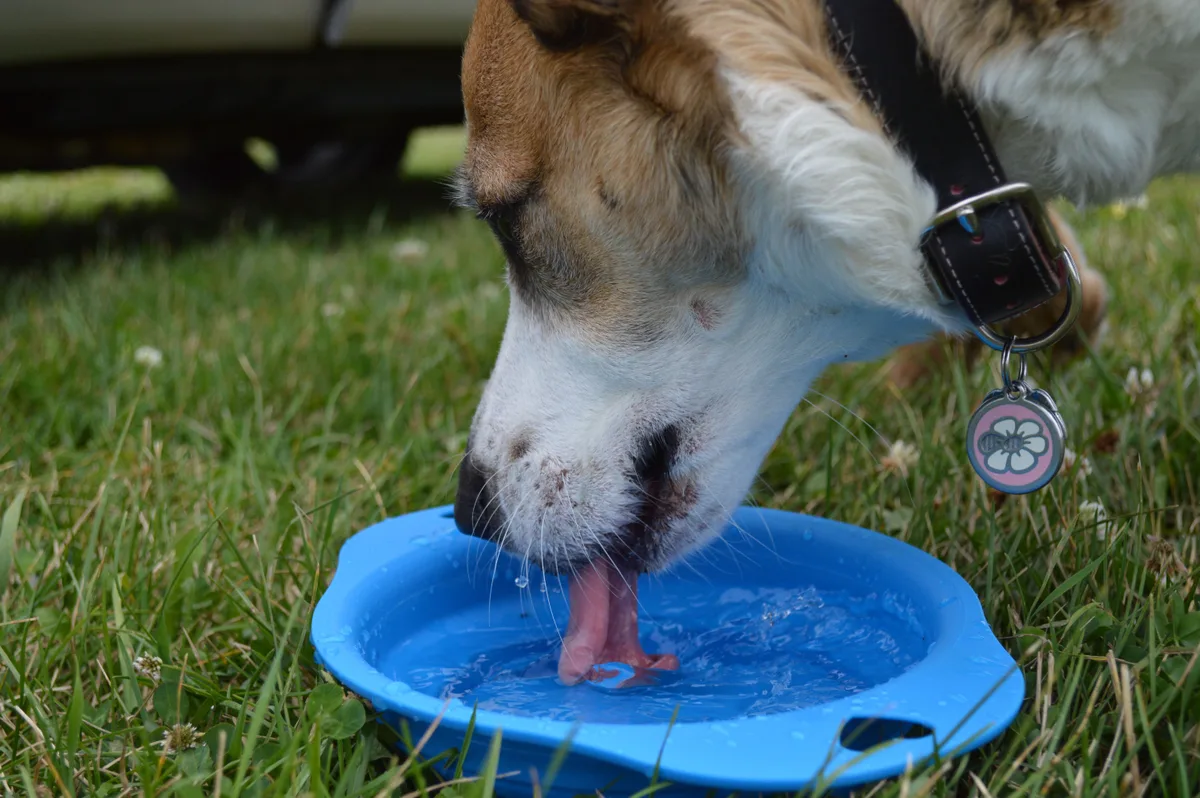
Parasites and infections
Intestinal worms, giardia, and bacterial or viral infections are common causes, especially in puppies and dogs who drink from puddles or meet a lot of other dogs. These often need a vet’s diagnosis and treatment rather than home care.
Food sensitivities and underlying illness
Ongoing or recurring diarrhea can point to a food intolerance, or to a deeper issue such as inflammatory bowel disease, pancreatitis or organ problems. Chronic loose stool that keeps returning deserves a proper work-up with your vet.
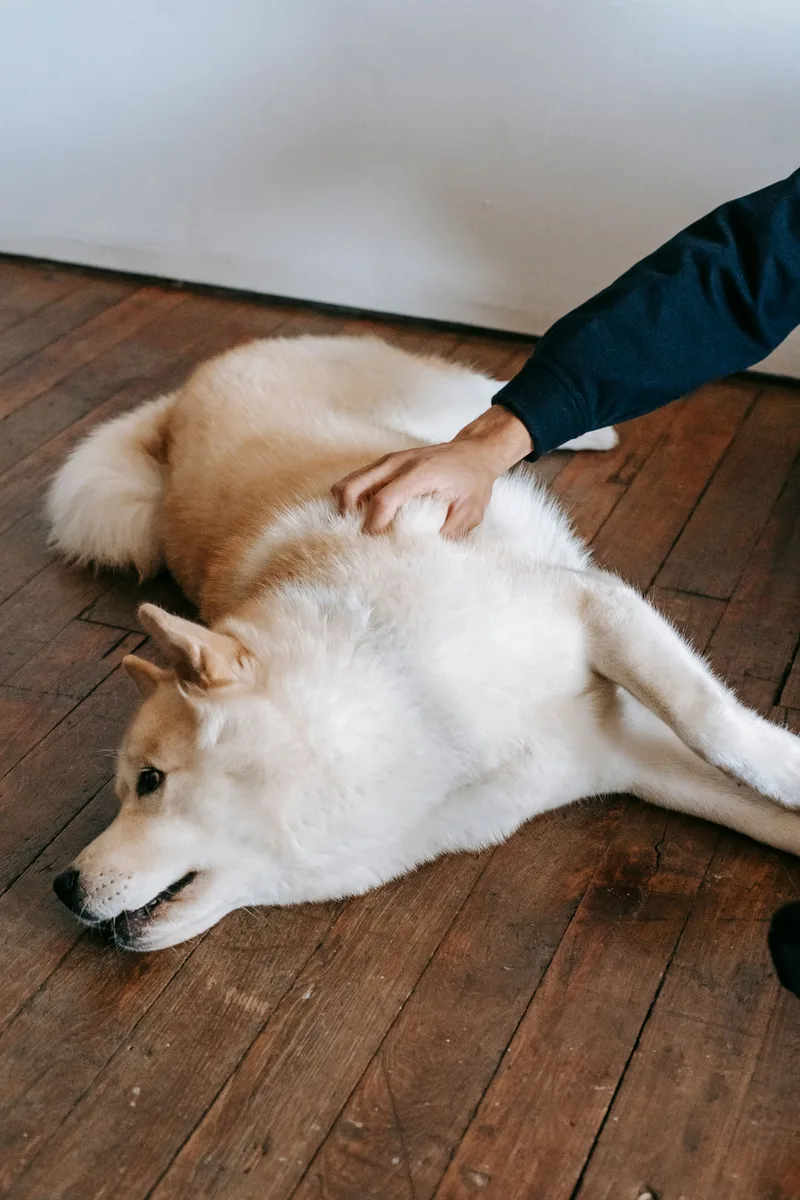
When diarrhea is an emergency
Call your vet right away if you see any of these alongside the diarrhea:
- Blood — bright red streaks, or dark, tarry stool.
- Repeated vomiting, especially if your dog can’t keep water down.
- Lethargy, weakness or collapse, or a painful, bloated belly.
- Signs of dehydration — tacky gums, sunken eyes, skin that’s slow to spring back.
- A puppy, senior or small dog, who can dehydrate dangerously fast.
- Diarrhea lasting more than 48 hours, or that keeps returning.
How to help a mild case at home
If your dog is otherwise bright, eating, and the diarrhea is mild, you can often help it settle:
- Keep water available: the biggest risk with diarrhea is dehydration, so make sure your dog is drinking. Our guide on what dogs can drink covers safe options beyond plain water.
- Offer a bland meal: a small amount of plain boiled chicken and white rice, or a vet-recommended bland diet, is gentle on an irritated gut.
- Feed small and often: little portions are easier to handle than one big meal.
- Ease back to normal: once stools firm up, gradually mix their usual food back in over a few days.
Reading your dog beyond the symptom
A dog with an upset gut often shows it in more than their stool — restlessness, pacing, asking to go out, licking their lips, or going quiet. That’s what Traini‘s AI dog translator is built for: translating your dog’s behavior and body signals into plain language so you can tell “I just need the garden” from “I really don’t feel right.” When you’re unsure whether to watch and wait or call the vet, you can ask PetGPT about your specific situation and get an answer grounded in your dog’s context. For related upsets, see our guides on why your dog is throwing up and why dogs eat grass.
Frequently asked questions
What can I give my dog for diarrhea?
For a mild case in an otherwise well dog, a bland diet of plain boiled chicken and white rice, fed in small portions with plenty of water, often helps the gut settle. Avoid giving human anti-diarrhea medicines unless your vet specifically advises it, as some are unsafe for dogs.
How long should dog diarrhea last?
A simple upset often improves within 24 to 48 hours. If diarrhea lasts longer than two days, keeps coming back, or is paired with vomiting, blood, lethargy or a painful belly, contact your vet rather than waiting.
When should I worry about my dog’s diarrhea?
Worry — and call your vet — if you see blood, repeated vomiting, lethargy, a bloated or painful abdomen, signs of dehydration, or if your dog is a puppy, senior or small breed. These can dehydrate or deteriorate quickly and need prompt care.
Why does my dog have diarrhea but acts fine?
Often it’s a minor, passing irritation — a diet change, a stressful day, or something they ate. A bright, playful, eating dog with a single bout of loose stool is usually fine to monitor at home. Keep water available and watch for any new symptoms over the next day.
This article is for general information and isn’t a substitute for professional veterinary advice. If your dog’s diarrhea is severe, bloody, lasts more than 48 hours, or comes with vomiting, lethargy or signs of dehydration, please contact your veterinarian.