
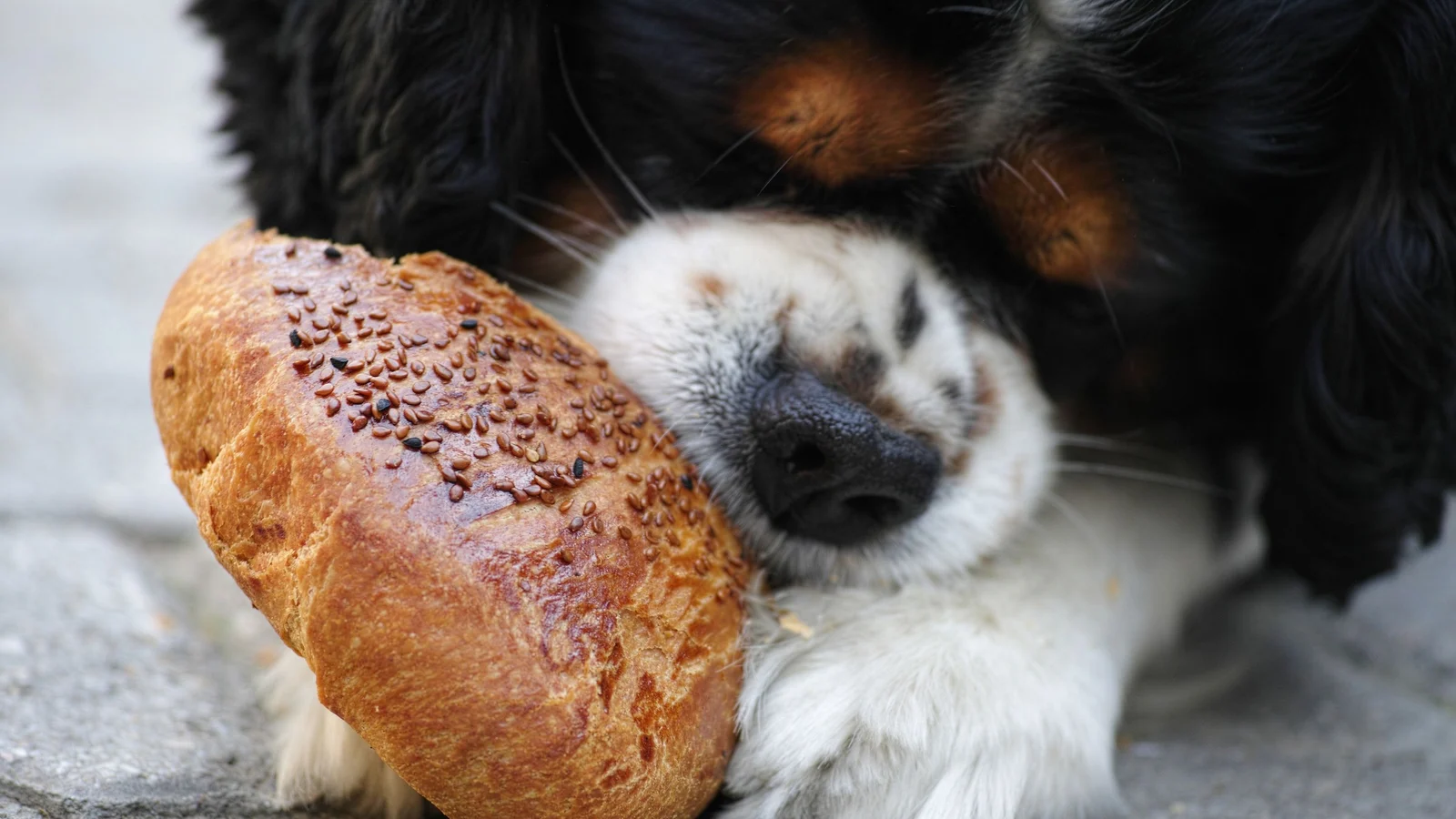
Can dogs eat bread? Yes — a small piece of plain white or whole-wheat bread is safe for most dogs and won’t hurt them. Bread is basically empty calories, though, so it’s a once-in-a-while nibble, not a daily treat. The real dangers are raw bread dough, and any bread made with toxic add-ins like raisins, xylitol, garlic or lots of seeds and nuts.
If your dog snagged a corner of your toast, relax — plain baked bread is harmless in small amounts. The problems start with raw dough, with the extras bakers mix in, and with feeding so much bread that it crowds out proper food. Here’s exactly where the line sits.
So, is plain bread actually okay for dogs?
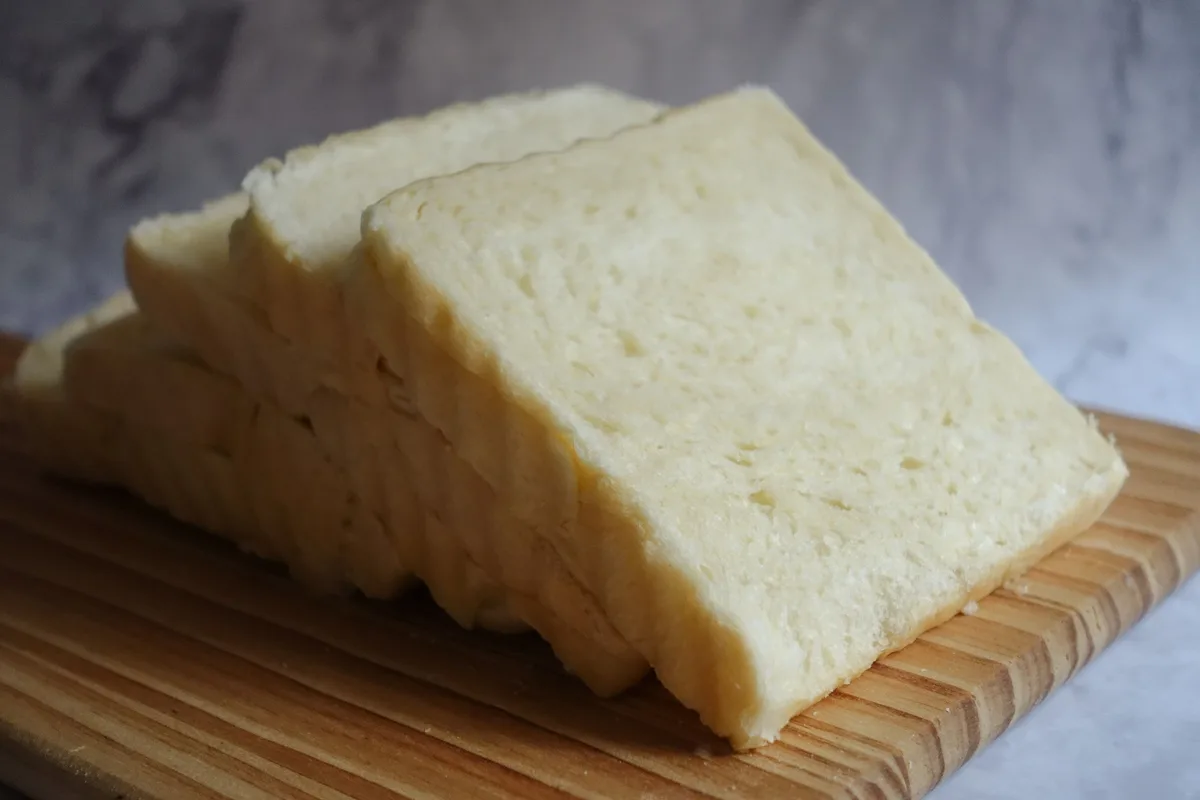
Yes. A small piece of plain, fully baked bread is non-toxic and most dogs digest it fine. The catch is that bread offers your dog almost nothing useful — it’s mostly refined carbohydrate and calories, with little protein or fiber to show for it. That makes it a poor everyday snack, especially for dogs watching their weight. Think of plain bread as a rare, tiny treat: a torn-off piece now and then is fine, a slice a day is not.
The real risks worth knowing
1. Raw bread dough is an emergency
This is the big one. If a dog eats raw, rising dough, the warm, moist stomach lets it keep rising — swelling painfully and potentially twisting the stomach. Worse, the yeast ferments into alcohol, which dogs absorb into the bloodstream. Signs include a bloated, hard belly, retching without bringing anything up, wobbliness and distress. Never leave dough proving where a dog can reach it, and call your vet immediately if they get into it.
2. Toxic add-ins
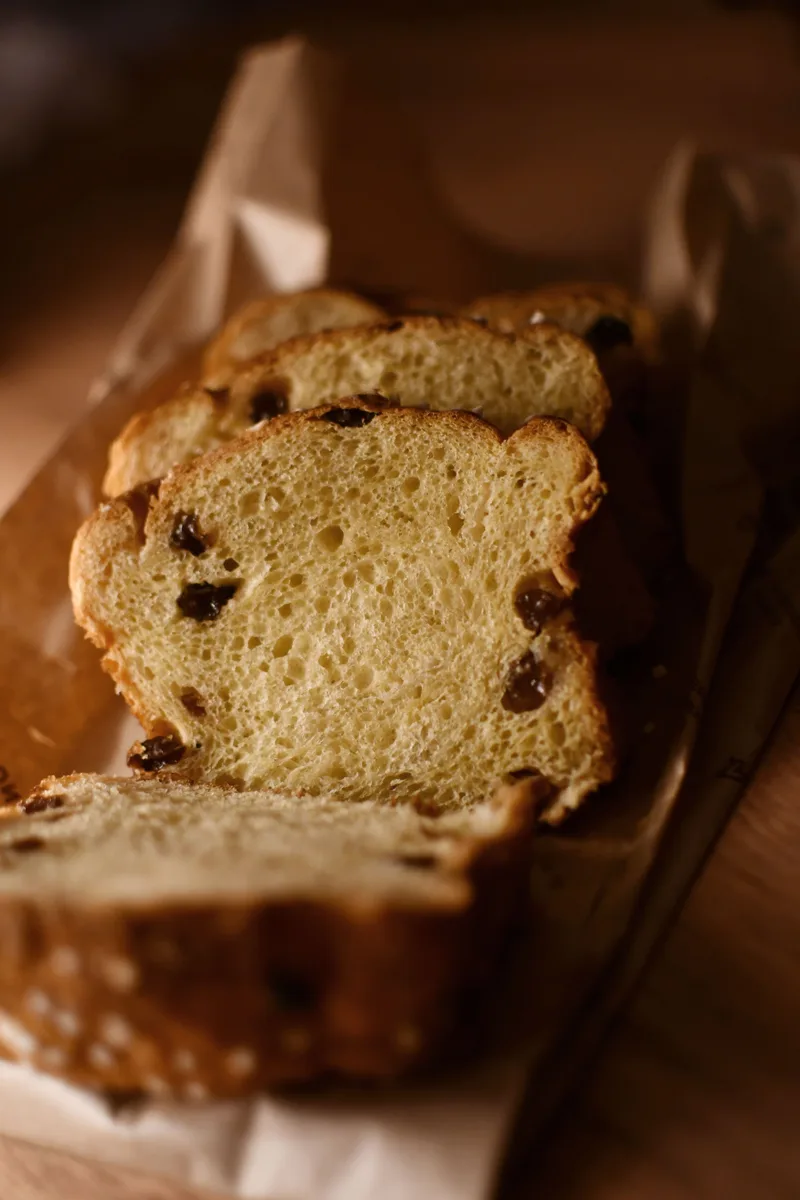
Many breads carry ingredients that are dangerous to dogs. Raisins (in raisin bread) can cause kidney failure; garlic and onion (in garlic bread) are toxic; and xylitol, a sweetener in some low-sugar and “keto” breads, is extremely poisonous even in tiny amounts. Lots of seeds, nuts or a heavy raisin load all push a harmless slice into risky territory, so always check what’s actually in the loaf.
3. Too much, or a wheat allergy
Bread is calorie-dense and easy to overfeed, so regular pieces add up to weight gain and can upset the balance of a complete diet. A minority of dogs are also sensitive to wheat or gluten; if your dog gets itchy skin, gassy or loose after bread, leave it off the menu and mention it to your vet.
How to share bread with your dog safely
If you want to offer a little, keep it simple:
- Plain and baked — basic white or whole-wheat, fully cooked, never raw dough.
- Check the label — no raisins, xylitol, garlic, onion or a pile of seeds and nuts.
- Small pieces — a thumbnail-sized bit as an occasional treat, not a slice.
- Nothing on it — skip butter, jam, chocolate spread and sugary toppings.
What to do if your dog ate bread
Match your response to what they actually got into:
- A bit of plain baked bread: No worries. Keep fresh water out and carry on.
- Raisin bread, garlic bread or anything with xylitol: Call your vet or an animal poison line right away — these can be serious even in small amounts.
- Raw bread dough: Treat it as an emergency. Watch for a swollen belly, unproductive retching or wobbliness, and contact your vet immediately.
Other foods dogs can enjoy
If you’d rather share something with a bit more to offer, there are better everyday picks. Plain cooked rice is gentle on the stomach, a little plain potato works in moderation, and a few plain spinach leaves or air-popped popcorn make lighter treats than bread.
And if your dog gives you those big eyes every time the bread bin opens, that begging is its own kind of communication. Traini’s AI dog translator helps you read what’s really behind the look — true hunger, habit, or just wanting in on what you’re doing — so “not the bread” gets easier for both of you.
Frequently asked questions
How much bread can a dog eat?
Only a small piece, occasionally. Like all treats, bread should stay under about 10% of your dog’s daily calories, with the rest from a complete, balanced diet. Because bread is nutrient-poor, there’s little reason to make it a regular snack.
Can dogs eat raw bread dough?
No — this is dangerous. Raw dough keeps rising in the warm stomach and ferments into alcohol, which can cause bloating, a twisted stomach and alcohol poisoning. If your dog eats raw dough, contact your vet immediately.
Is white or whole-wheat bread better for dogs?
Whole-wheat has slightly more fiber, but neither is a meaningful part of a dog’s diet, and both are just occasional treats. Whichever you offer, make sure it’s plain and free of raisins, xylitol, garlic and onion.
Can dogs eat toast?
Plain, dry toast in a small amount is fine for most dogs. Skip the butter, jam, chocolate spread and anything sugary, and keep the portion tiny — toast is still just refined carbohydrate.
This article is for general information and isn’t a substitute for professional veterinary advice. If your dog has eaten raw bread dough, raisin bread, garlic bread or anything containing xylitol, contact your veterinarian or an animal poison control line right away.