

Can dogs eat pineapple? Yes — fresh, ripe pineapple flesh is safe for most dogs in small amounts. It’s sweet, full of water and carries some vitamin C, fiber and manganese. The things to skip are the tough skin and spiky core, the sugary canned kind in syrup, and large servings that upset a sensitive stomach.
If your dog nabbed a chunk of fresh pineapple off a cutting board, there’s nothing to worry about. The picture only changes with the parts we don’t eat, with canned fruit soaked in syrup, or with a dog who gets a big helping all at once — and below we’ll walk through exactly where the line is.
So, is fresh pineapple actually okay for dogs?
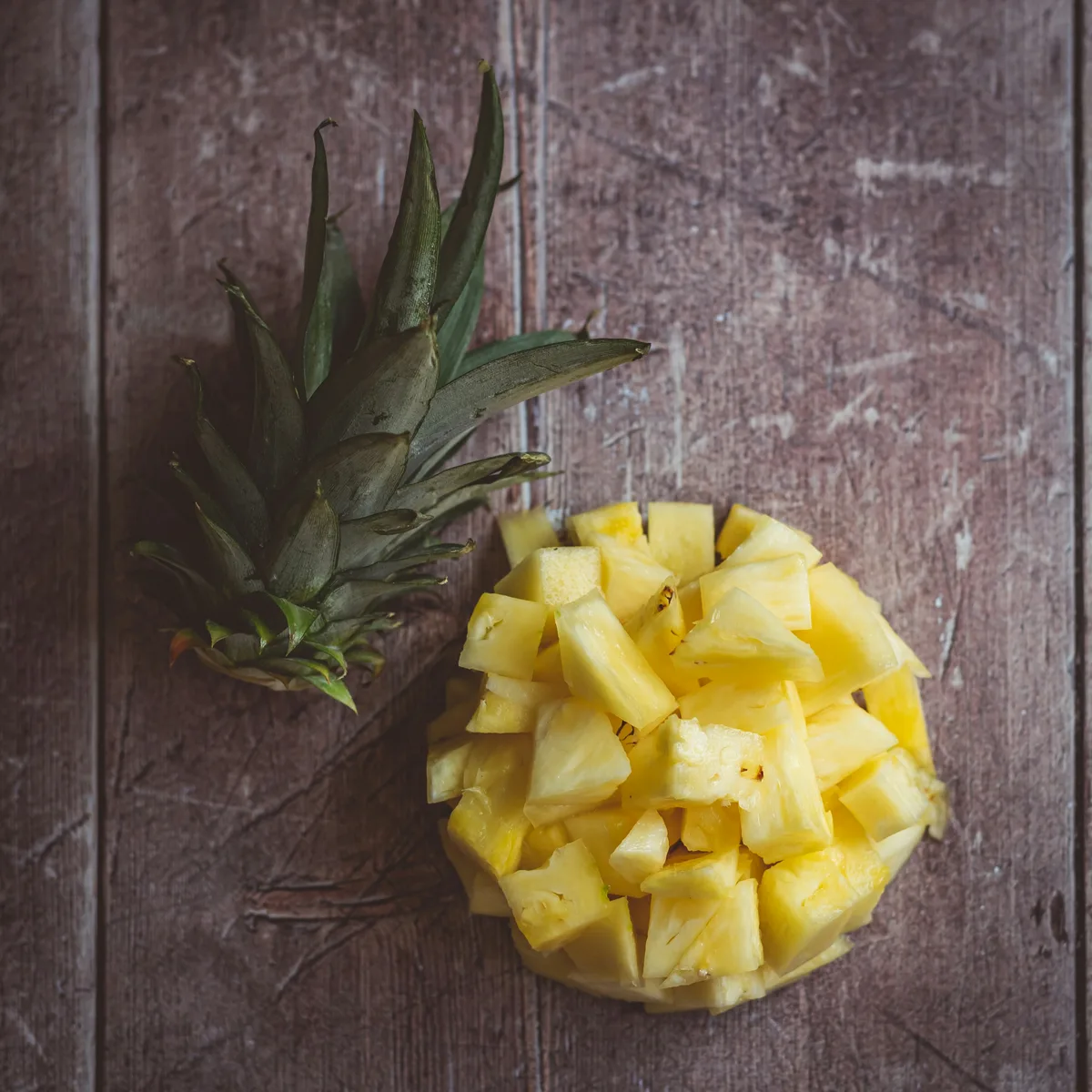
Yes. A few small pieces of fresh, ripe pineapple flesh are non-toxic and make a fine occasional treat. Pineapple is about 85% water, so it’s hydrating on a hot day, and it brings a little fiber, vitamin C and the mineral manganese. Dogs don’t need fruit, but a small amount of plain pineapple won’t hurt a healthy dog. The important words are fresh, ripe and small — the sugar content is high, so pineapple is a treat, not a staple.
The real risks worth knowing
1. The skin and core
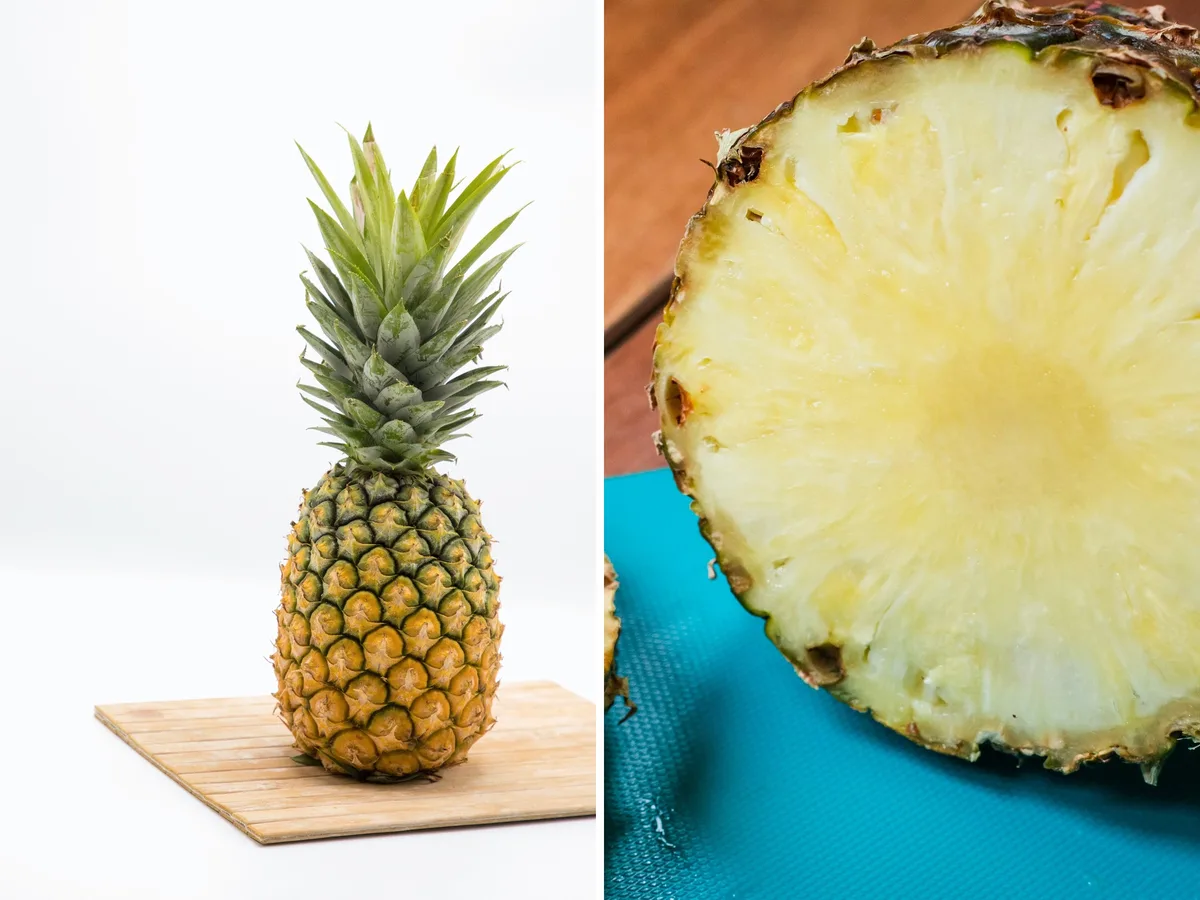
The waxy outer skin and the firm central core are the parts to keep away from your dog. They’re tough, fibrous and hard to digest, and a large piece can be a choking hazard or, worse, lodge in the gut and cause a blockage. Always cut pineapple down to soft, bite-sized flesh and bin the skin and core.
2. Canned pineapple and syrup
Canned pineapple is usually packed in juice or heavy syrup, which piles on sugar your dog doesn’t need and can trigger stomach upset. Dried pineapple is also very concentrated in sugar. Fresh is best; if you only have canned, rinse it well and offer just a small, drained piece.
3. Too much sugar and stomach upset
Even fresh pineapple is high in natural sugar and acidic, so too much can cause loose stools, gas or a gurgly belly — especially in dogs with sensitive stomachs or those new to fruit. Overdoing sugary treats over time isn’t great for a dog’s waistline or teeth either, so keep portions genuinely small.
How to share pineapple with your dog safely
If you want to offer a bite, keep it simple:
- Fresh and ripe only — no canned fruit in syrup, no dried pineapple.
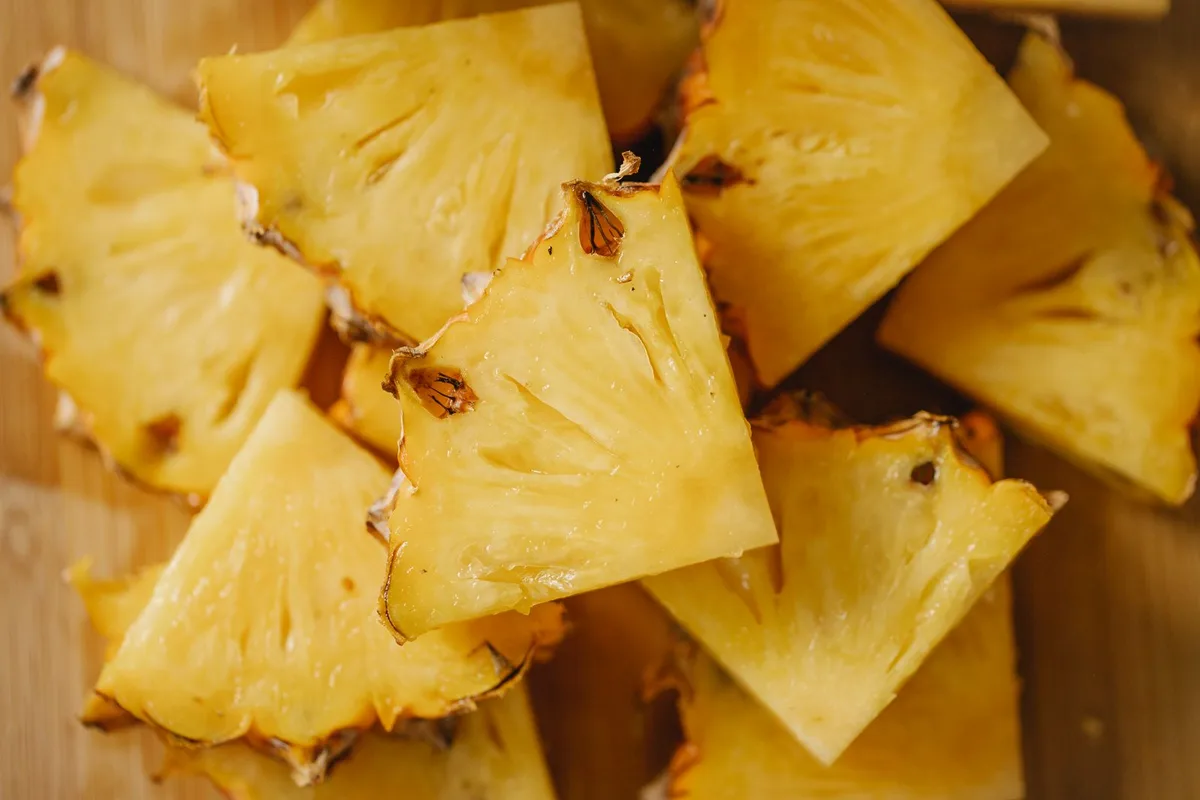
- Flesh only — cut away the skin and the hard core first.
- Small and bite-sized — a few little pieces as a treat, not a bowlful.
- Watch the first time — offer a little and see how your dog’s stomach handles it.
What to do if your dog ate too much pineapple
Match your response to what they actually got into:
- A few pieces of fresh flesh: No worries. Keep fresh water out and carry on.
- A lot of flesh at once: Watch for loose stools, gas or a brief upset stomach, which usually settles on its own. Offer water and a calm, light next meal.
- A chunk of core or skin: Watch for choking, repeated vomiting, a hard or painful belly, or trouble pooping, and call your vet — a tough piece can cause a blockage, especially in a small dog.
Other fruits dogs can enjoy
If pineapple is a hit, there are plenty of other safe, juicy options in moderation. Try a little watermelon, a few strawberries or blueberries, or a slice of orange — all sweet, hydrating treats with the pits, peels and seeds removed.
And if your dog parks themselves at your feet the second you start slicing fruit, that begging is its own kind of communication. Traini’s AI dog translator helps you read what’s really behind those looks — true hunger, habit, or just wanting in on what you’re doing — so “not this one” gets easier for both of you.
Frequently asked questions
How much pineapple can a dog eat?
Just a few small, bite-sized pieces of fresh flesh as an occasional treat. Like all treats, pineapple should stay under about 10% of your dog’s daily calories, with the rest coming from a complete, balanced diet. Start small the first time to see how their stomach reacts.
Can dogs eat canned pineapple?
It’s best to skip it. Canned pineapple is usually packed in juice or heavy syrup that adds far too much sugar. If fresh isn’t an option, rinse a piece well, drain it, and offer only a small amount.
Can puppies eat pineapple?
A tiny piece of fresh, ripe pineapple is unlikely to harm a puppy, but their stomachs are more sensitive, so it’s safest to wait and stick to puppy-appropriate treats. If you do offer a bite, make it very small and watch for any upset.
Does pineapple stop dogs from eating poop?
You may have heard that pineapple deters dogs from eating their own stool. The evidence is thin and it rarely works reliably. If your dog eats poop, it’s better to address the habit directly — see our guide on why dogs eat poop — rather than relying on pineapple.
Can dogs drink pineapple juice?
It’s best to avoid it. Pineapple juice, even unsweetened, is very concentrated in sugar and acid without the fiber of the whole fruit. Plain fresh water is always the better choice for hydration.
This article is for general information and isn’t a substitute for professional veterinary advice. If your dog has eaten a large amount of pineapple, or any skin or core, or seems unwell, contact your veterinarian.